Why the Supreme Court Overturned Trump's Tariffs
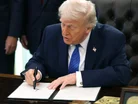
Global markets and supply chains are reacting to the US Supreme Court's decision to invalidate several of Donald Trump's expansive tariffs through a 6-3 ruling, in a substantial setback for one of the White House's flagship economic strategies.
The court determined that the International Emergency Economic Powers Act (IEEPA) of 1977, which Trump utilised to implement the duties, did not provide him with such authority.
While the legislation permits the president to "regulate" trade during a national emergency, the justices found this language insufficient to grant tariff-imposing powers.
Chief Justice John Roberts, writing for the majority, stated: "When Congress has delegated its tariff powers, it has done so in explicit terms and subject to strict limits.
"Had Congress intended to convey the distinct and extraordinary power to impose tariffs, it would have done so expressly, as it consistently has in other tariff statutes."
The decision specifically invalidates the "Liberation Day" tariffs introduced in April 2025, which imposed a baseline levy of 10% or more on goods from almost every nation globally, alongside emergency duties aimed at China, Mexico and Canada.
Trump had defended these measures as responses to drug trafficking and trade imbalances. The Supreme Court rejected this position, with the Chief Justice noting that "the vehicle is the imposition of taxes on Americans, and that has always been a core power of Congress."
The ruling does not impact tariffs imposed under alternative legal frameworks. Section 232 duties on steel, aluminium, cars and semiconductors continue to apply, as do Section 301 China-specific tariffs.

Market reaction unfolds
Financial markets responded quickly in response. The S&P 500 increased 0.3%, European automotive shares gained ground and stock markets across South Korea to India witnessed rises in US-listed shares.
The dollar index declined marginally, dropping 0.2% to 97.67, whilst yields on benchmark 10-year US Treasuries climbed two basis points to 4.096%.
Rob Burdett, Head of Multi Manager at Nedgroup Investments in London told Reuters: "This ruling has major implications for the limits of US presidential power and the division of power between the legislative branch and the executive branch, but also as a macro catalyst across equities, bonds, currencies and global trade flows."
Implications for supply chains
For supply chain professionals, the decision represents a watershed development. The most direct outcome is a substantial reduction in landed costs for importers who had been managing the IEEPA-based duties. Retailers, electronics manufacturers and small businesses are likely to experience immediate margin improvements on incoming shipments.
The ruling could also enable an estimated £105bn–£120bn in tariff refunds (approximately US$130bn–US$150bn).
Processing these claims may prove complex, with the Court of International Trade and Customs and Border Protection needing to examine thousands of individual protests and refund applications.
Perhaps the most challenging issue involves "reshoring regret." Since April 2025, numerous businesses invested millions relocating production from China and Mexico to reduce exposure to the tariffs now invalidated. With those duties eliminated, original and often more cost-effective supply routes may become viable again, leaving firms committed to higher-cost contracts in alternative locations.
Alex Saric, Smart Procurement Expert at Ivalua, adds: "The damage is already done. Companies have restructured sourcing networks, absorbed margin pressure and invested heavily in diversification.
"A Supreme Court reversal does not undo past disruptions, or eliminate the risk of new tariffs under a different authority. Businesses that retreat back to single-region sourcing to chase short-term cost relief risk repeating the same vulnerability.
"Trade volatility isn't an occasional shock anymore; it's a permanent operating reality. Businesses should treat this moment not as relief, but as validation of the need for dynamic supply chain planning."
The decision also fundamentally alters the character of trade risk. Rather than a comprehensive global tariff environment, supply chain managers must now navigate a more fragmented, sector-specific landscape.
With the administration widely anticipated to investigate alternative legal mechanisms to reintroduce duties in targeted sectors, monitoring specific legal triggers for different product categories could become essential practice.
The threat of sudden emergency tariffs had functioned as a significant tool in trade negotiations and had been employed by carriers and vendors to justify surcharges. With that justification effectively eliminated, shippers may find themselves with considerably greater leverage in contract negotiations, offering a practical benefit amid the broader uncertainty this ruling could unleash.
Company portals


Executives
Alex Saric
CMO