
Trump's Steel and Aluminium Tariffs Shake Up Supply Chains
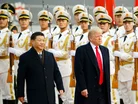
US President Donald Trump’s 25% tariffs on imported steel and aluminium are set to take effect on 12 March, resulting in major repercussions for supply chains worldwide.
In addition to the tariffs, President Trump has introduced strict new rules defining what qualifies as US-made metal. Steel must be "melted and poured" and aluminium "smelted and cast" within the country to count, a move designed to prevent low-cost materials from China and Russia entering the market via third-party nations.
While the policy aims to boost domestic manufacturing, its impact on global supply chains is a growing concern. The US remains heavily dependent on imported aluminium, particularly from Canada and Mexico and, with this tariff in place, costs are expected to rise across industries.
Trump defends the tariffs as necessary for economic independence, stating: "Our nation requires steel and aluminium to be made in America, not in foreign lands."
However, industry experts are questioning whether these tariffs will materialise in full, especially given Trump’s recent pause on similar levies against Mexico and Canada. Some suggest this could be part of a broader negotiation tactic rather than a permanent shift in trade policy.
How the tariffs may disrupt US supply chains
The US steel industry stands to benefit from these tariffs. Market optimism has already driven up the share prices of domestic steelmakers like Cleveland-Cliffs by nearly 20%.
As the world’s third-largest raw steel producer, after China and India, the US could see a surge in domestic production, potentially creating jobs and reducing reliance on foreign suppliers.
However, aluminium presents a different challenge. Unlike steel, the US imports around half of its aluminium, with Canada providing the bulk of supply.
In 2024 alone, Canadian aluminium exports to the US totalled 3.2 million tonnes—more than double the amount from the next nine largest supplier nations combined.
Aluminium is a crucial material for industries including aerospace, automotive manufacturing, defence, packaging, construction and consumer electronics. If import costs rise, manufacturers may be forced to pass these costs onto consumers or look for alternative suppliers, leading to significant price increases across multiple sectors.
For US manufacturers reliant on aluminium, the tariffs could cause supply shortages, higher production costs, and reduced competitiveness. A slowdown in infrastructure projects is also likely, affecting everything from public transport upgrades to commercial construction.
Rob Shaw, GM EMEA at Fluent Commerce, highlights the broader economic risks: "Since the announcement from President Trump threatening tariffs on global imports, the trade market can only be described as an unstable, ever-changing state."
He adds: "If the US does proceed with imposing tariffs, other countries will retaliate, as we’ve already seen with China.
"In this scenario, tariffs may be imposed in the opposite direction, raising costs within the supply chain. Ultimately, it’s consumers who will bear the brunt of these changes."
A shifting global trade landscape
Trump’s tariffs are not happening in isolation. They form part of a larger shift in global trade that reflects increasing tensions between the US and key economic players like China and Canada.
The President has long accused China of manipulating markets and flooding the US with cheap, low-quality products. Meanwhile, his attitude toward Canada remains unpredictable, with previous calls to make Canada the 51st state adding further uncertainty to trade relations.
China dominates aluminium production globally, and a US tariff on imports could see Chinese manufacturers retaliate. Similar measures have already been taken in response to previous US tariffs, raising concerns about further economic conflict.
If China and other nations respond with their own trade restrictions, US manufacturers could face higher material costs across multiple industries.

This raises a fundamental question: can the US truly rebuild a strong domestic manufacturing base through protectionist policies? The country has the foundation for steel production, but aluminium is another story.
A shift toward domestic aluminium production would require major investment, infrastructure development, and workforce expansion—none of which happen overnight.
Is the US manufacturing revival realistic?
Trump’s strategy leans on the idea that bringing manufacturing back home will lead to economic strength.
However, globalisation has permanently reshaped supply chains, making complete self-sufficiency difficult, if not impossible. Modern manufacturing depends on international cooperation, with raw materials, components and expertise spread across multiple countries.
Stephen Moore of the Heritage Foundation, who advised Trump on economic policy and co-wrote 'Trumponomics', believes the tariffs are part of a larger strategic game: "Just about everything Donald Trump does in Washington is a negotiating tactic."
If tariffs are indeed a bargaining tool, their long-term impact remains uncertain. But if they stay in place, the consequences for supply chains could be profound, driving up costs, reducing global competitiveness and straining trade relationships.
With the world’s manufacturing landscape deeply interconnected, no nation can return to the industrial model of the 1960s. Success today requires innovation, skilled labour and strategic investment—not just tariffs.
As the global market watches, the question remains: will these policies truly strengthen US manufacturing, or will they push key industries further into economic uncertainty?
Explore the latest edition of Supply Chain Digital Magazine and be part of the conversation at our global conference series, Procurement & Supply Chain LIVE.
Discover all our upcoming events and secure your tickets today.
Supply Chain Digital is a BizClik brand.