This Week's Top Five Stories in Supply Chain
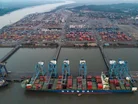

India’s largest container port is now absorbing the brunt of structural rerouting around the Strait of Hormuz, turning Navi Mumbai into a de facto dumping ground for diverted containers.
According to project44, container diversions around the Strait of Hormuz were relatively contained before the Iran conflict. During the week of 16 February, the number stood at about 1,075 diversions. After hostilities began, vessel diversions, and the frenzied dropping off of containers at alternative ports so ships could unload and exit the risk zone quickly, surged.
US-based project44’s report says Gulf disruption is no longer just a short-term shock. Instead, it is driving structural changes as container flows pivot east, feeding new routing patterns across the Indian Ocean and into Asian hubs.
China’s ban on sulphuric acid exports from May is set to cascade through global supply chains, tightening the screws on metals producers and fertiliser makers already hit by the Iran war and the closure of the Strait of Hormuz.
The decision turns a once-background industrial chemical into a strategic pinch point for mining, agriculture and food security.
The ban covers sulphuric acid produced as a by-product of copper and zinc smelting in China, the world’s largest exporter of the chemical.
It lands just as Middle Eastern sulphur shipments, a key feedstock for sulphuric acid, are curtailed by disrupted trade flows through Hormuz, and threatens a new crisis for global supply chains.
The geopolitical situation has in the Middle Eastern has continued to unfold, despite Iran, the US and Israel agreeing to a last-minute two-week ceasefire on 8 April.
Since then, Israel has continued its bombardment of Lebanon, while the Trump administration has remained infuriated by the lack of progress in the Strait of Hormuz.
This vital chokepoint handles up to 20% of global oil and gas shipments along with more than 33% of urea fertiliser exports and key industrial inputs like methanol, aluminium and helium essential to food, manufacturing and healthcare supply chains.
Meanwhile, peace talks have taken place in Islamabad with each of the involved parties laying out their terms for an end to the conflict.
But after 21 hours of negotiations in the Pakistan capital on 12 April diplomacy efforts ended without agreement. The markets have wasted little time in passing judgement with supply chain disruptions amplifying the fallout.
The shortage of helium triggered by the recent Strait of Hormuz closure is exposing a more fundamental problem than a disrupted gas market.
It is revealing how quickly medical supply chains can shift from exposed to structurally constrained when energy corridors and trade routes destabilise.
Iranian strikes on Qatar’s Ras Laffan Industrial City, the world’s single largest helium source, removed about 30-38% of global supply overnight.
While the Strait is now open following the US-Iran ceasefire, transportation remains fragile and conflict still threatens the region.
The most visible pressure point as a result of the global helium crisis is magnetic resonance imaging (MRI). These scanners depend on liquid helium to cool superconducting magnets, a requirement that cannot be easily engineered away at scale across global hospital systems.
Company portals







Executives
Lars Jensen
CEO

Michael Lynch
Distinguished Fellow
Mohamed El-Erian
Adviser
Phil Kornbluth
President