India's Largest Port Swamped By Strait of Hormuz Diversions
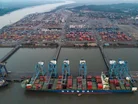
India’s largest container port is now absorbing the brunt of structural rerouting around the Strait of Hormuz, turning Navi Mumbai into a de facto dumping ground for diverted containers.
According to project44, container diversions around the Strait of Hormuz were relatively contained before the Iran conflict. During the week of 16 February, the number stood at about 1,075 diversions. After hostilities began, vessel diversions, and the frenzied dropping off of containers at alternative ports so ships could unload and exit the risk zone quickly, surged.
US-based project44’s report says Gulf disruption is no longer just a short-term shock. Instead, it is driving structural changes as container flows pivot east, feeding new routing patterns across the Indian Ocean and into Asian hubs.

Saudi Arabia and Singapore are emerging as key diversion destinations, while the United Arab Emirates’ share of diverted traffic slid from 42.6% in Week 1 to 33.1% by Week 4.
Although the Persian Gulf handles only around 2% to 3% of global container volumes, the dislocation of boxes from their planned paths is amplifying congestion at downstream ports.
Dwell times are climbing in India, Singapore and China with no clear sign of a plateau, and that is helping to push container rates higher on core east–west headhaul trades from major Asian gateways to the United States and Europe just as seasonal demand returns.
The pressure intensified within a month. The week of 23 March saw a nearly ninefold increase in diversions, reaching a peak of 9,655. The week of 30 March still recorded 9,317 diversions, higher than any week in the first two weeks after the conflict began.
“Diversions have plateaued at a new elevated floor, reflecting structural rerouting of cargo away from the Strait toward ports across the UAE, Oman, India, and Saudi Arabia,” says Eric Fullerton, Vice President of Product Marketing and Data Insights at project44, in a conversation with journalist Lori Ann LaRocco.
Why Navi Mumbai became the dumping ground
As shipping lines sought safe alternatives, one of the major dumping grounds for these diverted containers quickly became Navi Mumbai, India’s largest container port.
India’s Jawaharlal Nehru Port in Navi Mumbai has rapidly evolved into a major transshipment node, with volumes jumping more than 700% versus February baselines, according to project44’s analysis.
In normal conditions, Navi Mumbai’s infrastructure is geared for fast transshipment cycles and quick handoffs to onward sailings. That model is now under severe strain.
The sheer volume of diverted cargo shows that even ports built for high‑velocity relay operations can be overwhelmed, turning a flagship gateway into a catch‑all for boxes that can no longer move smoothly through the Gulf.
Navi Mumbai has become the most heavily stressed port in the affected network. Project44 reports that average import dwell has more than doubled, from under 12 days at the time of the closure to 23.47 days by Week 4, the highest level recorded across the system.
The spike is tied to a steep rise in transshipment moves, reflecting how carriers have rapidly redrawn service patterns to keep freight flowing around the Hormuz bottleneck.
Navi Mumbai as a visible pressure point
Fullerton points out in the interview that Navi Mumbai is one of the most visible pressure points in the global container network. The numbers behind that assessment are stark:
- Import dwell: rolling 7‑day average now at 20 days, down slightly from a peak of 23 days last week but still dramatically elevated versus pre‑conflict baselines.
- Transshipment dwell: 11 days, up from 8.7 days last week and still climbing.
- Transshipment volumes: up 19% week over week.
- Transshipment volumes: up over 1,300% compared to just before the conflict began.
“When transshipment dwell peaks, it will be the first real signal of network stabilization. But we are not there yet,” he says.
What this means for shippers
For cargo owners and logistics teams, Navi Mumbai’s congestion translates directly into longer and less predictable lead times, higher dwell‑linked charges, and more volatility in onward connections to US and European services.
Shippers using India as part of a China‑plus‑one strategy may need to build extra inventory buffers, revisit routing choices and deepen collaboration with carriers and 3PLs to secure capacity and backup routings while diversions and dwell times remain at this new, elevated level.