Maersk: Supporting the EV Shift to Decarbonise Supply Chains
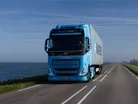
The transport and logistics industry produces almost 24% of global CO₂ emissions and consumers are calling for more sustainable options.
Business customers around the world are increasingly moving to electric vehicle (EV) trucking as the mode of choice, witnessing cost savings and emissions reductions in short periods of time.
Maersk is playing a key role in supporting this movement, exploring how to make this transition adopted on an even bigger scale.

Driving sustainable logistics
The logistics industry is a vital cog in global business, ensuring that products of any type can safely travel across the world and arrive at their intended destination, in perfect condition. Road transport is a significant part of this sector, but it is also a major contributor to greenhouse gas emissions around the world.
In 2023, European Union (EU) fossil fueled road transport resulted in 750 million tonnes of carbon dioxide emissions. This was a 23% increase than in 1990, demonstrating how vastly road transport has increased in the last 35 years. 39% of the emissions came from light and heavy trucks, as well as buses.
As a leading logistics company, Maersk organises several million truck transports every year for its customers, ensuring the smooth running of supply chains but contributing to global pollution nonetheless.
Now, logistics companies like Maersk are moving to alternative solutions such as low-carbon fuels or electric fleets to decarbonise their operations. This works alongside a growing demand for sustainable operations, with businesses looking to reduce their Scope 1, 2 and 3 emissions and consumers moving towards more sustainable brands.
"These figures show that we have a very important but also huge task ahead of us since Maersk has the goal to achieve net-zero emissions by 2040, which also applies to the road transport we operate for our customers," says Kenny Kristensen, Global Head of Energy Transition Business Enablement - Landside Logistics at Maersk.
"From today’s perspective, electric trucks are the best feasible solution for the energy transition on roads from both a total cost of ownership and scalability perspective – even if you still don't see electric trucks that often in many countries."
All supply chain, sustainability, Scope 3 and net zero leaders should attend:
- Procurement and Supply Chain LIVE: The Net Zero Summit - QEII Centre, London, March 4-5
- Procurement and Supply Chain LIVE: The US Summit - Navy Pier, Chicago, April 21-22
Co-located with Sustainability LIVE, these events brings together CSCOs, CSOs and senior decision-makers at a moment when sustainability, supply chains and commercial performance are increasingly interconnected.
Tickets can be booked online today for The Net Zero Summit and The US Summit. Group discounts available.
Barriers to adoption
Kenny's team are working on lowering the GHG emissions of barge, rail and road transport at Maersk. As China's production of battery-electric trucks and its advancement of EV trucks increase, Kenny predicts these gains will soon be seen around the rest of the world.
In Western countries, electric trucks are still twice as expensive as similar diesel products, making them a less appealing short-term purchase. Moreover, a diesel truck only takes 10-12 minutes to refuel, whereas EV trucks can take two-to-four hours to fully recharge.
However, EV producers are entering the market with more competitive models, which will reduce the cost of the vehicles significantly. Furthermore, faster charging technologies are emerging, including the Megawatt Charging System (750 KW) and the Twin CCS charging solution (up to 700 KW), allowing for full charge in 30 to 45 minutes.
Why go electric?
Maersk is already deploying EV trucks for its customers across 14 countries around the world, including across China, USA, UK and Denmark. Much of this is cooperation with local trucking partners for the best EV trucking solutions. The local partners procure and operate the EV trucks and Maersk ensures they are being used to full capacity by its customers.
Maersk also has its own fleets of heavy-duty EV trucks–in Germany, it has 25 electric Volvos for major customers in automotive, fashion and tech. These units had already covered more than 2.7 million kilometers on German highways by the end of 2025 and the US EV fleet had travelled 14 million kilometers. This has resulted in a major reduction of GHG emissions.
Studies have proven that EVs are more energy-efficient than other options. In EVs, 70-75% of the energy used is actually on the road, whereas for diesel combustion vehicles, this is only at 25-37% efficiency. Moreover, hydrogen-powered vehicles only display an energy efficiency of around 20%.
Though EV trucks have a higher purchase cost than the alternatives, they make up for it in energy efficiency, lower fuel costs and lower maintenance. As businesses look towards long-term cost savings, lower emissions and greater efficiency, they will be turning towards EV trucks and sustainable logistics providers like Maersk to do the job.
Company portals

Executives
Kenny Kristensen
Global Head of Energy Transition Business Enablement - Landside Logistics