Maersk: Building Resilience for Inland Logistics
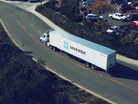
For inland logistics, ensuring resilience is the key to staying ahead of competitors.
Fragmented supply chains across the world result in higher risk and higher costs, but changing strategy to build flexible and integrated logistics networks will boost efficiency and resilience.
Maersk explores how logistics can be transformed to better meet demand and create business cohesion.

Inland logistics strategies
2025 has resulted in significant turbulence across global markets and, with various regulatory changes becoming effective in the coming year, 2026 is likely to see more compound disruption. To mitigate this risk, businesses need to act with speed, collaboration and planning. Moreover, inland logistics will remain resilient by increasing its choices.
By building a range of logistics options, whether that's by diversifying modes, routes or schedules, businesses can react faster, safe in the knowledge of having other solutions if one faces disruption. Maersk examines how businesses can build a strong resilience plan for 2026, emphasising the Maersk Inland resilience advantage.
Maersk offers strategic insights as to how businesses can pivot their inland logistics.
Early insights
In July 2025, heatwaves resulted in low water levels in some vital trade passages, meaning barges were unable to operate at full capacity. By gaining insights as soon as possible, companies can adjust inland freight early on, preventing the risk of bottlenecks and high costs.
Scenario planning
Through using systems like digital twins to scenario plan, businesses can ensure they have pre-approved and planned emergency reroutes in case of a disruption, meaning they can be implemented quickly and efficiently.
Consolidate partner ecosystem
Through choosing one logistics partner to cover road, rail and barge transportation, response to disruption will be more efficient with less handoffs, resulting in less potential for a greater disruption.
Vincent Clerc, CEO of A.P. Moller - Maersk, says: "Predictability in trade policy is not a luxury; it’s a support on the ground for strategic business decisions.
"As we look ahead, our focus remains on being a trusted partner in uncertain times. Through collaboration, transparency and resilience, we can help global trade not just survive, but to evolve and thrive."
Maersk expertise
Maersk positions itself as the best partner for the job of navigating inland logistics. As a company, Maersk has thorough knowledge of European transport infrastructure, understanding which routes work for each shipment type. Whether dealing with time-sensitive shipments or specialised cargo, Maersk has the knowledge and capacity to execute logistics of any requirement. Maersk has ground teams around the world, with the capabilities to report signs of disruption ahead of time.
Reflecting upon geopolitical events in recent months, Zera Zheng, Global Head of Business Resilience and Consulting at Maersk said: "these events highlight the importance of monitoring how political developments and logistics strategies intersect — and how interpretations of such signals can shape strategic planning.
"In global supply chains, it’s not only the events that matter, but the insights drawn from them. Geopolitics sets the context; the ability to interpret and prepare defines resilience."
According to McKinsey & Company, inefficient handovers could contribute up to 13-19% of logistics costs. If a company has numerous logistics partners, they are having to coordinate several schedules and manage too many players. According to Maersk, medium-sized businesses are particularly at risk to this. Maersk has transport options across every mode and can support businesses of each size.
Maersk says it "coordinates port-to-destination transport across rail, truck, and barge as part of a single, integrated plan. This agility allows rapid rerouting and mode changes in response to market shifts or disruption, without compromising delivery reliability."
Sourcing strategy is constantly shifting, with businesses choosing between localisation and diversification. With ongoing issues of tariffs and global economy uncertainty, many are sourcing closer to home, whereas some are taking the risk to deliver to new markets around the world.
Maersk's extensive inland network means it can reach every corner of Europe. It has 440 rail services and 130 barge services every week and a trucking base of more than 700 local vendors. This enables Maersk to deliver consisent and predictable transport options to anywhere at any time.
By strategising with the right focus, businesses can build resilient inland logistics in the face of disruption.


Executives
Vincent Clerc
Chief Executive Officer
Zera Zheng
Global Head of Business Resilience Consulting