EV Trucks Dominate as Supply Chains Race to Decarbonise
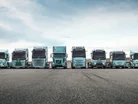
The electrification of heavy duty vehicle fleets took on fresh urgency at London Climate Action Week 2025, where sustainability and logistics go hand in hand.
Transport emissions remain a major challenge for decarbonisation, and the slow progress in shifting to electric trucks puts pressure on both governments and businesses to move quicker. The question is: who stands to win—established automotive giants or fast-moving new entrants?
At the heart of this shift is the supply chain. Logistics firms sit at the centre of a complex and interconnected system, and their ability to adopt battery electric trucks could play a defining role in cutting emissions across entire industries.
However, progress isn’t smooth and fleet operators, especially those reliant on long-haul deliveries, face a different reality to light-duty vehicle users.

The electrification gap between vans and trucks
According to London-based think tank Carbon Tracker, heavy duty vehicles lag six to eight years behind light duty vehicles in terms of electrification.
The reasons are clear: heavier payloads, longer distances, and higher up-front costs. But despite these barriers, momentum is starting to build.
At the beginning of 2025, Amazon placed its largest ever order of electric trucks.
The company’s purchase of 200 battery-powered vehicles is expected to help deliver 350m packages a year once they’re fully operational. This move signals more than a sustainability target—it shows that for major logistics companies, the economics are beginning to shift.
With advances in battery technology and lower maintenance costs starting to close the gap between diesel and electric trucks, the total cost of ownership equation is looking more favourable.
As Carbon Tracker’s Ben Scott explains, this could tip the balance: “However, once we see the total cost of ownership equation solved – it will be a no brainer for making the transition from diesel to electric trucks.”
Pressure builds on traditional manufacturers
For manufacturers, refleeting represents a high-stakes opportunity. The global market for new battery electric heavy duty vehicles is forecast to reach US$300bn by 2035, according to Carbon Tracker. As regional emissions rules tighten, truck makers that fail to decarbonise risk being cut out of future contracts entirely.
But while North American and European original equipment manufacturers (OEMs) slowly ramp up investment in electric trucks, their Chinese counterparts have already hit the accelerator.
In 2024, Chinese company BYD sold more than five times more heavy duty EVs than its nearest competitor. Though most of those sales occurred in China, the vehicles are expected to appear in European markets soon.
That raises alarm for incumbent firms. Without faster investment and production, the gap between established names and newer entrants may become too wide to close.
For logistics operators, sourcing from the most cost-effective and operationally viable supplier - regardless of where the vehicle comes from - may outweigh brand loyalty.
Challenges on the road to refleeting
Still, for all the ambition, real-world logistics come with complications.
Supply chains are complex and fleet operators, ranging from multinational couriers to local hauliers, have tight margins and long-standing operational routines. For them, switching to electric is not just about climate targets but also about business survival.
“Let’s think about the customers here,” says Ben. “It’s fleet operators and they can be anyone from a small family business who might own just a single truck, all the way up to the large logistics companies which are household names.”
He continues: “Ultimately, when these businesses are making the decision to buy new trucks, they only really care about two things. One, what's the total cost of ownership of the vehicle over its life? And two, can they even use it? Does it have the same functionality as the diesel vehicle they’re used to?”
At the moment, battery electric trucks cost around two to three times more than their diesel equivalents, a steep barrier for smaller companies. That price gap matters, especially when operating at scale or across international routes.
However, operational costs over time - factoring in fuel, maintenance and resale - could soon make electric the more practical choice.
Ben is clear that the opportunity is real: “The heavy duty vehicle sector doesn't get as many headlines as the passenger pathways, but it's certainly a sector that needs to rapidly decarbonise.”
He adds: “It’s a sector which contributes around 30% towards road transport emissions, but only constitutes about 3% of vehicles on the road. So in terms of moving the needle for sustainability, you don't actually have to replace or remove that many vehicles to really have a meaningful impact on greenhouse gas emissions.”
As London Climate Action Week draws attention to the future of logistics, the race is on to electrify not just personal cars or delivery vans, but the very trucks that keep economies moving.
The commercial stakes are as high as the environmental ones and how quickly supply chains adapt may decide who leads the charge.