Kimberly-Clark & Maersk: Embracing Freight Electrification
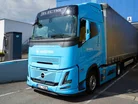
The electrification of road freight is moving from pilot to proof point across global logistics networks.
As battery technology improves and charging infrastructure scales, operators are beginning to swap diesel tractors for battery-electric vehicles on high-frequency routes, cutting fuel costs and emissions while improving air quality.
For shippers, electrified freight is increasingly about resilience, energy security and meeting tightening regulatory expectations related to greenhouse gas emissions reporting.
The challenge now is to turn isolated pilots into scalable, commercially-viable solutions embedded in day-to-day supply chain operations.

Kimberly-Clark and Maersk: Advancing electric freight
In the Czech Republic, a 36-kilometre route between Kimberly-Clark’s Jaromer plant and the Maersk warehouse in Dobřenice has become a live test bed for battery-electric vehicles (BEVs) in road freight.
Selected for its consistent delivery volume and frequency, the lane allows the partners to trial cost effective battery electric road freight that can reduce GHG emissions while strengthening supply chain resilience for Kimberly-Clark.
However, the shift was from straightforward, as James Hallam, Global Climate Leader – Logistics at Kimberly-Clark, explains: "At first glance, moving from a diesel vehicle to an electric one didn’t look economically viable. The biggest learning from this project was that it required long-term planning."
Rather than walk away, Kimberly-Clark and Maersk chose to face the challenge together. The companies leaned in, reimagining the transport model around not only tactical decisions, but a shared commitment to adaptability and innovation.
"It has always been clear to us that this pilot was not a standalone project," adds Annamarie Gey Van Pittius, Key Client Director for Kimberly-Clark at A.P. Moller Maersk. "It’s the start of a longer-term strategy we have been building: a strategy to ensure cost efficiencies, lower GHG emissions and reduce waste."
Informing electrification decisions
Now, a BEV is completing six round trips a day on the route, contributing to an estimated reduction of 130 tonnes of CO₂e in 2025 compared with a diesel truck on the same corridor.
Beyond the emissions savings, the pilot is generating operational insights and performance data that will inform future electrification decisions across the network.
The roadmap now includes a second truck and expanded charging infrastructure, signalling that this is just one step on a longer journey.
For Kimberly-Clark, the project is building readiness for upcoming decarbonisation regulations. For Maersk, it marks progress in developing logistics solutions that can offer FMCG customers a more connected and resilient supply chain while opening new possibilities for electric freight at scale.
From experiment to execution
Kimberly-Clark and Maersk are certainly not alone in having embraced electrification in logistics.
Amazon, for example, is investing in battery electric vehicles, partnering with Daimler Benz on 500-kilometre range trucks and placing what Amazon Freight MD Chris Roe describes as "their biggest-ever order ever of battery electric vehicles for the European market”.

Elsewhere, global logistics firm Kuehne+Nagel is moving electric trucks from concept to action alongside Milence, the company behind Europe’s largest public electric truck charging network. Together, they are putting electric HGVs into real-world operations to show how cleaner freight can work at scale, despite known limitations around battery life, charging infrastructure and cost.
Carlsberg Sweden is expanding its EV operations by extending its collaboration with freight technology firm Einride. The brewing group's Swedish arm plans to use electric trucks to manage up to 40% of its transport needs across the southern and western regions of the country over the course of 2025.
Together, these initiatives signal that electric road freight is shifting from experiment to execution across logistics networks. As shippers, carriers and technology partners collaborate, electrification is poised to become a key driver of decarbonisation, resilience and competitiveness in supply chains.
Sustainable supply chains under the microscope
Taking place in London on 4-5 March 2026, Procurement & Supply Chain LIVE: The Net Zero Summit will feature numerous discussions covering sustainability in logistics:
- The Scope 3 Forum | 4 March | 10.30-11.15am | Procurement & Supply Chain Stage
- The Global Trade & Logistics Forum | 4 March | 2.20-3pm | Procurement & Supply Chain Stage
- Sustainable Supply Chains | 5 March | 2.20-3pm | Procurement & Supply Chain Stage
What's more, our US audience can enjoy related sessions at Procurement & Supply Chain LIVE: The US Summit, which will be staged in Chicago on 21-22 April 2026:
- Sustainable Supply Chains | 21 April | 12.15-1pm CDT | Supply Chain Stage
- The Global Trade & Logistics Forum | 21 April | 2.15-3pm CDT | Supply Chain Stage
To secure your tickets to both events, click here.
Company portals






Executives

Anna Gey Van Pittius
Global Key Client Director
Chris Roe FCMA, CGMA
Managing Director, Amazon Freight EU

James Hallam