Maersk: Growth Despite Climate and Geopolitical Challenges
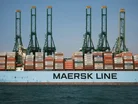
With CSRD now in effect, sustainability reporting has become a fair bit more complicated.
A.P. Moller - Maersk stands out in its latest CSRD-aligned Integrated Annual Report for 2024, which illustrates significant strides towards its goal of achieving net zero by the year 2040.
Lene Bjørn Serpa, Director, Head of Corporate Sustainability & ESG at Maersk, explains: “Now that the first company reports are coming out, I am sure we will start to see studies that can provide a more solid and comprehensive assessment of the value of the disclosures from the perspective of the users of the reports, and thereby point to relevant opportunities to simplify the standards.”
Expanding horizons in logistics
Maersk, recognised globally as a pivotal force in integrated logistics, actively works to streamline and enhance the supply chain connections worldwide.
The company has taken on commitments to achieving net zero emissions by 2040 throughout its entire operational spectrum, integrating new technologies, adopting novel vessel designs and making pivotal shifts towards utilising green energy solutions.
The logistics giant reported an impressive operational footprint in 2024, employing more than 100,000 individuals across close to 130 countries, managing nearly nine million square miles of warehouse space over 500 sites and operating more than 700 container vessels.
Maersk manages 53 terminals in 28 countries and is involved in three new port projects, all pivotal in streamlining global supply chains.

Advancements in sustainable shipping
The year 2024 has been pivotal for Maersk, particularly in the area of ESG commitments.
The company welcomed seven dual-fuel methanol vessels and introduced the Maersk Halifax, the world’s first retrofitted dual-fuel methanol vessel, significantly advancing its fleet's sustainable capabilities.
It will also be launching more than 50 dual-fuel methanol vessels, slated to enter service between 2026 and 2030, further modernising its fleet.
Maersk secured a crucial long-term offtake agreement for biomethanol fuel expected to commence in 2026, covering more than 50% of its dual-fuel methanol fleet demands by 2027.
However, challenges persist. Despite this improvement, the company’s absolute greenhouse gas emissions increased in 2024, which, Maersk says, was mainly driven by conflict in the Red Sea that forced vessels to re-route, with knock-on capacity shortages and port congestions requiring faster sailings.
Adapting to climate change
The impact of climate change on logistics networks is becoming increasingly apparent, as highlighted in Maersk’s report.
With adverse weather events expected to become more frequent, logistics companies are doubling down on their efforts to recalibrate operations and bolster their infrastructure to withstand these environmental challenges.

In 2024 alone, Maersk noted 219 extreme weather events that created not only significant personal loss but also severe disruptions to regional logistics frameworks, particularly highlighting the hurricane season in the US and catastrophic floods in Spain.
Such events necessitate enhanced infrastructural resilience and sustainability, pushing logistics providers to adapt rapidly to maintain efficiency and reliability in their operations.
Maersk’s report says: “Volatility became a defining feature this year and is here to stay, further amplifying the complexities of supply chain management. Disruptions are the new normal, with fluctuating trade routes, sudden shifts in demand and environmental concerns shaping the global trade landscape.”
Explore the latest edition of Supply Chain Digital and be part of the conversation at our global conference series, Procurement & Supply Chain LIVE.
Discover all our upcoming events and secure your tickets today.
Supply Chain Digital is a BizClik brand.