IMO Reforms: Strengthening Global Maritime Safety Standards
The International Maritime Organization (IMO) has introduced a series of amendments to its key treaties in order to make improvements to sector operations.
Through these updates, there will be increased efficiency across maritime trade, with improvements to incident reporting, safety standards and worker training.
The amendments came into force from January 1st 2026, raising the bar for maritime trade standards.

Raising the safety standards
Maritime trade is a major sector for the global distribution of goods, but because it takes place across the waters, it becomes harder – though no less important – to ensure each seafarer is following regulations in order to keep themselves, their teammates and the goods they are transporting safe. It was soon recognised that the best way of improving safety at sea was through developing international regulations.
In 1958, the International Maritime Organisation (IMO) was founded as a means of maintaining safety across the seas. Now, it is updating some of its regulations in order to increase the standards and make improvements across the sector.
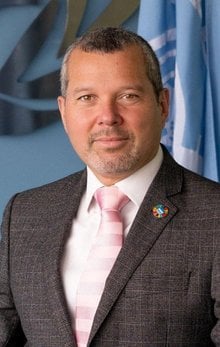
IMO Secretary-General, Arsenio Dominguez, laid out some priorities for 2026, stating: “As we start 2026, I would like to focus on something simple: getting things done.
"At IMO, this is the year of implementation; moving from plans to concrete actions and measurable progress, reflected in our world maritime theme: 'From Policy to Practice – Powering Maritime Excellence'.
“Seafarers. Nearly two million work at sea. Recognising that training needs to keep up with the new realities of the industry, we will start a major update of the STCW Convention – including emerging technologies, new fuels and changing requirements."
As a result, a series of changes have been added to key treaties aimed at encouraging safety, efficiency and wellbeing of global seafarers.
New education courses
Improved training and certification
Changes to the International Convention on Standards of Training, Certification and Watchkeeping for Fishing Vessel Personnel, 1995 (STCW-F Convention) and the recently established Code on Standards of Training, Certification and Watchkeeping for Fishing Vessel Personnel (STCW-F Code) are coming into effect.
These changes will make it easier to respond to new requirements of the fishing industry, through more cohesive qualification standards. Moreover, it will offer guidance to those involved in the training, education, certification and assessment of fishing vessel personnel.
Preventing workplace harassment
IMO has made changes to the Seafarers' Training, Certification and Watchkeeping Code (STCW Code) in order to prevent violence and harassment, or better respond to these issues. This includes sexual harassment, bullying and sexual assault.
They have new mandatory minimum requirements for basic training for seafarers, with increased knowledge of violence and harassment, including information on how to prevent it and respond to incidents.
Risk and reporting
Mandatory reporting of lost containers
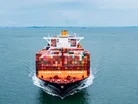
Containers lost overboard can be increasingly costly, as well as hazardous to navigation, safety and marine life. Each year, thousands of containers fall into the ocean, resulting in a chronic pollution issue. In November 2025, a vessel transporting bananas lost several containers, leading to an increase of boxes and packaging washing up on UK shores.
Refrigerated containers contain coolants and insulation materials which cab release toxic substances, polluting the oceans with more than just visible waste. As a result, amendments to the MARPOL and SOLAS Conventions on mandatory reporting have come into place. Now, the master of every ship which loses part of its shipment must communicate this incident to surrounding ships in the area, the nearest coastal State and to the flag State which will report the incident to IMO. The amendments also specify exactly which information needs to be reported, increasing transparency and accountability.
All supply chain, sustainability, Scope 3 and net zero leaders should attend:
- Procurement and Supply Chain LIVE: The Net Zero Summit - QEII Centre, London, March 4-5
- Procurement and Supply Chain LIVE: The US Summit - Navy Pier, Chicago, April 21-22
Co-located with Sustainability LIVE, these events brings together CSCOs, CSOs and senior decision-makers at a moment when sustainability, supply chains and commercial performance are increasingly interconnected.
Tickets can be booked online today for The Net Zero Summit and The US Summit. Group discounts available.
Safety implementation
An improved SOLAS regulation covers the construction, operation, testing, maintenance and more of onboard lifting appliances and anchor handling winches. This ensures these appliances are meeting regulatory checks and are not putting seafarers at risk.
Further amendments explore the safety of ships which are using oil fuel, requiring that these ships will carry a declaration which is signed and certified by the fuel supplier's representative, stating that it conforms to regulation.
Increasing improvements
Further amendments have been to the key treaties, prioritising worker safety and the smooth-running of sea operations. Through these changes, workers can be assured that the vessels they are operating on meet high standards, with their own training to ensure they are following updated protocol at all times.
Through this, the IMO is protecting these workers, preventing risks from breaking out and ensuring the sector limits its impact on ocean biodiversity. Due to increased reporting standards and increased quality standards of ship components, the maritime sector will see an increase of worker standards, with greater efficiency through its improved thoroughness.
Company portals
Executives
Arsenio Dominguez
Secretary General