
What Does the Long Beach Container Incident Mean for Trade?
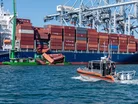
On September 9th, an estimated 75 shipping containers fell from the cargo vessel Mississippi at the Port of Long Beach.
With many containers damaged and Pier G terminal having to shut temporarily, the impact on trade cannot be understated.
The unaffected containers were secured by the 14th September, but many containers are yet to be recovered.

The Port of Long Beach
The Port of Long Beach is the premier pathway for trans-Pacific trade, handling trade valued at US$300bn annually.
The port supports 2.7 million jobs across the US, including more than 1.14 million in California - more than 543,000 in Los Angeles and Orange counties alone.
It serves 175 shipping lines and has connections to 217 seaports around the world, welcoming some of the world's largest vessels.
Approximately 40% of all the shipping containers in the US pass through the Port of Long Beach or the Port of Los Angeles, so any closures could have dramatic impacts on trade efficiency.
The port hosts six handle containers and 22 cargo terminals, including its International Transportation Service, Pier G which is where the incident took place.
The vessel, the Mississippi, was carrying 2,412 containers, with goods ranging from local news reports to shoes and electronics.
It was reported by the Port of Long Beach that approximately 75 containers had fallen off the vessel. Since this time, more than 30 have been recovered.
Disruption to work
With the scale of the disruption, the pier had to temporarily close, halting work on surrounding ships.
"Although this incident was at one berth at the Port, we will continue to act with caution as we recover containers and restore full operations at the Pier G terminal as quickly and safely as possible,” said Port of Long Beach CEO Mario Cordero in a statement on the 10th.
In a statement, the Port of Long Beach also wrote: "Dockworkers are unloading containers from a separate ship that was berthed at Pier G before the incident and truck drivers are moving containers to and from the terminal. No other terminals or port operations have been affected.
"The Coast Guard continues to maintain a 500-yard safety zone on the water surrounding the Mississippi. Nonresponding personnel are asked to remain clear of the affected area until further notice."
Since this statement, the port has gone back to regular work, though the exclusion zone is still in place.
As a result, resources are still being put into guiding ships around the cargo spill and in recovering the other containers.
Sonar surveys, which use acoustic pulses to locate items, are being used to locate the remaining submerged containers, which is also being used to ensure navigation of ship traffic.
In August, the Port of Long Beach saw its second-busiest August on record. Dockworkers and terminal operators processed 901,846 twenty-foot equivalent units.
Import numbers were at 440,318 TEUs and exports were at 95,960 TEUs.
With the pause on smooth workflow and no indicator as to when the area will be cleared, the incident may have a bigger impact on processing than thought.
Some of the merchandise has been affected as a result of the damaged containers, meaning affected trade and wasted products. The merchandise was headed to stores around the US, including giant names like Costco and Walmart, as well as small businesses.
As some of the containers have still not been recovered, the amount of merchandise which will have to be written off cannot be comprehended yet, but stock levels are sure to be limited after this incident.
This incident has disrupted several supply chains:
- The Mississippi has still not been unloaded so cargo is currently sat on the ship, meaning stores around the US are not receiving products
- Resources are being put into the clear up
- Damaged and affected merchandise will not be able to be sold, resulting in large sums of money lost out on
Wider impact
Some of the containers had fallen on the Stax 2, an anti-pollution vessel attached to the Mississippi which captures emissions.
The tank contained approximately 2,000 gallons of renewable diesel.
Since the subsequent leak, there has been no further signs of pollution, but teams are still remaining vigilant.
Only one injury has been reported - a worker aboard the barge sprained their ankle - but this could have had a major impact on the workers, particularly those on the emissions barge when the containers fell.
The cause of the incident is still unknown, but the US Coast Guard and the National Transportation Safety Board are leading an investigation to determine why this incident occurred.
The full impact on trade is not yet known, but this incident could result in a change in how goods are secured and processed on future cargo ships.