Hormuz Closure Demands Supply Chain Operational Overhaul
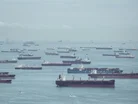
Supply chains have faced significant exposure to volatility in recent years, with the latest crisis centring on the Strait of Hormuz. As a critical artery for global trade, the closure has placed immense strain on organisations worldwide, forcing supply chain teams to rapidly adapt their operational frameworks.
In order to mitigate long-lasting impacts from the turbulence, organisations need to act with clear strategy, according to McKinsey & Company.
The Strait of Hormuz, located between Iran, the United Arab Emirates (UAE) and Oman, serves as a vital global shipping route, connecting the Gulf to the Gulf of Oman.

The cost of instability
During usual trade operations, approximately 20% of the world's oil and liquefied natural gas passes through the Strait – in 2025, this represented approximately 20 million barrels of oil per day. Usual trade throughout the strait represents US$1.3tn every year, or US$3.5bn daily.
Recent volatility, however, has rendered the Strait an unsafe route to travel through, meaning that ships have been left stagnant or been rerouted on longer, more costly journeys. As a result, trade has been significantly disrupted and prices – particularly of oil – have risen around the world.
The disruption, according to a report by McKinsey & Company, "is a system-level event, not a commodity fluctuation." The impact of the closure has been felt around the world, from vulnerabilities in Thailand requiring a work from home order to reduce oil consumption, to increasing oil prices in the US.
Since volatility began in late February 2026, shipping flows have fallen approximately 94%. In early April 2026, prices demonstrate a significant rise:
- freight costs up 130%;
- natural gas cost is up 57%;
- diesel and jet fuel have risen 110%;
- fertiliser costs have increased by 30%.
Amid this uncertainty, supply chain operations are having to adapt quickly, working to develop more resilient distribution networks and alternative routing strategies in order to avoid intense disruptions.
Though cost management remains important, organisations are also now having to ensure the sustained stability of their logistics operations amid turbulence.
"When a chokepoint breaks, procurement becomes mission critical," says Mauro Erriquez, Senior Partner at McKinsey & Company.
"The disruption in the Strait of Hormuz is constraining a major artery of global trade—impacting energy, chemicals, agriculture and manufacturing all at once.
"This is not a typical disruption. It's a cascading, system-wide event. The old playbook—reacting to price changes—is no longer enough."
Cascading operational impacts
This major global event has directly resulted in price spikes, supply disruptions and logistics concerns. These, however, lead to further issues such as restricted supply across petrochemicals, fertilisers and metals, as well as global changes such as inflation, demand destruction and new policy implementation.
Throughout all of this, the global logistics system faces increasing constraint, with more than 10% of global container fleet being impacted by this disruption. Logistics companies are facing higher costs for transportation or longer journey times, meaning that trade does not run as smoothly as it once did.
The financial pressure is increasing as a result, with higher inventory buffers, port delays and surcharges, as well as rising logistics and insurance costs. Multi-industry shocks are likely to occur, as surging prices across fertiliser and diesel take place, alongside the increasing cost of energy.
The delays and cost increases on metals is having its impact on the manufacturing industry. Moreover, supplier instability is increasing around the world, putting supply chains at risk of fragmentation, higher costs and ongoing delays.
"For procurement leaders, the implications go far beyond cost inflation," says Marc Sommerer, Partner at McKinsey & Company.
"This is about resilience, visibility and speed of decision-making across entire value chains."
Sustainability, procurement and supply chain leaders won’t want to miss Procurement & Supply Chain LIVE, taking place at Navy Pier, Chicago, on April 21–22.
Co-located with Sustainability LIVE: The US Summit, the event unites senior decision-makers at a time when supply chains, sustainability and business performance are more interdependent than ever.
Secure your place now for The US Summit – group booking discounts available.
Strategic response frameworks
The challenges arising are being tackled by organisations around the world, with supply chain operations taking a central role in mitigating risk. According to McKinsey & Company, there are five key action points for organisations in order to reduce the stress on their operations:
- Ensure a nerve centre - organisations can track materials, suppliers and logistics risks using real time tracking in order to make faster and more informed decisions;
- Build an end-to-end exposure view - organisations should ensure the integration of inventory levels, supplier dependence and logistics exposure in order to clearly define availability risk, demand sensitivity and risks of price increases;
- Explore supplier negotiations - demonstrate value chain transparency and real-time data to explore where price increases are justified;
- Manage cost, continuity and cash simultaneously - through demonstrable supply and alternatives, organisations can manage inflation by using indexation and levers;
- Prepare for volatility - by preparing for a worst-case scenario, organisations can develop risk mitigation strategies and resilience.
Through utilising demand signals such as order volatility and substitution effects, operations teams can gain true insights into their supply chain vulnerabilities.
Through rapid renegotiation, investments in relationships and demand-destruction scenarios, operations teams can better adjust contracts and make stronger decisions.

Building resilient logistics networks
Supply chain operations need to embrace complexity and change strategies thoroughly in order to navigate disruptions on this scale. Organisations need to balance procurement, finance, pricing and operations in order to develop coordinated decisions.
McKinsey & Company says in the report, "Geopolitical shifts mean that the aspects of global trade that once made the system strong and resilient, now represent weakness and risk.
"Businesses need multitier visibility systems through which they can track input costs across value chains. Both scenario modelling and digital twins, for example, enable integrated, data-driven decision-making and investing in them is long overdue for many organisations."
By ensuring transparency and flexibility, supply chain operations will be able to successfully deal with the impact of this closure, helping their organisations remain resilient and successful even amid uncertainty.
Company portals

Executives

Marc Sommerer
Partner
Mauro Erriquez
Senior Partner and Global Leader of Product Development and Procurement Practice