Why Maersk Bet on Rail to Ease Panama Canal Cargo Strain
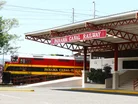
APM Terminals, part of Danish shipping group A.P. Moller - Maersk, has completed the acquisition of the Panama Canal Railway Company (PCRC).
The railway, which spans 76km across the Isthmus of Panama, provides a direct land route between the ports of Colón on the Atlantic and Balboa on the Pacific.
The deal hands Maersk control over a key stretch of infrastructure that doubles as an alternative to the Panama Canal—an increasingly valuable route as geopolitical uncertainty puts pressure on canal operations.

No financial details have been disclosed, but the acquisition marks a strategic play in securing a reliable interocean transport corridor.
Originally constructed in the mid-19th century and revived at the turn of the 21st, the Panama Canal Railway today serves as a critical piece in the logistics chain.
Its capacity to carry containers by rail when canal traffic is disrupted allows it to act as a pressure release for the congested and climate-sensitive waterway.
Strengthening intermodal freight connections
The Panama Canal Railway plays a central role in intermodal container movement, the process of moving containers between ships, rail and trucks without unpacking, allowing streamlined cargo handling.
For Maersk, the move enhances its service offering to global customers needing cargo moved efficiently between oceans.
“The Panama Canal Railway Company represents an attractive infrastructure investment in the region aligned to our core services of intermodal container movement,” says Keith Svendsen, CEO of APM Terminals.
“The company is highly regarded for its operational excellence and will provide a significant opportunity for us to offer a broader range of services to the global shipping customers we serve."
Owned until now by Canadian Pacific Kansas City (CPKC) and Mi-Jack Products through the Lanco Group, PCRC has seen renewed relevance in the logistics market.
As uncertainty Panama Canal traffic, cargo shippers increasingly look to rail for consistent and timely delivery.
The railway can currently handle around 500,000 container moves per year. There are plans to increase this to two million twenty-foot equivalent units (TEUs) annually by adding around 250,000 container moves each year.
Running parallel to the canal itself, the railway can accommodate up to 10 trains in each direction daily, with infrastructure in place to increase this to 32. Trains make the crossing in either direction between intermodal terminals in Colón and Balboa, allowing shipping operators to bypass canal delays entirely.
Navigating geopolitics
It also comes as Panama grows in strategic importance. The United States is aiming to reinforce its influence in the region, particularly in response to rising investment from China. By securing this acquisition, Maersk strengthens its regional presence while aligning with US interests in infrastructure stability.
US President Donald Trump has emphasised his desire to "take back" the Panama canal several times since his inauguration. His remarks highlight concerns over Chinese firms such as CK Hutchison operating key ports at both ends of the canal - which may be viewed as a strategic threat.
The ports in question, Balboa and Cristobal, raise questions about the neutrality of canal operations, especially if geopolitical tensions escalate.
At the same time, natural pressures like drought - exacerbated by global instability such as the Red Sea conflict - have already undermined the canal’s reliability. The railway helps ease that pressure, moving freight containers that would otherwise need to pass through the canal.
Keith Creel, President and CEO of CPKC, confirms: “We are pleased to have completed this transaction with APM Terminals, a part of A.P. Moller - Maersk, a key strategic partner of CPKC’s and major customer of the Panama Canal Railway Company.”
“The sale of this non-core asset creates value for our shareholders and reflects our commitment to optimise our assets as we focus on growing our core North American rail business through our unrivalled three-nation network connecting Canada, the United States and Mexico.”
A rail route with history
First opened in 1855, the Panama Canal Railway was constructed decades before the Panama Canal itself and was once the only reliable route across Central America.
Built by the United States, it became an essential route for passengers and freight during the 19th-century gold rush. Its legacy as an interoceanic corridor continues today, with double-stack railcars and two-way track systems allowing it to handle a substantial share of global cargo.
Each train can carry a mix of 20ft and 40ft containers using specialised railcars that allow for container stacking. The system is designed to manage bulk container transport, with each set of railcars capable of carrying around 75 containers. This makes it well-suited to meet increasing demands as supply chains stretch to cope with volatile global conditions.
By bringing PCRC into its portfolio, Maersk is ensuring critical flexibility in its operations. With both canal and railway options, the company can better navigate disruptions, environmental or political, while offering its customers consistent and dependable delivery routes.
Explore the latest edition of Supply Chain Digital Magazine and be part of the conversation at our global conference series, Procurement & Supply Chain LIVE.
Discover all our upcoming events and secure your tickets today.
Supply Chain Digital is a BizClik brand.