Maersk Maps Out Spring Market as US/China Tariffs Take Shape
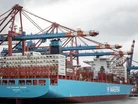
Maersk has opened its Spring 2025 Global Market Update by zeroing in on the US, where the latest data paints a mixed economic picture.
While some fundamentals remain steady, the backdrop is one of global unpredictability. Tensions continue as Maersk’s analysis points to potential shifts that businesses should monitor carefully.
Despite the stock market slump following so-called Liberation Day, the US economy is still on course to grow in 2025, but the Federal Reserve has revised its gross domestic product (GDP) forecast from 2.1% down to 1.7%. Interest rates remain unchanged for a second meeting, with officials opting for what they call a "wait-and-see" stance.

Data from The Conference Board indicates a four-month decline in American consumer confidence leading into March 2025. While opinions on the job market have improved slightly, many US consumers are now more downbeat about business conditions and future employment.
Despite this, trade data from Maersk shows stable demand, with deliveries and shipment volumes still robust. Maersk sees continued US growth through 2025, although any pullback in consumer activity could ripple through global supply chains.
“In the midst of all the commotion, we are focusing on the key indicators like shifting demand patterns and customer behaviour,” comments Karsten Kildahl, Chief Commercial Officer at Maersk.
Trade policy in the US also remains unpredictable. Tariffs are a live issue, with businesses making adjustments by increasing imports or securing more storage.
February data from the Logistics Managers’ Index points to an increase in inventory levels across the US. Maersk advises customers to keep track of changes and consider securing alternative warehousing options within its North America network.
Businesses are preparing for anything
Zooming out to the global picture, Maersk notes that 2025 started on a strong footing.
The tail end of 2024 saw an uptick in global GDP, largely thanks to China’s export-led performance. But wider uncertainty has set in once again, especially as trade tensions heat up between several global players.
Against this shifting background, Maersk urges supply chain managers to prepare for both rapid growth and softer demand.
If demand expands quickly, businesses may want to bulk up inventories in strategic locations. But if weak consumer confidence hits spending, maintaining high inventory becomes harder. Instead, the focus may need to switch to tighter forecasting and optimised inventory management.
Understanding changing patterns in customer demand is key to allocating resources. In uncertain environments, this helps businesses prioritise the most resilient or promising markets.
“We see our integrated approach as part of the solution in an increasingly complex world,” adds Karsten.

China continues to power exports
China met its 2024 target of 5% GDP growth, supported heavily by strong export volumes.
Maersk’s strategic intelligence suggests China’s share of global container exports grew from 32% in 2019 to around 36% by 2024. These figures reflect continued strength in manufacturing and competitive pricing.
This increase in Chinese exports has shown up clearly in Europe-bound shipments, which rose 12% year-on-year in the final quarter of 2024.
However, Chinese policymakers are aiming for more than external demand. At the 2025 National People’s Congress, the government set out plans to stimulate domestic consumption and reduce dependency on exports.
By focusing on internal demand, China hopes to reinforce local brands and maintain stable output, which in turn could help to steady global supply chains.
Europe watches Germany for signs of recovery
Meanwhile, in Europe, growth has been more muted. Expectations of a bounce back in 2025 haven’t quite materialised.
The Organisation for Economic Co-operation and Development (OECD) projects Euro area GDP to grow just 1.0% this year.
Major economies like Germany, France and Italy have been slow to rebound, while countries including Poland, Romania and Spain have done more of the heavy lifting. Manufacturing across the Euro area shrank by 1.5% year-on-year in December 2024, according to Eurostat.
There are signs of improvement though. German business sentiment, as tracked by the Ifo Institute, rose in March to its highest level in seven months. This comes as Berlin launches a major fiscal expansion programme, with infrastructure and defence investment tipped to stimulate wider growth.
“It's essential to remain aware of the ongoing challenges that Europe is facing, including trade policy uncertainty, high energy prices and competitive pressures," Karsten continues.
"However, the region has very quickly made a paradigm shift, with Germany's substantial investment plan in infrastructure and defence capabilities."
This, he adds, could unlock opportunities across supply chains and prompt businesses to rethink where they position inventory.
The Supply Chain Digital team will continue to bring you updates about the evolving picture, but for now the message seems to be prepare for a period of global vulnerability.
Explore the latest edition of Supply Chain Digital Magazine and be part of the conversation at our global conference series, Procurement & Supply Chain LIVE.
Discover all our upcoming events and secure your tickets today.
Supply Chain Digital is a BizClik brand.