
Is Crisis-Hit Rail Operator Deutsche Bahn Turning a Corner?
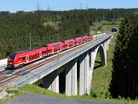
A combination of economic and operational challenges meant the national railway company, Deutsche Bahn, experienced a difficult 2023.
Weakened demand for rail freight as a result of wider economic slowdown halted progress, while high repair and maintenance costs for ageing rail assets put greater pressure on profitability.
As the network struggled to cope with increasing capacity needs due to previous underinvestment, Deutsche Bahn became burdened by damaged customer confidence and revenues.
However, bidding to turn its fortunes around, the organisation concluded the 2024 financial year with an operating loss (adjusted EBIT) of US$360m and net loss of US$1.9bn. It may not sound like cause for optimism, but this compares to a net loss of US$2.9bn in 2023.
Revenue stood at US$28.3bn, up 0.4% on the previous year.
The hope is that this slightly-improved performance will have a direct impact on supply chain reliability, especially in industries that rely on intermodal transport and rail freight.
“Deutsche Bahn is facing its most serious crisis since the German Rail Reform," admits Dr Richard Lutz, CEO and Chairman of the Management Board at Deutsche Bahn. "We are far from achieving our goals and far from meeting our customers' expectations in key areas.”
Infrastructure challenges and freight implications
DB Group contends that its economic development in 2024 was impacted significantly by the "poor condition" of infrastructure.
Additional pressure was put on the bottom line by quality of operations, with DB reporting a punctuality of 62.5% in long-distance service (versus 64.0% in 2023). Despite a year-on-year increase of 1.6% in the number of passengers on DB trains, strikes by the German Train Drivers’ Union (GDL) in the first quarter of 2024 harmed performance.
However, DB Group’s infrastructure unit, DB InfraGO, saw success through the modernisation of the Riedbahn corridor between Frankfurt and Mannheim, completed in December. It represented a major step in stabilising operations and was DB’s first general upgrade of a highly-utilised corridor.
As well as highlighting the potential for large-scale, targeted upgrades to improve service quality, the project prevented further degradation of infrastructure on the Frankfurt-Mannheim line, enhancing reliability.
- Renewable energy in traction current mix rose from 68% to 69.8%
- Reduced absolute greenhouse gas emissions by 17.9%
- Carried 9% less freight in 2024
- Volume sold fell 7.9%
- Revenues were down 3.2% year-on-year in 2024
DB InfraGo saw revenues increase slightly year-on-year by 4% to around US$8.8bn, despite train kilometres on track falling by 1.3% due to the vast levels of construction.
Elsewhere, DB Long-Distance experienced a decline in punctuality and efficiency because of strikes, incident-prone infrastructure and construction-related restrictions. Volume sold was down 3% year-on-year (at 44.1 billion passenger kilometres) and revenues declined by around US$54m compared to the previous year.
Customer satisfaction remained stable DB Group continued to modernise its long-distance fleet.
DB is also selling DB Schenker and DB Arriva to help minimise the number of subsidiaries by more than 60% compared with 2023. It will also help cut the financial debt of DB Group, which stood at US$35.3bn as of 31 December 2024.
"The sale of DB Schenker will reduce our indebtedness and interest burden," says Dr. Levin Holle, CFO at Deutsche Bahn. "This will allow us to concentrate better on our core business of rail operations.”
S3 changes and supply chain recovery
Aiming to enhance rail operations and infrastructure, while boosting profitability and improving customer experience, DB implemented its S3 restructuring programme in the second half of 2024.
When it comes to infrastructure, two corridors – between Emmerich and Oberhausen and Hamburg and Berlin – will be modernised this year in an attempt to reduce delays, improve reliability and increase capacity.
In terms of operations, a construction cycle is to be implemented. This will schedule maintenance work in designated time windows to enhance timetable stability and minimise unplanned disruptions.
DB can ensure routes remain operational during upgrades by effectively coordinating construction effectively.
Richard continues: “To overcome this crisis, we have launched S3, a comprehensive restructuring programme to improve DB's infrastructure, rail operations and profitability. We're already seeing first results. Our bold new approaches and discipline when it comes to implementation are paying off.
“The general modernisation of the Riedbahn (Frankfurt–Mannheim) was a success and, for the first time, we were able to prevent the infrastructure from deteriorating further. Thereby, we have initiated the turnaround.”
Deutsche Bahn’s progress and modernisation efforts are helping the rail organisation catalyse greater progress in 2025 and onwards.
While corridor upgrades like the Riedbahn are helping to minimise service disruptions, the S3 programme is helping to enhance rail performance, customer experience and profitability.
DB Group remains committed to winning back freight customers, restoring reliability and returning to profitability in the years to come through its focus on sustainability, modernisation and infrastructure investment.
Explore the latest edition of Supply Chain Digital Magazine and be part of the conversation at our global conference series, Procurement & Supply Chain LIVE.
Discover all our upcoming events and secure your tickets today.
Supply Chain Digital is a BizClik brand.