
Supply Chains Shift as Trump Hails Panama Canal Deal
A major shift in global trade is underway as a BlackRock-led consortium acquires a controlling stake in Panama Ports Company.
The US$22.8bn deal with Hong Kong conglomerate CK Hutchison hands the US-based group control over key terminals at the Panama Canal, one of the most important trade routes in the world.
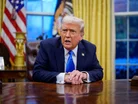
While CK Hutchison insists the sale is a purely commercial decision, US President Donald Trump has framed it as a geopolitical victory, declaring: “My administration will be reclaiming the Panama Canal and we've already started doing it.”

A strategic shift
The agreement grants the BlackRock consortium—alongside Terminal Investment and Global Infrastructure Partners—90% ownership of Panama Ports Company, which operates the Balboa and Cristobal terminals at either end of the canal.
These ports handle a significant volume of goods moving between the Atlantic and Pacific Oceans, making them critical to supply chains linking Asia, the Americas and Europe.
The US government has been pushing for reduced Chinese influence in Panama’s trade infrastructure, with officials citing security concerns over CK Hutchison’s long-term control of the ports. While the Hong Kong-based firm is publicly listed and not directly controlled by Beijing, its presence in a vital US trade corridor has been a point of contention.
"We are glad to see US investors acquire a controlling stake in Panama Ports Company, which owns and operates the ports of Balboa and Cristobal at either end of the Panama Canal," a US State Department official said.
Panamanian President Jose Raul Mulino, however, rejected Trump’s characterisation of the deal, saying: “The Panama Canal is not in the process of being reclaimed...the Canal is Panamanian and will continue to be Panamanian!” he posted on X.
Despite this, Trump has doubled down on his claims, linking the acquisition to broader efforts to secure US trade interests.
Markets feel the impact
For CK Hutchison, the sale represents a significant financial manoeuvre. The firm is selling its 80% stake in Hutchison Ports, valuing the equity at US$14.21bn.
However, with the repayment of shareholder loans, the final proceeds will exceed US$19bn. This figure is well above the US$13bn valuation analysts had previously estimated for the assets.
The announcement sent CK Hutchison’s stock soaring over 20% in Hong Kong trading, far outpacing the broader Hang Seng Index’s 2.8% rise.
Analysts at Citigroup noted that the “disposal would be significantly value enhancing,” while UBS pointed out that the proceeds could reduce CK Hutchison’s net debt of HK$138bn (US$17.76bn), potentially putting the company into a net cash position.
Goldman Sachs advised CK Hutchison on the sale, with sources stating that its president, John Waldron, was directly involved due to the transaction’s high profile.
The company’s decision to exit the Panama business follows a trend of diversifying away from China, a strategy its billionaire owner, Li Ka-shing, has pursued since the 1980s.
Currently, only 12% of CK Hutchison’s revenue comes from Hong Kong and China, with the bulk now generated in Europe, the Asia-Pacific region and Canada.
"I would like to stress that the transaction is purely commercial in nature and wholly unrelated to recent political news reports concerning the Panama Ports," added Frank Sixt, CK Hutchison's Co-Managing Director.
What does this mean for global trade?
The Panama Canal remains a vital link in global supply chains, with around 12,000 vessels passing through each year, connecting 1,920 ports across 170 countries.
More than 75% of the ships using the canal are either heading to or coming from the United States. This strategic importance is one reason why control over its ports has been such a politically sensitive issue.
The US previously controlled the canal and the surrounding zone until the 1977 Torrijos-Carter Treaties transferred sovereignty to Panama, a process completed in 1999.
The canal’s history remains a contentious topic for many Panamanians, especially given the violent protests in 1964 when demonstrators clashed with US forces, resulting in dozens of deaths.
Meanwhile, JPMorgan described the sale as a “surprise” and potentially “opportunistic,” suggesting that CK Hutchison’s willingness to sell reflects a philosophy of acting whenever “the price is right.”
The firm’s infrastructure segment, which currently contributes 28% of earnings before interest, tax, depreciation and amortisation (EBITDA), will rise to 33% following the deal, while port operations will drop from 15% to just 1%.
As US investors take control of key Panama Canal trade hubs, the impact on supply chains will be closely watched.
Whether this move strengthens US strategic positioning or stirs further geopolitical tensions, the real test will come as global trade patterns adjust to the shift.
Explore the latest edition of Supply Chain Digital Magazine and be part of the conversation at our global conference series, Procurement & Supply Chain LIVE.
Discover all our upcoming events and secure your tickets today.
Supply Chain Digital is a BizClik brand.