How ESG Reporting is Reshaping Global Supply Chains
ESG reporting is now a key requirement for businesses worldwide. Companies face mounting regulatory pressures and growing demands from stakeholders to be more transparent about their impact on the planet and society.
One of the most significant frameworks driving this shift is the EU’s Corporate Sustainability Reporting Directive (CSRD). This directive mandates that organisations report on their environmental and social impact alongside traditional financial data.
It is widely seen as the gold standard for corporate ESG reporting. By 2025, more than 10,000 companies and institutions will have either set science-based decarbonisation targets or committed to doing so.
Despite political uncertainty, the momentum for sustainability remains strong. Twenty-four US states and more than 190 countries continue to align with the Paris Climate Agreement, reinforcing the global commitment to corporate responsibility.
However, meeting these standards isn’t easy—particularly for businesses managing complex supply chains.

Supply chains face an uphill battle
While large corporations have the resources to navigate ESG regulations, many smaller businesses within supply chains struggle to keep up. Suppliers often lack the dedicated sustainability teams or expertise required to measure and report emissions accurately.
"Generally, SMBs won't have a dedicated sustainability person," says Yogesh Chauhan, Senior Director of Sustainability at HubSpot.
"So how do they navigate around Scope 1, Scope 2 and Scope 3 emissions? How do they calculate it? How do they develop their GHG inventory? How do they set science-based targets?"
Scope 1, 2 and 3 emissions refer to different sources of greenhouse gases within a business’s operations and supply chain.
Scope 1 covers direct emissions from company-owned sources, Scope 2 includes indirect emissions from purchased electricity and Scope 3 accounts for all other emissions linked to the company’s value chain, including suppliers and customers.
"It's daunting; all of these things are. If you're a small business that employs 10 people, that's going to be really hard work," Yogesh adds.
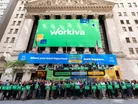
Despite these challenges, technology is making ESG reporting more manageable. Platforms like Workiva provide businesses with tools to simplify financial and sustainability disclosures.
Workiva’s platform is used by more than 6,000 companies worldwide, including 80% of Fortune’s top 1000 firms such as JPMorgan Chase, Iberdrola and AWS. Collectively, Workiva’s clients represent around US$55tn in global market capitalisation.
“The market has spoken and forward-thinking companies aren't waiting – they're taking action and committing to science-based targets and stronger disclosures,” says Tensie Whelan, Distinguished Professor at NYU Stern Center for Sustainable Business.
“They understand that sustainability and integrated reporting isn't just about risk management, it's a competitive advantage that attracts capital and drives long-term success.”
How technology is shaping sustainability reporting
One company that has embraced Workiva’s ESG reporting capabilities is Tietoevry, a Finland-based technology firm that has been publishing sustainability reports since 2009. From the outset, the company recognised the scale of the task ahead.
“We realised early on that this is going to be challenging,” says Ida Bohman Steenberg, Tietoevry’s Chief Sustainability Officer.
“We decided we need a clear vision, enough competent staff and the relevant tools."
Tietoevry initially used Workiva’s platform for financial reporting but soon expanded its use to ESG disclosures as well. With more than 1,500 data points to track—including climate change, circularity, human rights, labour rights and responsible AI—Workiva’s services became essential.
“When we saw how much more data and how much more difficult reporting was going to be, we expanded our agreement with Workiva and brought along the sustainability aspect as well,” Ida says.
Tietoevry’s partnership with Workiva has evolved beyond a standard vendor-client relationship. The company provides ongoing feedback, helping shape the platform’s features.
“We are more than just regular customers,” Ida explains. "We've been super involved in providing feedback to Workiva. We've been early users, early adopters of many things."
The future of supply chain sustainability
With global supply chains facing increasing scrutiny, companies must ensure their suppliers also meet sustainability standards.
Workiva’s CEO, Julie Iskow, believes this shift is not just about compliance but about long-term business strategy.
“CEOs are making choices today that will shape their business for years to come,” she says.
“Assured financial and sustainability reporting is not simply a compliance play, it's a strategic approach to mitigate risk, fuel performance and strengthen investor confidence.”
Mandi McReynolds, Workiva’s Chief Sustainability Officer, highlights how reporting expectations are evolving beyond just data collection.
"What I think is an interesting twist is the rise of qualitative reporting," adds Mandi. "How are you managing to do this? What is your organisation doing in transition planning? What about the accountability of your organisation?"
“That is becoming far more important than the number of data points.”
Technology is also making reporting more efficient. AI-powered tools are enabling companies to create sustainability policies and reports much faster.
“We're seeing customers write 10 policies in one day in alignment with the CSRD using AI,” Mandi continues. “An AI assistant looking at a prompt library can help get companies going in a much faster way.”
ESG reporting here to stay
The business case for integrated ESG reporting is stronger than ever.
In Workiva’s recent Executive Benchmark Survey, 97% of executives said combining financial and sustainability data helps identify performance gaps that drive financial growth. Additionally, 93% of institutional investors are more likely to invest in companies with integrated reporting.
For companies like Tietoevry, regulations like the CSRD are not just about compliance—they provide a valuable framework for responsible business practices.
“I am absolutely crazy about directives,” Ida concludes. “I think they're brilliant because they give us such a great support structure, a way of working. They give us a common language.”
Explore the latest edition of Supply Chain Digital Magazine and be part of the conversation at our global conference series, Procurement & Supply Chain LIVE.
Discover all our upcoming events and secure your tickets today.
Supply Chain Digital is a BizClik brand.