What does IKEA's Supply Chain Overhaul mean for Net Zero?
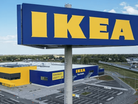
Ingka Group, the largest IKEA retailer, operates in 31 markets and accounts for 90% of IKEA’s global retail sales.
As a key strategic partner, it drives innovation while ensuring the business stays aligned with ambitious sustainability goals.
Now, with its Net Zero Transition Plan, the company is taking a deeper look at its supply chain to cut emissions and make a meaningful impact.

The plan targets a 50% absolute reduction in greenhouse gas (GHG) emissions across IKEA’s value chain by FY30, using FY16 as the baseline and ultimately achieving net zero by FY50.
This means tackling emissions from company-owned operations (Scope 1), indirect emissions from purchased electricity and heating (Scope 2) and, crucially, the broader supply chain—including sourcing, production, transport and customer use (Scope 3).
Karen Pflug, Chief Sustainability Officer at Ingka Group, underlines IKEA’s long-standing commitment to sustainability: “As part of the IKEA vision of creating a better everyday life for the many people, sustainability has been an important part of the business for many years, with the first IKEA environmental policy introduced in 1991.”
The company is already making progress, cutting its climate footprint by 30.1% since FY16 while growing its business by 23.7%. Much of this is down to a shift toward renewable electricity, efficiency improvements and adjustments in product sourcing and logistics.
Decarbonising the supply chain
To reach net zero, Ingka Group is focusing on its supply chain, recognising that Scope 3 emissions—those tied to suppliers, logistics and product use—are the biggest challenge.
Key actions include:
- Renewable energy sourcing – IKEA aims to use 100% renewable energy across its supply chain by 2030, pushing suppliers to transition away from fossil fuels
- Sustainable materials – Increased use of low-carbon and recycled materials in products and store refurbishments
- Green logistics – More than 90% of home deliveries will be zero-emission by 2028
- Circular economy initiatives – Developing services for repair, resale and recycling to extend product lifespans
- Efficient buildings – Retrofitting 150 units with renewable heating and cooling systems by 2030
- Sustainable food options – Expanding plant-based menu choices in IKEA restaurants to lower the environmental footprint of food production
By embedding sustainability into its core operations, IKEA is ensuring that every stage of the supply chain, from raw materials to customer deliveries, contributes to its climate targets.
Collaboration and policy
Ingka Group knows that transforming a supply chain this vast isn’t something it can do alone. Meaningful climate action requires collaboration between businesses, governments and consumers to drive systemic change.
The company is actively calling for stronger climate policies to speed up the transition to renewables and a circular economy.
Simon Henzell-Thomas, Climate & Nature Manager at Ingka Group, explains the company’s approach: “Climate change is highly complex and we don’t pretend to have all the answers, but as a multinational business we have a responsibility to be part of driving the transition to net zero in society.
“But we can’t do it alone. Climate change has no borders and together – across the public and private sector – we must collaborate across industries and with governments and customers to drive real change.
"2025 is a critical milestone for governments to deliver their own ambitious national climate plans ahead of COP30, so we invite policymakers, industry peers and customers to collaborate in accelerating the transition to a sustainable future.
“We can only get there by working together.”
Ingka Group’s policy recommendations include:
- Setting ambitious national climate targets aligned with the 1.5°C goal
- Phasing out fossil fuels while driving energy efficiency
- Creating regulatory frameworks to support renewable energy adoption and circularity
By tackling emissions at every level of the supply chain, Ingka Group is positioning IKEA as a leader in sustainable retail.
The company hopes its Net Zero Transition Plan will inspire others to take bold steps in rethinking procurement, logistics and product sourcing.
Explore the latest edition of Supply Chain Digital Magazine and be part of the conversation at our global conference series, Procurement & Supply Chain LIVE.
Discover all our upcoming events and secure your tickets today.
Supply Chain Digital is a BizClik brand.