
Trump Tariffs: What Businesses and Importers Need to Know
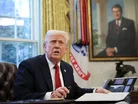
US President Donald Trump's sweeping tariffs are already reshaping global trade.
Last week, he imposed a 25% tax on foreign-made vehicles, including sedans, SUVs, crossovers, minivans and light trucks, alongside key auto parts like engines, transmissions, powertrain elements and electrical systems.
Now, President Trump has promised that reciprocal tariffs, to be announced this week on so-called 'Liberation Day', will affect all nations. The UK is among those scrambling to agree a last-minute trade deal with the US in a bid to avoid being hit by potentially-damaging new trade measures.
Here, Greg Husisian, Partner and Chair of the International Trade & National Security Practice at Foley & Lardner, outlines key takeaways on the most pressing tariff issues facing businesses and discusses how importers are restructuring supply chains amid shifting trade policies.
How high will tariffs go and which industries will be hit next?
Trump’s second term has already seen more tariff actions in two months than in his entire first term – and the administration is just getting started. We expect that upcoming “Fair and Reciprocal” tariffs could trigger the most aggressive trade restrictions yet, forcing businesses to brace for higher costs, supply chain reconfigurations and potential market retaliation.
The reason why the reciprocal tariffs are likely to be a driver of sharply higher tariffs are that:
- Some countries have much higher tariffs that the United States
- The reciprocal tariffs imposed will be calculated not only by looking at the level of tariffs, but also any items that potentially give an advantage to the producers in the foreign country (VAT refunds, export subsidies, low-cost electricity, etc.) but also items that discriminate against U.S. exports (non-tariff barriers, etc.); and
- The analysis will include allegations of currency manipulation, which would systematically hinder all US exports to the country. Putting this together, the net result is an expectation of sharply higher tariffs.
In addition, the Trump administration has indicated that it is still focusing on certain sectors for special tariffs. In addition to the already-implemented tariffs on steel and aluminium, additional sectors raised include pharmaceutical, automotive, semiconductors, copper and lumber.
Which industries face the biggest disruptions and how should they respond?
New and proposed 25% tariffs on automotives, semiconductors and pharmaceuticals would sharply increase costs for manufacturers and suppliers reliant on global production. In the short term, importers are looking to front-load critical inventory and to identify import-related risks (analysing import patterns, determining geographic vulnerabilities and so forth).
Companies also are reviewing all their buy- and sell-side contract to determine tariff vulnerabilities and what types of coping mechanisms are available to them – ability to pass on higher prices or tariff surcharges for sell-side contracts and ability to alter pricing or even manouvere out of contractual obligations on the buy-side.
In the mid-term, companies are looking to add tariff-related risk sharing provisions in new contracts and those up for renewal, including by looking at opportunities to potentially renegotiate contacts early, such as by creating commercial incentives to renegotiate supplier contracts (extending the time covered by the contract or adding new products in return for tariff-sharing obligations, etc.).
In the longer term, companies are looking to set up more flexible sourcing strategies, such as by qualifying additional and secondary suppliers.
Are businesses truly avoiding Chinese tariffs or just shifting the risk?
A new 20% tariff on Chinese imports is reinforcing the long-term shift away from China. Although this was an effective strategy with the Section 301 tariffs, it is not clear how effective this will be with the new tariffs.
The tariff proclamations have emphasised that Customs needs to be prioritising enforcement of the China tariffs, which means that companies that relocated to Vietnam, India or Mexico or other third countries may still be exposed if they continue using substantial amounts of Chinese-origin parts. If they can’t document how there is sufficient work to “substantially transform” the product into a new and different article of commerce, with a new name, character and use, then they could find that Customs disagrees that the import is a product has a third-country origin. This can lead to very high potential penalties.
Will tariffs on Canada and Mexico return and how will manufacturers adapt?
A 25% tariff on Canadian and Mexican imports was temporarily lifted, but non-USMCA-compliant goods remain at risk. Whether the proposed tariffs (which only are partially suspended, for USMCA-compliant goods) will be imposed or be fully imposed depends on the process of negotiations between the three governments, since the tariffs were mostly imposed/suspended based on concerns relating to unauthorised immigration and fentanyl trafficking.
Auto manufacturers and cross-border suppliers should be risk planning for the potential full return of these tariffs and should be taking all steps to document their compliance with whatever the current state of rules is, due to Customs heavily focusing on claims of originating status under the USMCA.

Which US industries could get caught in a global tariff war?
Any country at heightened risk of reciprocal tariffs are likely to get caught up in the trade wars, which means that U.S. industries that import from those countries will be caught as well. So will industries that are traditional targets for retaliation, which has a well-worn playbook due to how countries responded in the first Trump administration as well as various WTO disputes.
Regarding the former, importers are most at risk if they import from: 1) China; 2) the European Union; and 3) any country that has a large trade surplus with the US. Regarding exports to other countries, farm and agricultural products are the most likely target of retaliatory tariffs.
Can businesses fight new tariffs or will they be forced to absorb the costs?
Legal challenges are expected, but the international trade courts have historically deferred to executive power on trade policy. This includes challenges to the section 232 steel and aluminium tariffs and the section 301 tariffs against China, both imposed in the first Trump administration.
Meanwhile, Customs enforcement is ramping up, based on Customs having complete visibility into import patterns of the wide importing community because this information is all now filed electronically through the Customs Automated Commercial Environment (ACE) portal. The best tactic for business is to ensure that their current Customs compliance is in order, especially for tariff classifications, country-of-origin claims, full identification and payment of antidumping and countervailing duties, full inclusion of assists/production aids and all claims of USMCA preferential treatment.
All frequent importers should have post-entry checks in place, so as to identify and fix any errors within the 310-day post-summary corrections period. And any company that has not done an internal Customs audit in the last two years should strongly consider doing so, to evaluate the state of its ongoing Customs compliance. In a high-tariff, high-penalty world, getting import-related compliance right has never been more important.
Explore the latest edition of Supply Chain Digital Magazine and be part of the conversation at our global conference series, Procurement & Supply Chain LIVE.
Discover all our upcoming events and secure your tickets today.
Supply Chain Digital is a BizClik brand.