What Trump's Automotive Tariffs Mean for the Supply Chain
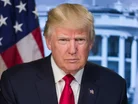
The president of the United States, Donald Trump, has declared the enforcement of a 25% tariff on imported automobiles, including sedans, SUVs, crossovers, minivans and light trucks, alongside key auto parts like engines, transmissions, powertrain elements and electrical systems.
The sweeping measure, due to come into force on 3 April, seeks to bolster domestic production and stave off perceived threats to national security.
Unpacking Trump's auto tariffs
President Trump’s decision leverages the Trade Expansion Act of 1962's Section 232, articulating that these tariffs are critical for the survival of the domestic automotive sector.

The administration highlights that, in 2024, nearly half of the vehicles purchased in the US were imports, with a scant 25% of these vehicles' components domestically produced.
This scenario, they argue, risks the US automotive industry's stability, especially in light of the kinds of supply chain disruptions seen during the COVID-19 crisis.
The tariffs are strategically placed to promote self-reliance and fortify the US’s automotive supply chains, which is deemed essential for national security purposes.
While these tariffs are expansive, there exists an exception for components aligning with the US-Mexico-Canada Agreement (USMCA). USMCA-compliant cars can be certified for their US-origin components, potentially exempting the value of non-US parts from the tariffs, at least initially until more defined regulations are framed.
Domestic gains and global pains
On the domestic front, the move aims to direct consumer preference towards home-grown vehicle production. Elevated costs of foreign cars and parts should, theoretically, make US-produced vehicles more appealing, potentially pumping up employment and private investment in the sector.
But, it’s not all smooth driving. Analysts caution that this might crank up vehicle prices for the American consumer, more so for those automakers whose production lines are intricately woven into the global supply fabric. Giants like General Motors and Ford, with substantial stakes in Mexico, may find themselves back at the drawing board, devising strategies to cushion against the economic shock.
Abroad, the EU, a major stakeholder affected by the tariffs, has expressed deep disappointment.
Ursula von der Leyen, President of the European Commission, said via LinkedIn: "I deeply regret the US decision to impose tariffs on EU automotive exports. Tariffs are taxes – bad for businesses, worse for consumers, in the US and the EU. The EU will continue to seek negotiated solutions, while safeguarding its economic interests.”
Back in North America, Canada is already going toe-to-toe with the US in a trade war. Prime Minister Mark Carney has already condemned the latest tariffs as a "direct attack" on Canadian autoworkers.
EV impact
The advent of electric vehicles (EVs) brings another layer of complexity. American EV innovators, although pioneering, rely heavily on foreign parts—especially batteries whose supply chain has its heart in China, the apex exporter of EV batteries.
With tariffs now encircling components essential for EVs like those in Ford's Mustang Mach-E or General Motors' various models, the US might just see a deceleration in its EV uptake due to escalated manufacturing costs driving prices north.
However, local giants like Tesla or newcomers like Hyundai, with notable US production footprints, might dodge the worst of these tariff storms. This divergence underscores a potential shift towards more in-house production but not without substantial investments and recalibrations in strategic operations.
In essence, Trump's tariffs are carving out a new contour in the global automotive landscape, charged with prospects and riddled with challenges.
Explore the latest edition of Supply Chain Digital Magazine and be part of the conversation at our global conference series, Procurement & Supply Chain LIVE.
Discover all our upcoming events and secure your tickets today.
Supply Chain Digital is a BizClik brand.