WHO: Global Partnerships are Required for Vaccine Supply
The global vaccine supply chain is a complex network, with production concentrated in a few firms.
A World Health Organization (WHO) report highlights that just 10 manufacturers produce 78% of all vaccine doses, highlighting the supply system's fragility, which was exposed during the COVID-19 pandemic.
The report concludes that complete self-sufficiency is unattainable as all nations depend on this global network.

Global supply chains and regional interdependence
According to the WHO report, no country meets its own immunisation needs using only domestically or regionally produced vaccines. Countries in all WHO regions purchase vaccines that undergo production stages across multiple continents.
While vaccine production often occurs from end to end within a single region, sometimes at one integrated facility, this is not a universal rule.
The WHO European and Americas regions are notable exceptions. Vaccines manufactured there often involve production steps crossing between both regions, creating an interconnected supply chain.
The report notes that domestic manufacturing can bolster supply security but does not guarantee it during emergencies, highlighting the need for a resilient global network.
Manufacturing technology and production bottlenecks
A key factor influencing the vaccine supply chain is the type of technology used. Most producers rely on traditional platforms such as live attenuated or inactivated viruses.
In contrast, innovative technologies like messenger RNA (mRNA) or viral vectors are primarily limited to facilities in the United States and Europe. This geographical concentration of advanced technology could create supply bottlenecks for other regions.
The WHO report identifies IP complexity, high R&D costs and a lack of regulatory readiness as primary hurdles for manufacturers outside Europe and the US.
Further bottlenecks can emerge at the finishing stage. Lyophilisation, or freeze-drying, which enhances vaccine stability, can slow down production.
While vials are the main container, fewer than half of producers can fill pre-filled syringes, creating a niche for more advanced facilities. To achieve genuine supply security, the report says investments must target Drug Substance (DS) production, not just fill-finish capacity.
Strategic financing to build supply chain resilience
The reliance on external manufacturing is particularly stark in Africa, which sources 99% of its required vaccines from other WHO regions.
To address this supply chain vulnerability, the Platform for Harmonized African Health Products Manufacturing (PHAHM) aims to reduce this import reliance to 40% by 2040.
Supporting this goal, Gavi, the vaccine alliance, launched the African Vaccine Manufacturing Accelerator (AVMA) in June 2024. AVMA employs a 'pull financing' model, providing downstream incentives to help manufacturers manage the initial costs of development and production.
Ursula von der Leyen, President of the European Commission, said: "Investing in health is investing in our shared future. Our work with Gavi saves lives. Millions still need this vital protection.”
The instrument has a commitment of up to US$1.2bn over 10 years to expand Africa’s manufacturing base. In 2025, more than US$9 billion was committed to Gavi from organisations including the European Commission and the Gates Foundation.
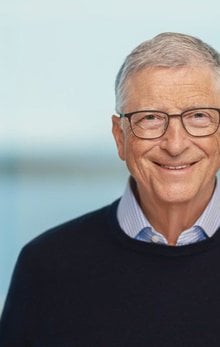
Bill Gates, Chair of the Gates Foundation, says: “In a constrained budget environment it’s even more important to focus aid funding on the investments that really work. And Gavi is exactly that. I don’t know of anything with a higher impact per dollar in terms of saving and improving lives.”
Ultimately, securing the global vaccine supply chain requires more than just building domestic factories. True resilience in a health crisis depends on ensuring the availability of raw materials and fostering capacity across all stages of manufacturing, from drug substance to final delivery.
Company portals

Executives
Bill Gates
Chair
Ursula von der Leyen
President