
US President Trump Tightens Defence Supply Chain Rules
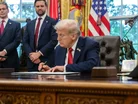
Domestic commercial interests appear to be a priority for many nations globally at the moment, with US President Donald Trump signing an Executive Order this week targeting loopholes in defence and tightening restrictions on foreign critical materials.
The directive restricts the use of statutory waivers under 10 U.S.C. 4872, which previously allowed defence contractors to source vital inputs from non-domestic suppliers.
- Restricts foreign waivers: Tightens exemption rules under 10 U.S.C. 4872, requiring defence contractors to prove exhaustive efforts to source US materials before seeking waivers.
- Mandates sub-tier mapping: Requires contractors to submit a complete bill of materials tracking the origin of critical minerals, magnets, microchips and software down through lower-tier suppliers.
- Enforces domestic onshoring: Demands that defence companies seeking exemptions provide concrete mitigation plans outlining how they will transition to compliant domestic sources.
- Prioritises critical inputs: Focuses strategic oversight on raw materials, speciality metals and advanced electronics vital to major US Department of Defense hardware programs.
Contractors seeking an exemption are required to prove exhaustive efforts to identify compliant US suppliers and submit detailed mitigation plans to onshore their operations. The US Department of Defense has also been ordered to enforce stricter oversight on domestic acquisition mandates across military programs.
The rule change, according to White House Officials, eliminates administrative exemptions for primary defence contractors. “The United States military must rely on a secure domestic industrial base," says the Executive Order from The White House. "Paper waivers can no longer substitute for genuine domestic manufacturing capacity."

Deep mapping exposes sub-tier supply chain vulnerabilities
Modern military systems rely on complex global networks extending several levels below primary defence contractors.
The US Department of Defense will require defence businesses to map critical supply chains from raw materials through to finished platforms as a result of the new directive. What this means in reality is that suppliers must submit a complete bill of materials that identifies the origins of critical minerals, magnets, microchips and specialised software.
To continue this dominance in an era of renewed great power competition, the United States must secure its supply chains against physical, cyber, and economic subversion.
Traditionally, Government oversight would not extend beyond the primary or secondary contractor level, leaving bigger operational risks unmonitored across sub-tier suppliers.
Major defence programs typically have supply networks that run five or six tiers deep into specialised global markets and dependencies are often hidden in lower tiers among vendors supplying speciality metals, electronics and unprocessed inputs.
“To continue this dominance in an era of renewed great power competition, the United States must secure its supply chains against physical, cyber, and economic subversion,” says Executive Order from The White House.
Domestic sourcing v allied partnerships
Years of infrastructure, as well as significant capital investment, are going to be required to build the domestic mineral processing and refining capacity needed. It is not just domestic suppliers impacted by this Executive Order, but international suppliers embedded in NATO and allied defence programs are also directly affected by this move towards domestic policy.
Industry leaders across the UK and Europe will be assessing how these strict compliance demands will affect transatlantic defence ventures, while procurement teams in the US will be needing to immediately audit sub-tier suppliers and establish digital traceability systems across their networks.
Greater visibility as a result of vetting lower-tier suppliers, such as US defence organisations are doing as part of this mandate for foreign ownership, geopolitical risk and material origin compliance, will help to ensure more resilient defence supply chains.