
Trump’s Tariffs: The Elimination of EU-US Supply Chains
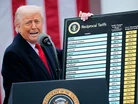
As part of US President Donald Trump’s ‘war on tariffs’, the EU has been threatened with 30% tariffs.
This tariff hike would be crippling for the EU trade industry, as a significant amount of shipping occurs across the Atlantic every day.
Members of the EU are still optimistic that a deal can be negotiated and are working to ensure that a solution can be found before 1 August.

High tariffs, high optimism
The current transatlantic trade is worth €4.4bn (US$5.1bn) a day, meaning that a tariff in excess of 30% would be unsustainable to businesses.
Since President Trump first announced his tariff plans, many countries have begun trying to strike a deal with the US, or have turned to alternative countries for new trade deals.
Leaders within the EU are still optimistic that a deal can be negotiated with the US, aiming to lessen the 30%.
President Trump announced on social media that from 1 August, EU imports would face a 30% tariff.
The EU had been optimistic about negotiating to 10%, which would have still been a significant monetary loss for the EU.
Whilst some are losing hope after the announcement, others are still fighting to change Trump’s ruling.
Maroš Šefčovič, the EU Trade Commissioner says: “We want to use every day, every possibility and every minute until 1 August to find a negotiated solution.”
With optimism, Maroš explains he believes an agreement is still possible, “otherwise you would not spend three months on drafting an agreement in principle and going through 1,700 tariff lines discussing all details from agriculture to the spare parts of cars if this [would just] be ended by one – even though – very, very important letter.”
Measures and countermeasures
In response to Trump’s deadline, the EU postponed counter tariffs on €21bn (US$24.5bn) of US goods which was going to begin on 1 August.
There are further discussions of countermeasures, including targeting €72bn (US$84bn) of US imports to the EU.
A trade war between the EU and US would be destructive for both sides, seeing either a significant loss of trade or unsustainably high prices.
Lars Løkke Rasmussen, Denmark’s foreign minister and chair of the talks, comments: “We don’t want to escalate things then, on the other hand, we also need to flash some muscles.”
He explains: “I don’t believe in the idea of escalating to de-escalate,” continuing to explain that the EU will show a united front to get the best solution.
He continues to say there is “a total unified approach among ministers that we should be ready to respond if needed.”
This is despite French president, Emmanuel Macron’s, insistence on implementing anti-coercion instruments and accelerating countermeasures to place legal measures on the US.
A supply chain ripple effect
Although the UK has reached its own trade deal with the US–10%--, its main trading partner is the EU
As a result, the UK could become a victim of the EU’s economic turndown through high tariff costs in the US.
“Many British firms import components and goods from the EU that are later exported to the US, meaning UK businesses could be indirectly hit by this tariff hike,” explains Matthew Allen, a lecturer in economics at the University of Salford.
Trump is already weaponising trade supply chains around the world and the UK’s close ties with the EU could see a further supply chain collapse.
In recent talks, Trump has threatened an enforcement of 100% secondary tariffs on Russia, if there’s no deal between Russia and Ukraine in 50 days.
Consequently, any country which continues to trade with Russia will face a significant tax in sales to the US.
Some might suggest that Trump is making trade with the US more difficult, with his tariffs potentially upsetting supply chain partnerships around the world.