IEA Outlook: Growing Risks to Critical Mineral Supply
Critical minerals supply has been at the forefront of many discussions in recent years, driven by the energy transition, increasing demand for defence and aerospace, as well as the growing need for semiconductors.
Though much of production comes from China, recent years have seen the diversification of critical minerals supply chains, as organisations around the world look to develop greater resilience and more domestic trade.
However, recent International Energy Agency (IEA) analysis found that there are growing risks to critical minerals supply, even though policy makes resilience possible.
The IEA works with global organisations and governments in order to develop resilient and sustainable energy policies. It has published its Global Critical Minerals Outlook 2026 report, examining how critical minerals have changed roles throughout recent years and how supply chain diversity is becoming a core need.
This edition looks at the latest market, investment and technology trends, as well as recent industry developments. The report also includes a new chapter which explores policy within resilient and diversified critical minerals supply chains.

Access to critical minerals will remain important, but competitive advantage will increasingly be determined by how intelligently those minerals are produced.
Diversifying suppliers
The geopolitical environment is becoming increasingly complex, with climate events proving the need for the green transition, trade relationships changing regularly and trade routes being re-formed. With this, critical minerals have found themselves as a leading priority for many countries, particularly as part of their energy, economic and national security strategies.
This has led to a greater focus on supply chain diversification and resilience, but the new IEA report finds that action is still lacking. According to the report, prices of critical minerals rose in 2025 and early 2026, caused by tighter supply chain conditions. As a result, investment fell by 9% in 2025.
Alongside this, there has been a growth in geographic concentration. Indonesia – the top country for nickel refining – and China – the top refiner for many other key materials – were responsible for more than 75% of total growth in refined supply.
“The conversation around critical minerals has changed markedly over the past year. They're no longer viewed solely through the lens of the energy transition, but increasingly they have become a defining test of industrial competitiveness, economic security and supply chain resilience," explains Joachim Braun, Global Division President of ABB's Process Industries division.
"The paradox is that while governments are working to diversify sources of critical minerals, production and refining remain highly concentrated by location. New supply is essential, but most projects take well over a decade to reach production while demand continues to accelerate.
"That means we need to think differently. Expanding supply isn't only about building new capacity; it's also about unlocking more value from the operations we already have. Existing mines represent one of the fastest opportunities to strengthen supply chains by improving productivity, recovery, energy efficiency and operational resilience."
Smart investments
Governments have actively been working to diversify critical minerals supplies, with public finance commitments reaching US$65bn, growing four times over between 2023 and 2025. Ongoing projects for advancements in copper and lithium mean that projected gaps in demand and anticipated supply are narrowing. This shows that the projects are making a difference and are helping organisations meet demand better, due to increased supplier potential.
However, the IEA finds that diversification progress is being focused on mining, but there is a lack of investments to aid the expansion of refining and downstream capacity. For rare earth supply chains, refining capacity will only meet 66% of expected mine output by 2035, and only one-third for magnet production.
The high concentration of export controls has demonstrably been a risk, with some automakers having to suspend operations or reduce production in 2025 due to rare earth export controls from China in April last year.
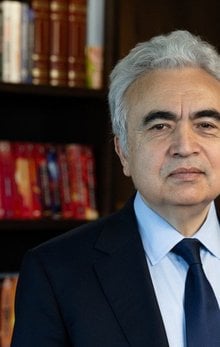
“Our latest analysis shows that vast amounts of economic value depend on relatively small volumes of critical minerals, whose supply chains remain highly concentrated and are therefore vulnerable,” says Fatih Birol, IEA Executive Director.
“Yet there are encouraging signs of progress – including in rare earth supply chains – where we see targeted policies and investment support starting to make a difference. And while diversified supply can come at a higher cost, this can be viewed as a mineral security premium in a time of geopolitical uncertainty – a form of economic insurance against major supply risks.”
The additional cost of diversification, according to the IEA, could be absorbed with little impact on the consumer, as critical mineral costs are only a small portion of the final product price. Though they make up approximately 25% of battery cell costs, they are only responsible for 3% of the average electric vehicle.
Technological advancements
The report also explores the limitation of technology on supply chain diversification, with limited access to equipment and issues of a skilled workforce. Rare earth processing equipment is not common outside of China, meaning governments and organisations need to invest into this technology.
IEA suggests that governments should structure policies, with specific costs of improvements distributed across governments, industries and consumers. It also suggests a co-located stockpile of low-volume materials, or reserve production. With collaboration and communication, efficient stockpile management could work to reduce critical mineral supply chain bottlenecks.
- The IEA has identified 37 critical minerals which are used in aerospace, energy infrastructure and smartphones
- China controls approximately 60% of rare earth mining output and more than 90% of refining capabilities
- Excluding rare earths, the average share of the top refining country rose to 72% in 2025
- Critical mineral investment declined by 9% in 2025
- Exploration spending declined by more than 10%
Technology advancements are a growing necessity within critical mineral mining. Leading organisations are beginning to implement automated machinery in their supply chain, which makes processes safer and more efficient.
Joachim states: "ABB’s Mining's Moment research found that 77% of mining leaders believe electrification, automation and digitalisation must work together to achieve sustainable transformation. These technologies are helping operators improve productivity, extend asset life and reduce energy intensity, strengthening supply before new capacity comes online.
"Ultimately, access to critical minerals will remain important, but competitive advantage will increasingly be determined by how intelligently those minerals are produced. The countries and companies that invest in productivity, resilience and sustainable operations today will be the ones best positioned to meet tomorrow's demand."
There are numerous factors at play to determine critical mineral supply chain resilience – for one, critical minerals are needed for the energy transition, but the energy transition is needed to protect the materials themselves. Through alliances, collaboration and government policy, critical mineral supply chains can operate with resilience and sustainability in mind.


Executives
Fatih Birol
Executive Director
Joachim Braun
Division President Process Industries