What Does Unilever's $44bn Deal Mean for Food Supply Chains?
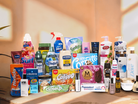
The British-based consumer goods manufacturer Unilever has agreed to sell its foods assets, including Marmite, Horlicks and Knorr, to US-based McCormick in a transaction that could reshape global food distribution networks and supply chain operations across multiple continents.
The deal reflects an enterprise value of US$44.8bn for Unilever Foods and presents significant operational integration challenges as two major manufacturing and distribution systems merge.
The transaction could create two focused businesses, each better aligned to its categories and operational capabilities.
However, the success of this deal hinges largely on the ability to integrate complex supply chains, consolidate distribution networks and maintain continuity across global logistics operations during the transition period.

The deal implies an enterprise value for Unilever Foods of approximately US$44.8bn, or approximately 13.8 times fiscal year 2025 earnings before interest, taxes, depreciation and amortisation. Unilever and its shareholders are expected to receive shares equating to 65% of the fully diluted combined-company outstanding equity, equivalent to US$29.1bn based on McCormick's one-month volume-weighted average price.
Unilever will also receive US$15.7bn in cash, subject to certain closing adjustments. This reflects an enterprise value for McCormick of approximately US$21.0bn, or approximately 13.8 times its 2025 fiscal year.
Consolidating global distribution networks
Unilever's portfolio includes Knorr, a popular stock and seasoning product, and Marmite. According to reports from Bloomberg, Hellmann's and Knorr make up 60% of Unilever's food sales. The transfer of these brands could require significant reconfiguration of existing warehousing, transportation routes and retail delivery systems to accommodate McCormick's operational framework.
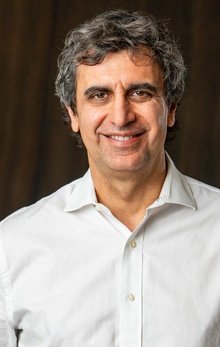
Fernando Fernández, Chief Executive Officer of Unilever, says: "For Unilever, this transaction is another decisive step in sharpening our portfolio and accelerating our strategy towards high-growth categories as a €39bn (US$44.7bn) pureplay home and personal care (HPC) company with a proven sector-leading growth profile.
"We are unlocking trapped value through a growth-led separation of Foods, creating a scaled, global flavour powerhouse. By combining Unilever Foods' iconic leading brands and global reach with McCormick's exceptional portfolio, category expertise and capabilities, we are establishing a focused, high-quality business with significant top line growth and value creation potential.
"This is a combination built on strong strategic and cultural alignment, providing exciting opportunities for our people and ensuring our Foods brands continue to thrive as part of a global flavour leader. Our retained ownership stake reflects our conviction in the strength of the combined company and its future prospects."
According to Unilever, the separation of Unilever Foods will position Unilever as a high-growth company, estimating €39bn (US$44.7bn) of revenues based on fiscal year 2025. Post-completion, Unilever will operate across beauty, wellbeing, personal care and home care, potentially streamlining its supply chain focus to these specific categories.
Sustainability, procurement and supply chain leaders won’t want to miss Procurement & Supply Chain LIVE, taking place at Navy Pier, Chicago, on April 21–22.
Co-located with Sustainability LIVE: The US Summit, the event unites senior decision-makers at a time when supply chains, sustainability and business performance are more interdependent than ever.
Secure your place now for The US Summit – group booking discounts available.
Operational integration across continents
McCormick is an American food company with brands including Cholula, Frank's RedHot, French's and Schwartz. McCormick will retain its existing name, its Maryland global headquarters and NYSE listing. However, McCormick will establish international headquarters in the Netherlands and is planning a secondary listing in Europe, suggesting a strategic repositioning of its operational command structure to better manage expanded European distribution networks.
Brendan Foley, Chairman, President and Chief Executive Officer of McCormick, says: "This transformative combination accelerates McCormick's strategy and reinforces our continued focus on flavour. The Unilever Foods business is one we have long admired, with a portfolio that complements our existing business, capabilities and long-term vision.
"Together, we will be better positioned to accelerate growth in attractive categories. This combination will create a diversified flavour leader with a robust growth profile that remains differentiated by its focus on flavouring calories while others compete for them.
"Unilever Foods' global portfolio of strong brands, combined with our proven expertise in insight-driven brand-building and integration, will enable us to deliver flavour in new and exciting ways for more consumers, driving significant growth across the combined portfolio and value for all stakeholders.
"Integrating two global organizations of this scale requires disciplined execution, and we are confident that our detailed integration roadmap, experienced teams from McCormick and Unilever, external advisors and our strong partnership will enable us to capture the full value of this opportunity.
"McCormick is the right partner for Unilever Foods' brands and employees, and our shared culture and values will empower our combination. We are excited to welcome their exceptional talent and international expertise to our Power of People culture."
Managing dual-channel distribution scale
According to McCormick, the combination brings together two industry-leading organizations with complementary global footprints and portfolios of iconic brands across herbs, spices, seasonings, cooking aids, condiments and sauces. The combined company is expected to benefit from expanded global reach, enhanced scale across retail and foodservice channels and greater resources to invest in innovation, brand-building and global distribution.
The emphasis on dual-channel scale suggests potential efficiencies in managing parallel supply chains serving both retail outlets and foodservice operators, though realising these synergies could require substantial logistics coordination and warehouse consolidation across multiple markets.

Executives
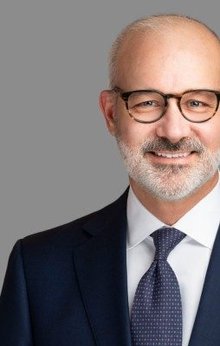
Brendan Foley
Chairman, President and Chief Executive Officer
Fernando Fernandez
Chief Executive Officer