UK-China Trade and the Renewable Supply Chain
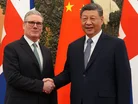
UK Prime Minister Sir Keir Starmer's visit to Beijing has opened an important new chapter in UK-China relations, with renewable energy supply chains and low-carbon technology trade emerging as central pillars of cooperation.
The meeting on 29 January 2026 marked the first visit by a British Prime Minister to China since 2018.
During discussions with President Xi Jinping, the Prime Minister spoke of the UK's willingness to work with China on climate change and global stability.
President Xi also proposed expanding the collaboration through joint research and industrial applications in renewable energy, low-carbon technologies, AI and biosciences. His focus on these sectors reflects Beijing's dominant position in global clean energy supply chains and its ambition to lead the green technology transition.

UK supply chain vulnerabilities
The timing is particularly significant for the UK's energy transition dependencies. Britain has committed to achieving net zero emissions by 2050 and fully decarbonising the National Grid by 2030.
The country faces substantial challenges including scaling up renewable infrastructure, reducing fossil fuel dependence and securing reliable supply routes for critical components.
Leveraging China's manufacturing capabilities in solar panels, wind turbines and battery technology could prove crucial. Chinese companies dominate global supply chains for these technologies, with China being the world's largest renewable energy generator and climate tech exporter.
The UK's current renewable energy capacity relies heavily on imported components, with approximately 80% of solar panels installed in Britain manufactured in China. This dependency creates both opportunities and vulnerabilities as the government accelerates its net zero timeline.
Without diversified supply chains, disruptions to Chinese manufacturing or trade restrictions could significantly delay the UK's renewable energy deployment targets and increase costs for consumers and businesses alike.
Strategic trade considerations
Cooperation with China necessitates a delicate balancing act for the UK government.
US President Donald Trump called Prime Minister Starmer's decision to do business with Beijing "very dangerous", though Trump himself is expected to visit China in early spring to establish an economic accord.
While Chinese technology could accelerate Britain's energy transition, concerns about strategic dependency remain prominent among policymakers. The UK has already reduced Chinese involvement in critical infrastructure, removing Huawei equipment from 5G networks and restricting Chinese investment in sensitive sectors.
In 2021, China imposed sanctions on several senior British politicians after they criticised China's treatment of Uyghur Muslims in Xinjiang. Beijing has lifted these sanctions to facilitate the UK deal, though the MPs remain defiant.
Prime Minister Starmer's approach appears to be selective engagement, benefiting from Chinese manufacturing expertise while maintaining safeguards around critical infrastructure and sensitive technologies.
A broader economic mission
The energy discussions formed part of a broader economic mission, with Starmer leading nearly 60 British business and cultural leaders to China.
Both leaders describe their vision as building a long-term comprehensive strategic partnership, suggesting an intention to move beyond recent volatility in UK-China relations.
The success of the cooperation will depend on translating diplomatic commitments into concrete trade agreements and supply chain partnerships.
However, significant obstacles remain, including regulatory differences, intellectual property protections and broader geopolitical tensions.
The UK must navigate these challenges carefully, maintaining strong relationships with European and transatlantic partners whilst pursuing pragmatic engagement with Beijing on climate issues.
As the energy transition accelerates globally, climate technology supply chains may offer a pathway for constructive engagement between nations that disagree on other fronts.