Could Tariffs Mean Major Refunds for Global Companies?
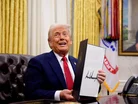
Global supply chains have been navigating a volatile landscape throughout 2025 following the introduction of substantial US tariffs.
In April, US President Donald Trump initiated a baseline 10% tax on imports from numerous countries, with some rates reaching as high as 50%.
These fluctuating tariffs have created considerable uncertainty and financial pressure for businesses reliant on international trade.
Now, a legal challenge from wholesale giant Costco could pave the way for companies to reclaim billions of dollars in duties, adding another layer of complexity to supply chain management and financial planning.

Presidential powers and supply chain disruption
Trump used the International Emergency Economic Powers Act (IEEPA) to legitimise the tariffs. Critics, however, argue the act’s powers do not extend to imposing such broad tariffs and that no genuine emergency existed.
The core of the issue is the Supreme Court’s review of whether Trump possessed the legal authority to impose these import taxes under a 1970s national security law. Anticipating a ruling that could render the tariffs unlawful, Costco has proactively filed a lawsuit against the US government with the US Court of International Trade, seeking a full refund of the duties it has paid.
This legal ambiguity has been a major issue for businesses, whose supply chains are built on predictable cost structures.
The lawsuit filed by Costco over Thanksgiving highlights the material suffering the business has endured. Lawyers for Costco stated "a separate action is necessary" because a refund is not guaranteed "in the absence of their own judgment and judicial relief".
Costco has requested the Court of International Trade to declare the tariffs unlawful, stop further duty collection and order the reimbursement of tariffs already paid.
The financial toll of tariffs
The financial impact on businesses has been substantial. According to the Committee for a Responsible Federal Budget, tariff revenue for the 2025 fiscal year, which ended in September, increased to US$195bn from US$118bn in the previous year.
This reflects a steep rise in monthly customs duties, which grew from US$7bn in January to US$30bn by September. For individual companies, the figures are stark.
While Costco has not specified the total sum it is seeking to reclaim, data indicates the retailer paid US$90bn in IEEPA-related tariffs as of late September.
This represents a substantial direct cost embedded into its supply chain, affecting everything from procurement costs to final consumer pricing. The outcome of the legal challenge could have profound implications for corporate treasuries that have absorbed these expenses.
A legal precedent hangs in the balance
This is not the first time the tariffs have been legally contested. In May, the Court of International Trade became the first to rule that Trump's tariffs were in violation of the law, a decision later supported by the US Court of Appeals.
During a Supreme Court hearing in November, justices reportedly expressed doubts about the president’s authority to enact such measures without congressional approval.
Attorneys for the Trump administration maintain that the emergency powers do grant the president the authority for these worldwide tariffs. The administration has warned that a ruling against it would weaken its negotiating power and force the treasury to forfeit billions already collected.
With other companies reportedly preparing similar legal challenges, the Supreme Court's decision is highly anticipated. A deadline of 15 December 2025 has been set for other businesses to submit their own claims, after which reclaiming any paid duties could become much more difficult.