This Week's Top Five Stories in Supply Chain
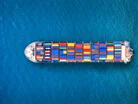
UNCTAD: Fragile Logistics Threatens Sustainable Development
Trade disruptions have become commonplace across the globe, but often the biggest hits are taken by developing nations.
It's why ministers participating in the 16th UN Conference on Trade and Development (UNCTAD16) have called for a coordinated investment in more sustainable logistics networks.
Ministers at UNCTAD16 warned that many supply chains are close to breaking point. If nothing changes, inequality in global supply chains will likely deepen and recent progress could stall.
With logistics networks fragile amid ongoing instability and shifting regulations, trade is increasingly at risk. Sustainable development is under threat as key trade arteries grow more congested and bottlenecks more frequent.
To avoid unstable routes, maritime shipments are constantly being rerouted, extending journey times even as overall volumes fall.

Kinaxis: Supply Chain Resilience with Maestro Agents
During times of volatility, companies must be able to protect their supply chains with confidence.
In a bid to give leading businesses the supply chain efficiency and agility they require, Kinaxis has launched Maestro Agents.
By implementing these agents, businesses can experience faster decision-making with more informed solutions.
Maestro Agents – a milestone development in the context of AI-enabled supply chain intelligence and decision-making – are embedded in Kinaxis Maestro. These digital co-workers assist the pathway from problem to action, speeding up entire processes.
They are embedded within live planning situations, meaning they grow to understand context, constraints and trade-offs, enabling them to plan alongside leaders and help make more informed decisions.
The agents are not designed to replace employees, but to aid them in decision-making and strategic planning.
Inversion: Building a Space-Powered Logistics Network
Arc, the flagship space-based vehicle from aerospace and defence technology company Inversion, could reshape how critical cargo moves across the planet.
Designed to descend from orbit and land autonomously, Arc brings a new layer of logistics infrastructure that functions above Earth's atmosphere.
Built for both speed and flexibility, Arc operates from low-Earth orbit with the ability to reach any location on Earth in under an hour. That includes remote regions, disaster-hit zones or environments without reliable infrastructure.
The aim is to deliver mission-critical cargo with minimal delay, regardless of conditions on the ground.
Big Data: The Engine Driving Supply Chain Transformation
The digital revolution has fundamentally altered how companies view and utilise data. Once considered merely the exhaust of business operations, information has become the high-octane fuel powering the engine.
It’s a transformation that is particularly pronounced in procurement and supply chain management, where the sheer volume, variety and velocity of data present both unprecedented opportunities and complex challenges.
As Microsoft CEO Satya Nadella recently observed, we now inhabit "a mobile-first and cloud-first world" where computing has become ubiquitous and experiences span multiple devices with ambient intelligence.
Nestlé: Powering Supply Chain Scale with SAP Intelligence
Nestlé is building a unified digital system across its global supply chain.
The company is rolling out what it calls the largest SAP S/4HANA Cloud Private Edition upgrade to date, moving 50,000 users across 112 countries in Asia, Oceania and Africa onto the platform.
This phase forms part of a multi-year digital programme to embed AI into core operations, spanning procurement, manufacturing and fulfilment.
SAP positions its Joule AI assistant as a key element in this transition, while Nestlé integrates the AI tool across its supply chain and business systems, allowing for real-time insight and automation across production, finance, sales and logistics.
Nestlé already runs its global operations using a single SAP enterprise resource planning (ERP) template and this upgrade helps standardise supply chain visibility across regions.
Company portals




Executives
Satya Nadella
Chairman and CEO