Nestlé: Powering Supply Chain Scale with SAP Intelligence
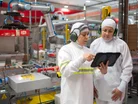
Nestlé is building a unified digital system across its global supply chain.
The company is rolling out what it calls the largest SAP S/4HANA Cloud Private Edition upgrade to date, moving 50,000 users across 112 countries in Asia, Oceania and Africa onto the platform.
This phase forms part of a multi-year digital programme to embed AI into core operations, spanning procurement, manufacturing and fulfilment.

SAP positions its Joule AI assistant as a key element in this transition, while Nestlé integrates the AI tool across its supply chain and business systems, allowing for real-time insight and automation across production, finance, sales and logistics.
Nestlé already runs its global operations using a single SAP enterprise resource planning (ERP) template and this upgrade helps standardise supply chain visibility across regions.
“Driving growth through innovation is a top priority,” says Anna Manz, Nestlé's Chief Financial Officer and Head of Integrated Business Services.
“We are transforming our business to invest more boldly in the best opportunities. We need to combine great consumer insights and innovation with flexibility and scale, to provide great quality products to consumers around the world when, where and how they want them.”
Nestlé uses SAP’s in-memory database platform, HANA, to process data in real time. The cloud version of this platform, S/4HANA Cloud, now underpins operations that include everything from sourcing ingredients to shipping KitKats.
The company's supply chain, which spans 185 countries, benefits from a unified ERP model capable of adjusting instantly to fluctuations in demand or supply bottlenecks.
Digital architecture brings global agility
Nestlé sets a target to complete its full global upgrade within two years. The platform now runs critical functions from a single cloud-based system, allowing different departments and regions to operate with real-time coordination.
“We are building a future-ready enterprise – one that works smarter and faster,” says Chris Wright, Nestlé’s Head of IT and Chief Information Officer.
“Having a common ERP system as our backbone is already a tremendous advantage for Nestlé. It provides a unified platform and data foundation that allows us to execute end-to-end and have visibility across our entire company and beyond.”
This shift means that Nestlé’s warehouses, factories and procurement teams all pull from the same data, reducing the risk of supply gaps or duplicated orders. The new architecture helps manage trade classifications and automates journal uploads and service processes — essential for a global brand with thousands of daily transactions.
Retail order fulfilment is now matched to supply in real time, reducing stockouts in-store and online. The company has moved procurement operations entirely into the cloud, increasing transparency and standardising how spend is managed across regions.
SAP says S/4HANA now supports 11 languages and integrates into both public and private cloud editions. This ensures teams across Nestlé’s global operations access the same tools and insights, no matter their location.
SAP eyes AI-led ERP market dominance
SAP introduced S/4HANA in 2015 to simplify ERP through real-time data processing. It now forms a core part of SAP’s wider strategy to offer AI integration through services such as RISE with SAP and GROW with SAP.
S/4HANA Cloud sits at the centre of this push, recognised in Gartner’s Magic Quadrant for Cloud ERP year after year. The cloud ERP market is valued at US$44bn in 2023, with demand rising for platforms that incorporate embedded AI.
Nestlé is leveraging this ecosystem through SAP’s Joule assistant, which adds conversational AI to the mix. The tool interprets context, integrates with back-end business processes and handles tasks that would otherwise require human input. These features reduce friction in the supply chain, helping the company react faster to change.
“Nestlé’s successful go-live of SAP S/4HANA Cloud Private Edition showcases how scale can be a strategic advantage for innovation,” says Thomas Saueressig, Member of the Executive Board of SAP SE for Customer Services and Delivery.
“As one of the world's most recognisable and forward-thinking companies, with the go-live on SAP S/4HANA Cloud Private Edition, the company exemplifies how cutting-edge technology empowers global brands to anticipate consumer trends, optimize operations, and deliver exceptional experiences at scale.”
SAP plans to offer 400 embedded AI use cases across its cloud platforms by 2025. Nestlé’s deployment is one of the highest profile examples of how the enterprise tech sector integrates AI into the supply chain. The company gains not just automation, but also access to insights across planning, reporting and customer demand.
“With the upgrade, we gain more flexibility, capabilities and insights that will help us roll out new products globally faster to meet the needs of our customers and consumers," adds Chris. "And with the use of AI and automation at scale, we’ll drive efficiency and effectiveness, throughout our value chain."
A tool for supply chain innovation
Nestlé’s move to SAP S/4HANA Cloud enables faster product launches in areas such as cold coffee and therapeutic pet food.
Anna says the company uses this new agility to build long-term product pipelines and respond to shifting consumer needs. Supply chain resilience becomes central to this plan, with ERP software providing a digital layer that unifies decision-making across sourcing, production and delivery.
The upgrade marks a shift in how global consumer brands treat ERP. No longer a static system for managing back-end data, it now becomes the engine behind everything from inventory management to AI-powered demand forecasting.
By embedding AI across its ERP backbone, Nestlé positions its supply chain for speed and scale – a model other multinationals are expected to follow.

Executives
Anna Manz
Chief Financial Officer, Executive Vice President

Christopher Wright
Head of Information Technology and Nestlé Group CIO
Thomas Saueressig
Member of the Executive Board of SAP SE for Customer Services & Delivery