This Week's Top Five Stories in Supply Chain

Pressure on global supply chains is intensifying as the conflict involving Iran shows little sign of easing, with aviation emerging as one of the most exposed sectors.
UK flights are not yet being cancelled at scale, but the risk window is narrowing. An increasing number of industry experts are warning that if disruption to jet fuel supply persists into the early summer months, airlines may soon be forced to cut capacity.
The UK appears closer to that tipping point than any other major aviation market in Europe. A combination of import dependence, supplier concentration and exposure to key global chokepoints has left its jet fuel supply chain particularly fragile.
Rivian's facility, which began construction in 2026, is expected to begin customer vehicle production in 2028 at the Stanton Springs site in Georgia. Rivian's US$5bn manufacturing investment could signal a significant shift in the electric vehicle supply chain landscape, as automotive manufacturers respond to mounting pressure to localise North American operations.
The manufacturer intends to build the facility in two phases, each resulting in 200,000 units of annual production capacity, for a total of 400,000 units of annual capacity. This expansion could reshape Rivian's supply chain capabilities and its position within the broader automotive manufacturing ecosystem.
According to the Georgia Department of Economic Development, the investment is expected to create 7,500 long-term jobs by 2030. Brian Kemp, Governor of Georgia, says: "This innovative company is further delivering on its commitment to the people of Georgia and the thousands of hardworking Americans who will work at this facility will see generational benefits for their families."
The ongoing closure of the Strait of Hormuz is placing unprecedented pressure on pharmaceutical supply chains serving the UK, with the NHS confronting mounting logistics costs and delivery delays for critical generic medications that account for the majority of prescriptions.
The disruption comes as the conflict in the Middle East continues, highlighting the fragility of global medicine supply routes and the UK's heavy dependence on international manufacturing hubs.
The situation has intensified concerns about the resilience of pharmaceutical supply chains, particularly for off-patent drugs that flow through now-constrained shipping lanes.
A fragile ceasefire between the United States and Iran and the conditional reopening of the Strait of Hormuz has sent oil prices sharply lower, but supply chain leaders would be mistaken to read this as a return to business as usual.
Brent dropped back toward the mid‑90s in the wake of the ceasefire, from spikes well above US$110 dollars a barrel during the height of the crisis, while US benchmarks have also given up some of their recent gains.
Yet prices remain materially above pre‑war levels, and the structural vulnerabilities exposed over recent weeks will shape procurement and logistics decisions long after the headlines move on.
The big question now is whether traffic will flow freely through the Strait, as suggested by US President Donald Trump, or whether it will flow "via coordination with Iran’s Armed Forces", as insisted by Iran’s Foreign Minister. Those are two very different realities for global supply chains, in terms of both cost and predictability.
A silent crisis is unfolding across UK supply chains as businesses struggle to balance sustainability transparency with regulatory fears.
According to research by The Marketing Pod, 98% of businesses surveyed admit they have been excluded from new contract opportunities due to their inability or reluctance to share their sustainability credentials.
This widespread hesitation is creating significant disruption throughout procurement processes and supplier networks.






Executives
David Weeks
Director, Supply Chain Industry Practice Lead | Moody’s
Diane S.
Chief Economist

Karin Ström
VP
Lars Jensen
CEO
Mark Samuels
Chief Executive Officer
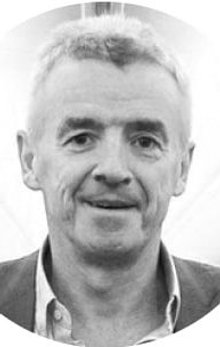
Michael O'Leary
CEO of Ryanair Group