What Rivian's US$5bn Investment Means for US Supply Chains

Rivian's facility, which began construction in 2026, is expected to begin customer vehicle production in 2028 at the Stanton Springs site in Georgia. Rivian's US$5bn manufacturing investment could signal a significant shift in the electric vehicle supply chain landscape, as automotive manufacturers respond to mounting pressure to localise North American operations.
The manufacturer intends to build the facility in two phases, each resulting in 200,000 units of annual production capacity, for a total of 400,000 units of annual capacity. This expansion could reshape Rivian's supply chain capabilities and its position within the broader automotive manufacturing ecosystem.
According to the Georgia Department of Economic Development, the investment is expected to create 7,500 long-term jobs by 2030. Brian Kemp, Governor of Georgia, says: "This innovative company is further delivering on its commitment to the people of Georgia and the thousands of hardworking Americans who will work at this facility will see generational benefits for their families."
Localisation pressures reshape operations
The expansion comes as automotive companies and manufacturers in the US market face increasing pressure to keep operations in North America. US President Donald Trump has threatened to penalise companies, such as Apple, which do not move manufacturing processes to the US.
This political environment could mean that supply chain strategies across the automotive sector are being reconfigured to prioritise domestic production over international sourcing.
Rivian Founder and CEO, RJ Scaringe says: "We are cementing Rivian's future at our Georgia plant, helping ensure America maintains its technology leadership and excellence in automobile manufacturing.
"Our Georgia facility will support our global expansion and provide the scale necessary to get millions of future drivers in our incredible all-electric vehicles, both in the United States and overseas."

Sustainability, procurement and supply chain leaders won’t want to miss Procurement & Supply Chain LIVE, taking place at Navy Pier, Chicago, on April 21–22.
Co-located with Sustainability LIVE: The US Summit, the event unites senior decision-makers at a time when supply chains, sustainability and business performance are more interdependent than ever.
Secure your place now for The US Summit – group booking discounts available.
Manufacturing capabilities and technology integration
Rivian currently operates a manufacturing facility in Normal, Illinois, where it manufactures its R1 products and has a separate line for building its commercial vans. The company's R1 SUV offers 660 km in range and zero to 100 km/h in under 2.7 seconds. To produce the vehicles, Rivian has implemented AI technology and robotics in its manufacturing process.
Javier Varela, Rivian's Chief Operations Officer, says: "Our products are sophisticated and we use cutting edge technology, including AI, to constantly improve our manufacturing processes.
"But the people that work at this plant and the community we're in are truly the most important story. Technology is important and we are using our robotics an AI capabilities extensively. We have high levels of automation, but everything starts with our team members: they're the experts at what they do."
Economic impact beyond direct employment
According to analysis conducted by IMPLAN, the 7,500 direct jobs expected to be created by this investment could generate an additional nearly 8,000 indirect jobs.
Collectively, these more than 15,000 jobs are expected to generate more than US$1 bn in labour income annually, supporting suppliers, vendors and small businesses.
This ripple effect could demonstrate how large-scale manufacturing investments influence regional supply chain networks, creating demand across multiple tiers of suppliers and service providers.
The Georgia facility could therefore represent not just an expansion of Rivian's production capacity, but a broader development of the electric vehicle supply chain infrastructure in the southeastern United States.
Company portals

Executives
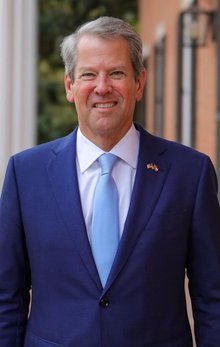
Brian Kemp
Georgia Governor
Javier Varela
COO

RJ Scaringe