A Taxing Budget for UK Logistics: What’s at Stake
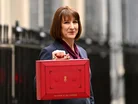
Ahead of the UK Autumn Budget 2025 delivery on 26th November, UK Chancellor Rachel Reeves has conducted a pre-Budget speech.
In her speech, she discussed the potential for a hike on income tax, VAT and National Insurance, despite Labour's pledge to avoid this in its general election manifesto.
Further taxation could have a damaging effect on UK businesses, particularly after a year of supply chain disruption.

The pre-budget statement
Reeves stated in the pre-Budget speech that she will do what is needed in order to secure the country's finances, even if it goes against the popular vote. The Budget, according to Reeves, is aiming to reduce national debt and the cost of living in a necessary act.
Reeves said: "Each of us must do our bit for the security of our country and the brightness of its future."
She currently points to a number of reasons for the UK's current economic standing, including: poor productivity as a result of Conservative government policy - with particular blame on Brexit, austerity and decisions to cut infrastructure spending - high global inflation and disruption caused by tariffs.
"It is important that people understand the circumstances we are facing, the principles guiding my choices – and why I believe they will be the right choices for the country," Reeves added.
Though Reeves states this is sure to improve the UK's economic standing, many businesses worry that it will lead to further crises after a year of market volatility.
Supply chain concerns
The logistics sector is important to a country's success, as it connects international and domestic markets to one another, through the movement of goods across land, sea and air. If there is a disruption, it can have a significant effect on the UK supply chain, interrupting the flow of goods and therefore the flow of money.
The UK Warehousing Association (UKWA) has concerns over business resilience if taxation is set to rise. With energy bills rising, tariffs causing an issue or general volatility causing disruption, small and medium-sized companies have already expressed concerns.
UKWA CEO Clare Bottle, comments: “We recognise the Chancellor faces tough choices on the public finances, but our members are more than pulling their weight. Steep increases in employment costs and business rates mean that the warehousing sector is all taxed-out.
“Whether it’s taxes or energy costs, everything is going up. Meanwhile, the message I get from small and medium-sized companies in particular is that the market is difficult out there. Customers are nervous and sitting on their hands. Overall, our members are under unsustainable pressure.
“The UK’s logistics system – of which warehouses are an essential part – is critical to the Government achieving its goals. Increasing housebuilding, boosting renewable energy and strengthening our national defence all rely heavily on the supply of physical goods. Ministers have made welcome statements about the importance of logistics in the last year, the Budget is the moment to back them up with action.”
The trickle-down effect
The increase in taxation, while it could improve the UK's economy, it will trickle down into the public and smaller businesses. Every UK business will feel the impact of higher tax, which means prices around the country will rise. This leads to less spending, or an increase in personal debt - once prices are heightened, it is the consumer who determines the outcome.
UK consumers may have to change their spending habits, which then goes back to the businesses. If consumers can't afford to buy their products, businesses may have to work at a loss or increase their prices even further.
“Increasing the cost of doing business for logistics companies is counterproductive and will put the hand brake on growth and drive inflation," comments Kevin Green, Acting Chief Executive of Logistics UK.
“Whether tax increases come from fuel duty, employer National Insurance Contributions (NICs) or business rates, the result will be the same: higher prices for households and businesses.
“Profit margins in the road haulage sector are around 2% and almost 500 hauliers went bust last year. The sector simply cannot afford to absorb any more costs, so a tax on logistics will be a tax on everyone.”
Rather than increasing taxes, some call for further support for businesses as a means of improvement and growth. Some argue that if the government invests in businesses and provides the opportunity for training, the government will be rewarded with a stronger economy.
Managing Director of the Road Haulage Association (RHA), Richard Smith argues that the government needs to avoid adding costs to small businesses, instead working to help them.
He says: "Our position remains clear: Support businesses and ease the cost burdens on firms that are crucial to the economic health of the country.
"That means flexible training options through the growth and skills levy. It means helping businesses find ways to cut sky-high energy bills.
"For economic growth to happen, decision-makers need to support the companies and sectors that make it possible. Additional cost pressures heaped on businesses at a time of already rising costs isn't a recipe for making growth happen."
While UK industries await the Budget announcement, the pre-speech has many leaders feeling concerned about the outlook of their businesses and the UK economy. If Reeves does announce the raising of taxes, the logistics sector will see a tightening of budgets, which will have a knock-on effect throughout its supply chain, with fewer resources and higher pressure to deliver high business standards.
Company portals




Executives
Clare Bottle
Chief Executive
Kevin Green
Director of Policy, Marketing & Communications
Richard James Smith
Chairperson