British Steel Closure: The Potential Supply Chain Impact
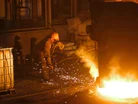
The looming closure of British Steel spells major disruption not only for its thousands of workers, but for the entire UK supply chain.
If it happens, the consequences for logistics, sourcing and regional industry could be widespread and long-lasting. The collapse of the firm would deal a hard blow to UK steelmaking, which has been in a slow state of decline since the 1960s.
Faced with global competition, high energy prices and limited state support, the sector’s downturn has become a cautionary tale.
British Steel is the last site in the UK that still produces virgin steel from iron ore – and its loss would send shockwaves across local economies, logistics networks and wider sourcing operations.

Job losses and logistics disruption
British Steel employs around 4,000 people directly, but its supply chain reaches far beyond the plant itself.
Haulage companies, local maintenance contractors and regional service providers rely heavily on the demand generated by the steelworks. If production stops, these logistics networks will shrink rapidly and thousands more jobs could disappear.
This hits industrial towns like Scunthorpe and Teesside particularly hard.
Employment opportunities are already limited and the loss of one of the last major industrial employers would damage local economies. From suppliers moving raw materials to finished product distributors, logistics businesses will almost certainly see revenues fall.
A sudden drop in freight volumes also risks destabilising the region’s supply chain infrastructure.
Then there's the skills impact.
Steelmaking is a highly-specialised process requiring trained labour. Once these jobs go, the sector risks losing core technical capabilities developed over generations. Rebuilding this workforce would take time, funding and commitment – none of which are guaranteed without a functioning domestic steel sector.
Scunthorpe, home to British Steel's main plant, remains the only UK site making steel from iron ore after Tata Steel closed blast furnaces in South Wales. If British Steel shuts down, it would deepen the divide between regions and reinforce an already stark economic imbalance between the north and south.
While government support may offer short-term relief, without long-term policy change, it fails to tackle the wider supply chain fragility exposed by this crisis.
Sourcing under threat
The case of British Steel highlights a wider set of sourcing challenges across the UK industry.
Steelmaking in Britain is already under pressure from high energy prices – among the highest in Europe – while competing with low-cost imports from China, India and Turkey.
These cheaper imports can undercut domestic prices, creating impossible margins for UK producers.
The issue is compounded by Brexit. Leaving the European Union has introduced more bureaucracy and costs, making it harder for UK steel to reach European buyers.
Extra paperwork and customs delays have made sourcing British steel less appealing across the continent. These barriers also complicate importing raw materials and exporting finished products, adding further strain to supply chains.
Environmental regulations represent another hurdle. The industry must decarbonise, but that transition demands large investment in new technology.
Electric arc furnaces and hydrogen-powered production processes are essential for low-carbon steel, but require time and money that British manufacturers lack.
British Steel’s limited financial resources make this transition difficult without substantial support.
Although government initiatives like the Department for Energy’s Hydrogen Strategy aim to accelerate green steel production, these remain high-level frameworks. To succeed, they must be backed with direct funding, tax incentives and strong industrial partnerships.
Councillor Rob Waltham MBE, leader of North Lincolnshire Council, reflects this urgency: “Steel making is vital for the regional and national economy. British Steel’s site in Scunthorpe is now the only place in the UK that can make virgin steel and must be protected.
“We are continuing to work with them to develop surplus land at the steelworks to harness new technology and create green jobs. Master planning is underway to attract high-paid and high-skilled jobs to the area – using new technologies to create green industry. But the steel works need to be part of the picture moving forward.”
Pathways to protect the steel supply chain
Reversing the decline of UK steel means reforming how the supply chain functions.
First, the government must address industrial electricity costs. Subsidies or investment in renewable energy infrastructure can help steelmakers compete on an even footing with international rivals.
The shift to green steel also needs proper funding. Without grants and strategic support, British producers will fall further behind.
The UK has the potential to lead in sustainable steel production, but that potential will be wasted if no action is taken.
Trade policy is another pressure point. Many UK steel products are being undercut by unfairly subsidised imports.
Like the EU and US, the UK could impose tariffs or quotas to shield domestic producers and secure the future of steel sourcing.
All of this depends on a long-term industrial strategy.
The UK has long lacked consistent policy in this area, leaving steelmakers in a state of uncertainty. Clear direction, investment in R&D and skills training and a commitment to infrastructure would help secure the sector.
A key priority must be to ensure the UK doesn’t become wholly reliant on foreign steel.
Domestic production is essential for sectors ranging from construction to defence. Without it, sourcing becomes vulnerable, lead times extend and costs increase across logistics networks.
In 2024, data from the ISSB shows UK crude steel output dropped 29% year-on-year to 4.0Mt. December output fell 63% to just 160,000t – evidence of the scale of the decline.
This is a critical moment.
The closure of British Steel would signal the end of an era but could also be a wake-up call. With strategic planning and political will, the UK can rebuild steelmaking into a modern, sustainable and secure part of its industrial future.
Explore the latest edition of Supply Chain Digital Magazine and be part of the conversation at our global conference series, Procurement & Supply Chain LIVE.
Discover all our upcoming events and secure your tickets today.
Supply Chain Digital is a BizClik brand.