Supply Chain Software’s Next Evolution

The future of supply chain software is being shaped by a shift from traditional transactional systems to advanced decision-making infrastructures that integrate data, AI and even experimental biological intelligence.
In a world where supply chains must become ever more resilient, agile and intelligent, leading innovators o9 Solutions and Cortical Labs embody two distinct yet complementary visions.
Supply chain software historically centred on transactional processes like order processing and warehouse management through ERP systems. Today, it serves as the critical decision-making infrastructure underpinning modern supply chains, knitting together data from suppliers, production lines, logistics, demand signals and market conditions into unified systems of record.

Scaling AI for decision-making
Adam Ben-Yousef, SVP of Revenue Growth Management Solutions at o9 Solutions, encapsulates the purpose of modern supply chain software, saying: “When I joined o9 four years ago, my goal was to establish a capability that could truly elevate how commercial leaders plan and invest for growth.”
Drawing on his decade of experience at Diageo, working across strategy, marketing, technology transformation and embedding AI, Adam has seen how fragmented planning is in many enterprises.
“It’s one thing to build analytical tools,” he reflects, “but getting them used meaningfully at scale in a hundred-country business with 200 brands is a very different challenge.”
Adam emphasises that the future of enterprise planning requires platforms designed for scale, resilience and integration.
He says: “Commercial and supply chain investments often operate in silos – each a bit suspicious of the other.
“But, if technology can make information flow both ways, businesses can automate the routine and focus leadership bandwidth on the unexpected, high-impact decisions.”
His work is focused on helping organisations bridge this gap to drive integrated and adaptive performance.
Building smarter defences
Of course, these innovations do not operate in a bubble; there are outside risks to consider. In recent years, these have presented themselves in the form of a pandemic, international conflicts and tariffs – all a warning to CSCOs about the cost of underinvesting in resilience.
“I see tariffs as more symptomatic of the real underlying factor: unpredictable, isolated shocks that fundamentally test resilience,” Adam says.
“We’ve built incredibly complex supply chains and most businesses that haven’t invested in true end-to-end visibility across all tiers struggle to understand bottlenecks and dependencies, because that knowledge is highly decentralised.”
He highlights the relative calm from the mid-2000s to late 2010s, when the supply chain was treated mainly as a cost centre focused on efficiency. “If you optimise for efficiency too tightly,” he warns, “you start to take resilience out of the system.”
Addressing these challenges requires two key elements: board-level commitment and the capability to bring decentralised knowledge together.
“I would put real primacy on having an open conversation with your board about investing in resilience. This literally means committing capital. If your supply chain spends several billion a year, meaningful resilience investment could run into the hundreds of millions,” Adam stresses.
On the operational side, “companies must build the capability to stitch that knowledge so it’s accessible instantly. Use cases constantly evolve from an annual plan that’s the ‘north star’, to unpredictable scenarios.”
This is where o9’s platform brings value. Its Digital Brain technology integrates diverse data and tribal knowledge from across a company, enabling agentic AI models that not only analyse but recommend and execute adjustments autonomously.
“Anyone can use a general-purpose LLM like ChatGPT for casual queries – it’s an incredible innovation. But enterprise use cases require robustness and specialised knowledge frameworks,” Adam adds.
When silicon meets the living cell
While AI and machine learning increasingly automate and optimise planning tasks, a radical new solution is emerging – one that blends digital with living biological systems.
o9 Solutions may lead the practical edge of software-enabled resilience, but Cortical Labs ventures into something entirely different: experimental “wetware” computing. This pioneering approach seeks to blend biological intelligence with traditional silicon systems.

What is wetware?
In the world of computing, wetware describes systems built using living biological materials like neurons or DNA.
Unlike hardware (physical devices) or software (the digital instructions they run), wetware involves biological tissues that compute, learn and adapt.
In the 1990s, Professor William Ditto at Georgia Institute of Technology used leech neurons to perform basic arithmetic. The experiment proved that even these simple biological components can process information.
In this field, researchers and technologists use actual neurons or other biological materials to perform calculations, process information and even respond to changes in real time. The aim is to mimic how the human brain operates – efficiently, adaptively and with low energy use.
Wetware ultimately connects computer science, neuroscience and bioengineering. It may open a path to systems that are self-healing, naturally adaptive and capable of handling vast streams of information in ways traditional silicon computers cannot match.
Cortical’s CL1 biocomputer houses approximately 800,000 living human brain cells cultured on a silicon chip and sustained by a life-support system. Then, the company’s proprietary biOS allows software code deployment directly to these neurons, creating hybrid systems of “hard silicon and soft tissue”.
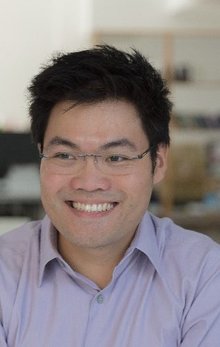
Founder and CEO Hon Weng Chong explains: “The only machine or the only thing that we know of that actually has true intelligence is the brain. So, we said, ‘let’s start with the basic building blocks – neurons – and build our way up and maybe we’ll get there along the way’.”
These biological systems, though requiring meticulous maintenance and surviving only around six months, promise computing capabilities that are adaptive, self-healing and able to process complex data streams far more efficiently than traditional chips.
Wetware computing interlinks neuroscience, computer science and bioengineering, opening possibilities for real-time adaptation and accelerated predictive analytics in supply chains. This could enable supply chain planning systems that react faster and more resiliently to disruptions than rule-based software today.
A bio-digital future might also include bioengineered packaging materials and embedded biosensors monitoring conditions in transit.
Yet, many challenges temper this promise. Biological variation, stability, environmental control needs and ethical concerns about using living human cells mean wetware remains in a proof-of-concept phase.
Despite these barriers, wetware researchers and entrepreneurs are continuing to explore how biological processing can augment supply chains. Other innovators like Koniku and Ginkgo Bioworks pursue bio-digital sensing and synthetic biology production, pushing us closer to a future in which living systems and digital technologies merge.
Reimagining planning in the age of intelligence
In parallel, digitising enterprise plans is already transforming how businesses operate today – turning static spreadsheets into dynamic, cloud-based assets that synchronise commercial plans, demand forecasts and supply strategies in real time.
“When sales teams create plans, our AI automatically generates P&L forecasts. Once approved, those plans feed directly into our forecasting engine,” says Adam. This integration reduces forecast error and biases between sales-driven commercial goals and accuracy-focused demand teams, particularly in supply-constrained situations.
The AI agent layer takes automation further by orchestrating planning interactions.
“When new sales figures arrive, the system can automatically recommend promotional or marketing adjustments to close gaps, replacing months-long offline analyses that might otherwise produce outdated results,” he continues.
By digitising and automating routine coordination, o9 streamlines enterprise planning, boosts productivity and frees leaders to focus on more strategic decisions.
Looking forward, Adam sees resilience and sustainability as the twin forces shaping supply chain futures.
“The pandemic revealed how supply chains and routes to market could be disrupted simultaneously, exposing visibility gaps on both demand – real-time consumer behaviour and supply tracking goods across multi-tier networks.”
Meeting future challenges, Adam argues, will require more frequent and precise “temperature checks” on consumer sentiment and tighter integration of knowledge across the enterprise to build true resilience.
At the same time, wetware’s emergent promise invites us to rethink intelligence – not only as code and algorithms but as living systems.
Did you know?
Company portals
Cortical Labs
o9 Solutions


Executives

Adam Ben-Yousef
SVP of Revenue Growth Management Solutions
Hon Weng Chong
Founder/CEO