
Inside Nexperia’s Cross-Border Chip Supply Tensions
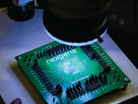
Dutch chipmaker Nexperia is facing a standoff between its Netherlands headquarters and China-based unit, exposing wider tensions across global supply chains.
After the Dutch parent stopped wafer shipments to its China assembly facility, the Chinese arm responded publicly, calling the decision "unilateral" and "extremely irresponsible".
At the centre of the dispute is a sudden supply cut-off triggered on 26 October.
Nexperia headquarters says the move comes as "a direct consequence of the local management's recent failure to comply with the agreed contractual payment terms". However, the China operation fired back, describing that claim as "misleading and highly deceptive".
The fallout hits as legacy chip supply across the world undergoes a reset. Governments, manufacturers and tech companies are reassessing their exposure to Chinese manufacturing, driving a shift in sourcing strategies and chip inventories.

Maintaining output and securing orders
Despite the wafer suspension, Nexperia China insists that its operations remain secure. It confirms it has "sufficient inventories of finished goods and work-in-progress", adding that existing stock is enough to cover all current orders "through year-end and beyond".
The company says it has launched "multiple contingency plans" and is now "accelerating the qualification of new wafer supply sources" to prepare for customer demand in 2026.
Nexperia’s chips are not high-value processors but affordable power-control components like transistors and diodes, often costing just a few cents.
Yet, these small chips are critical across the automotive and electronics sectors. Automakers have already flagged possible production disruptions tied to the wafer freeze.
The issue follows a broader political shift after Dutch authorities seized control of Nexperia from its Chinese owner Wingtech in September, citing national security concerns about potential technology transfers. The Chinese government responded by blocking exports from Nexperia’s China operations.
Tensions escalated until the announcement of a deal between China and the US, reached at a summit in South Korea involving US President Donald Trump and President Xi Jinping. Under the agreement, China pledged to "take appropriate measures to ensure the resumption of trade from Nexperia's facilities in China, allowing production of critical legacy chips to flow to the rest of the world".
Bracing for disruption
The wafer shortage comes as the semiconductor industry faces pressure on several fronts. In the US, Washington is considering 100% tariffs on Asian semiconductors, steering buyers toward domestic production. This includes Texas Instruments’ US$60bn fabrication build-out and Tesla’s US$16.5bn chip agreement with Samsung.
At the same time, Apple and US defence authorities push to re-anchor the supply chain for rare earth elements – crucial in electric vehicles and consumer electronics – away from China. USA Rare Earth’s purchase of Less Common Metals supports a chain from mine to magnet without relying on Chinese processing. Manufacturers are diversifying rare earth sourcing and supply routes as part of this transition.
Although the wafer dispute creates near-term uncertainty, some industry voices see longer-term benefits. Supply chain diversification reduces overreliance on any single geography, especially in areas with mounting political risk.
Sigrid De Vries, Director General of the European Automobile Manufacturers’ Association, says: "The Chinese authorities have said they would start exporting eligible chips again, that they're investigating and making lists of companies ... but the scope and the conditions are as yet unclear.
Sigrid adds that, while China’s move to ease the chip export ban is positive, "supply shortages were imminent" and the threat of further interruptions "are still looming".
Carmakers including Jaguar Land Rover, Volkswagen and Volvo have already warned that chip shortages may lead to temporary shutdowns.
Trade truce reshapes production priorities
The US-China deal extends beyond semiconductors. China has agreed to pause its export restrictions on rare earth minerals for a year and commit to large purchases of US soybeans. The countries also addressed the chemicals used to make fentanyl, a synthetic opioid largely produced with Chinese-sourced ingredients.
The White House has confirmed the details in a fact sheet, stating that the aim is to stabilise trade between the two largest economies.
US Treasury Secretary Scott Bessent adds: "We don't want to decouple from China… (but) they've shown themselves to be an unreliable partner."
Nexperia’s production, which relies heavily on cross-border supply and assembly, captures the complexity of today’s supply chains. Around 70% of chips manufactured in Europe are shipped to China for assembly and re-exported worldwide. This model only works when trade flows remain open.
The chip industry now faces a moment of adjustment. Governments continue to intervene, reshaping where chips are made, where rare earths are mined and who controls key infrastructure.
As President Xi Jinping states: "The business relationship should continue to serve as the anchor and driving force for China-US relations, not a stumbling block or a point of friction."
As companies search for certainty, the pressure on supply chain stability remains constant.
Company portals

Executives

Sigrid de Vries
Director General