Inside Texas Instruments' $60bn US Supply Chain Gamble
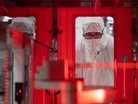
Texas Instruments (TI) is committing US$60bn to expand its semiconductor manufacturing operations in the United States, marking the largest investment of its kind in US history.
The plan spans seven fabrication plants—or "fabs"—across three manufacturing mega-sites located in Texas and Utah. The goal: strengthen domestic supply chains at a time when demand for chips shows no sign of slowing.
The investment not only aims to boost output of TI’s 300mm semiconductor wafers, but also ties directly to some of America’s most influential companies.
Apple, Ford, Medtronic, NVIDIA and SpaceX are all working closely with TI to keep core components flowing for devices, vehicles, satellites and healthcare equipment.
TI says the project will support more than 60,000 jobs, reinforcing its central role in meeting high-volume chip demand across industries.

Expanding US chip capacity at scale
Haviv Ilan, President and Chief Executive of Texas Instruments, says the expansion will help build scale in the kind of semiconductors that power everything from household electronics to aerospace systems: "TI is building dependable, low-cost 300mm capacity at scale to deliver the analogue and embedded processing chips that are vital for nearly every type of electronic system."
The phrase "300mm" refers to the diameter of the silicon wafers used to make chips. Larger wafers allow more chips to be made from a single wafer, improving output and cost efficiency. These 300mm chips are the foundation for TI’s analog and embedded products—technologies that handle functions like temperature sensing, voltage regulation and system processing in modern electronics.
TI’s plans are anchored in Sherman, Texas, where the company is building four fabs - SM1 through SM4 - with a projected US$40bn investment. SM1 starts production this year, just three years after breaking ground. SM2’s exterior shell is already complete. The final two fabs, SM3 and SM4, are slated to support demand over the long term.
In Richardson, Texas, TI continues to ramp up RFAB2, the follow-up to RFAB1, which in 2011 became the world’s first 300mm analogue wafer fab.
Meanwhile in Lehi, Utah, TI is scaling up LFAB1 and constructing LFAB2—an adjacent fab that will operate as part of a combined campus to improve efficiency and yield.
Supply chains front and centre
The manufacturing push is rooted in the need for more secure, domestic supply chains.
"President Trump has made it a priority to increase semiconductor manufacturing in America – including these foundational semiconductors that go into the electronics that people use every day," says Howard Lutnick, US Secretary of Commerce.
"Our partnership with TI will support US chip manufacturing for decades to come."
These chips feed into supply chains that serve millions of consumers. For Apple, TI’s US-made silicon is a core component.
“Texas Instruments' American-made chips help bring Apple products to life,” adds Tim Cook, Chief Executive of Apple.
“Together, we’ll continue to create opportunity, drive innovation and invest in the future of advanced manufacturing across the US.”
Ford’s supply chain depends on consistent chip supply to keep US-built vehicles on the road.
“At Ford, 80% of the vehicles we sell in the US are assembled in the US,” says Jim Farley, Chief Executive of Ford Motor Company.
“We are proud to stand with technology leaders like TI that continue to invest in manufacturing in the US.”
Medtronic highlights the impact on healthcare systems that rely on precision hardware.
“Our life-saving medical technologies rely on semiconductors to deliver precision, performance and innovation at scale,” says Geoff Martha, Chairman and Chief Executive of Medtronic.
“Texas Instruments has been a vital partner – especially during the global chip shortages.”
NVIDIA and SpaceX also cite TI’s US-based fabs as essential to future operations.
Jensen Huang, NVIDIA Founder and Chief Executive, says their shared goal is “revitalise US manufacturing by building more of the infrastructure for AI factories here in the US.”
A platform for future growth
TI’s near-100-year manufacturing legacy positions it uniquely for this level of expansion. The company’s chips, though less high-profile than smartphone processors or data centre units, remain integral to power delivery, signal processing and control functions across modern electronics.
By producing hundreds of millions of these chips each day across its US sites, TI aims to secure a long-term domestic supply that keeps production moving and supports job growth. The Sherman, Richardson and Lehi fabs represent core infrastructure for sectors that depend on stable chip availability.
TI’s broad customer base, from consumer tech to aerospace, benefits from reduced lead times, lower risk of disruption and access to home-grown supply.
It’s a bet not just on one company, but on rebuilding industrial strength through domestic capability.
Explore the latest edition of Supply Chain Digital Magazine and be part of the conversation at our global conference series, Procurement & Supply Chain LIVE.
Discover all our upcoming events and secure your tickets today.
Supply Chain Digital is a BizClik brand.