Will China’s AI Chip Supply Chain Surpass Nvidia’s Grip?
China’s campaign to build a self-sufficient tech ecosystem is taking a sharper turn as its largest firms step up efforts to challenge Nvidia’s global dominance in AI chip supply.
With trade restrictions tightening and domestic demand rising, companies like Huawei and Alibaba are playing a key role in reshaping the semiconductor landscape.
Chinese chipmakers close the gap
Nvidia, long considered the leading supplier of high-performance chips for AI systems, now faces open competition from Chinese developers backed by state ambition and investment.
The shift begins in 2024, when DeepSeek - a Chinese AI start-up - unsettled the market by introducing a rival to ChatGPT. The new model runs efficiently on fewer high-end chips, cutting into Nvidia's valuation and sparking new questions about supply chain resilience and dependency on US tech.
Chinese companies are seizing the moment. Alibaba unveiled a chip in September that, according to Chinese state media, rivals Nvidia’s H20 chips on performance while consuming less power. The H20s are a scaled-back line of processors made specifically for the Chinese market following US export controls. These chips represent Nvidia's attempt to comply with US policy while keeping a stake in China, one of the world’s biggest AI markets.
Huawei is going further. It not only introduced what it calls its most powerful AI chips yet, but also launched a public-facing strategy. The firm also promises to open up its chip designs and software frameworks to the Chinese market, encouraging firms to pivot away from US-made technology. Huawei has also outlined a three-year plan to challenge Nvidia’s grip on AI infrastructure.
Nvidia responded: “The competition has undeniably arrived,” one spokesperson told the BBC.
The company adds it will “continue to work to earn the trust and support of mainstream developers everywhere.”
Supply chains and testing standards under scrutiny
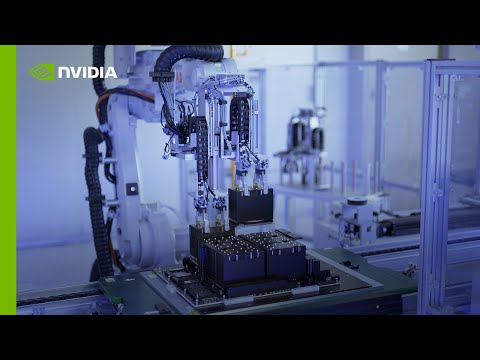
Even as Chinese manufacturers move fast, questions remain about performance, transparency and testing protocols. Limited access to technical benchmarks makes it difficult for global analysts to assess how Chinese chips stack up in real-world scenarios.
Jawad Haj-Yahya, a computer scientist who works with both US and Chinese chips, observes that Chinese semiconductors perform comparably in predictive AI tasks, such as large language models (LLMs). However, he says they lag behind in advanced analytics and complex processing.
“The gap is clear and it is surely shrinking. But I don’t think it’s something they will catch up on in the short-term,” he explains.
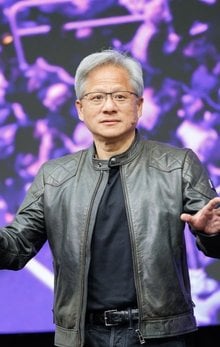
Jensen Huang, Founder and Chief Executive of Nvidia, agrees that China is gaining pace. Speaking on the BG2 podcast in September, he warns that the US must compete “for its survival,” noting China’s “vibrant entrepreneurial, high-tech, modern industry.” He says China is just “nanoseconds behind” in chip development.
The picture emerging is one where Chinese chipmakers are not replacing Nvidia yet, but they are moving into specific parts of the supply chain, especially in domestic markets, where performance thresholds are easier to meet.
Trade politics drive supply chain strategy
Underlying this shift is a broader political strategy.
Chia-Lin Yang, computing professor at National Taiwan University, calls China’s chip announcements a “bargaining chip” in trade negotiations with the US. She believes Beijing wants to pressure Washington into relaxing export controls or risk losing relevance in one of the fastest-growing AI markets.
This strategy becomes clearer in the context of Washington’s export policy. The US has blocked the sale of Nvidia’s top-tier AI chips to Chinese customers, aiming to limit Beijing’s progress in military and high-level AI applications.
Raghavendra Anjanappa, a semiconductor engineer, says the restrictions “hit China exactly where its dependency is deepest.”
He concedes China may substitute lower-end chips with domestic alternatives, but says the country still lacks the “raw performance” needed for cutting-edge AI training.
“But China’s not far off in the grand scheme and they might only need five more years to be independent from the US,” he adds.
Chinese President Xi Jinping continues to push for what he calls “high-quality development,” pouring tens of billions of dollars into the domestic semiconductor sector. In his words, China should not rely on “anyone’s gifts.”
With US export barriers firm and Beijing stepping up its industrial planning, the world’s most important supply chain is shifting fast. What began as a technical race is now as much about trade as it is about tech.
Company portals


Executives
Jensen Huang
Founder and CEO