What Maersk's Return to Suez means for Global Logistics
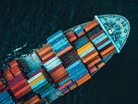
Following successful trans-Suez transits of Maersk Sebarok and Maersk Denver, Maersk has plans to return its services to the trans-Suez route.
Its MECL service connects the Middle East and India with the US East Coast, meaning the trans-Suez route is the optimal one for efficiency.
Through the return, shipping will be faster, more cost-effective and more sustainable.

Efficient logistics
The Suez Canal is the fastest route which links Europe and Asia, having accounted for 10% of global seaborne trade prior to the Houthi attacks and ongoing conflict which began in 2023. Since then, the disruption has proven a key contributor to trade, with logistics companies finding alternative routes to avoid volatility.
This has resulted in longer transit times and higher expenses, with rerouting taking ships around Africa, rather than through the Red Sea. Due to a period of improved stability in the area, Maersk is ready to return its services to this route, increasing transit efficiency greatly.
Maersk trialed the route with its trans-Suez transits of Maersk Sebarok and Maersk Denver, before deciding to return its MECL service to the route permanently. This represents the first structural change of a service back to this route, with Maersk returning to its original service pattern. As a result, customers will the most efficient transit times, which could also result in lower costs.
"The return to the Suez Canal should ease freight rates," said Germany's chemical industry association, VCI.
The situation will continued to be monitored, with Maersk implementing contingency plans if conflicts in the region increase. If volatility emerges and the security deteriorates, Maersk may return the MECL service to the Cape of Good Hope route.
Sustainability concerns
The trans-Suez route is the preferred sailing route for many logistics companies and Maersk has been determined to return to the Red Sea since conflict arose. The Suez Canal acts as a vital maritime corridor between the East and the West, ensuring efficiency across global supply chains.
The route which follows the Suez, the Red Sea and the Bab el-Mandeb Strait acts as the fastest journey between Asia and Europe. As a result, it is also the more efficient and most sustainable option, reducing unnecessary mileage and emissions.
Prior to the disruption, the Suez had a daily shipping volume of 3.5 million tonnes. Following the Houthi attacks, this dropped by almost 60%, falling to approximately 1.25 million tonnes. From Singapore to Rotterdam, through the canal, a shipping journey is a 26-day trip, travelling 8,5000 nautical miles. By going around Africa, this increases to a 36-day trip, covering 11,800 nautical miles. As a result, emissions increase exponentially, proving the larger route to be more impactful to the environment.
Through the return to the Suez, Maersk can significantly reduce its emissions and those of its clients, helping it with its decarbonisation journey and goals to build sustainable supply chains.
All sustainability, net zero and sustainable supply chain leaders should attend:
- Procurement and Supply Chain LIVE: The Net Zero Summit - QEII Centre, London, March 4-5
- Procurement and Supply Chain LIVE: The US Summit - Navy Pier, Chicago, April 21-22
Co-located with Sustainability LIVE, these events brings together CSOs, ESG leaders and senior decision-makers at a moment when sustainability, supply chains and commercial performance are increasingly interconnected.
Tickets can be booked online today for The Net Zero Summit and The US Summit. Group discounts available.
Avoiding disruption
The structural change comes about through a strategic partnership between Maersk and the Suez Canal Authority, as the region attempt to drive safe and efficient logistics. The return is a highly positive step, but disruption is predicted to occur as shipping times change and supply chains become reorganised.
"There is no doubt that there will be added volatility to supply chains once container liners begin the shift back to East-West transits through the Red Sea, just as we saw when the industry started sailing via the Cape of Good Hope," warns Johan Sigsgaard, Chief Product Officer for Ocean at Maersk.
"While this shift can be planned to a certain extent, changes of this size introduce considerable disruption to the networks and the scale of the impact will depend on how fast the transition will happen."
The shorter transport time could result in port congestion and overstocking, but Maersk is working to collaborate on these concerns in order to find the best strategy.
Through its expertise in flexibility, due to its Gemini network, Maersk can reroute vessels and adjust schedules when needed. This ensures faster decision-making and more agility in order to minimise disruption as much as possible.
Company portals

Executives
Johan Sigsgaard
EVP, Chief Product Officer - Ocean