How Maersk’s AI Customs Platform Targets Tariff 'Chaos'
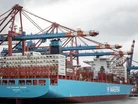
A.P. Moller - Maersk has launched its new digital platform, “Maersk Trade & Tariff Studio”, in response to growing challenges in global trade.
As tariffs shift rapidly and customs scrutiny intensifies, Maersk is introducing a tool designed to bring structure to what many cargo owners are calling “tariff chaos”.
The global logistics company describes the platform as a smart, centralised customs and tariff management system.
Designed to handle rising duties, changing regulations and delayed processes, it gives importers a way to reduce costs and navigate complex compliance requirements with less friction.

A global trade environment in flux
Trade no longer moves in the predictable patterns businesses relied on for decades.
Lars Karlsson, Maersk’s Global Head of Trade & Customs Consulting, says: “For decades, global trade benefited from declining tariffs and fewer barriers. But for now, that has been put on hold.
"Today’s environment is defined by unpredictability, with newly imposed and suddenly postponed tariffs creating what many of our customers describe as ‘tariff chaos’.
"Maersk Trade & Tariff Studio is our answer to this challenge—bringing clarity, compliance, agility and cost optimisation to global supply chains when goods are crossing borders.”
While cargo used to move under fairly stable trade agreements and consistent duties, the situation has shifted. With new tariffs appearing without notice and frequent policy reversals, importers face delays, fines and unplanned expenses.
Many still rely on a patchwork of local customs brokers, sometimes more than 30 per company, spread across dozens of ports or countries. This results in fragmented data, minimal visibility and unnecessary costs. Maersk sees this model as unsustainable in today’s environment.
Internal research from the company backs this view. According to its data, cargo owners overpay duties by 5–6% on average due to the lack of centralised data and proper optimisation.
Meanwhile, 20% of shipment delays stem from poor customs preparation. There are more than 650 Free Trade Agreements (FTAs) worldwide, but only about half of eligible trade uses them.
The complexity involved in understanding origin and destination rules means that many opportunities for tariff relief are missed entirely.
Maersk tool aims to change the process
The new Trade & Tariff Studio brings together AI, live data and a global network of customs professionals.
It matches more than 6,000 product codes and more than 20,000 sub-codes to their correct tariff applications. The platform also conducts compliance screening before goods are shipped, reducing the risk of penalties or inspection-related delays.
Live updates from Maersk’s own customs experts, of which there are 2,700 globally, feed into the system along with external data from regulatory sources. This enables the Studio to respond to tariff or rule changes in real time.
Importantly, businesses can still work with local brokers they know and trust while viewing their customs operations in one centralised system.
The tool launched first in the US market on 28 June and will expand globally in August. It is designed primarily for cargo owners using Maersk’s broader logistics services, but it can also function as a stand-alone solution.
Lars explains the value of centralised digital support in an area long known for its complexity.
“Customs declaration is one of the most complex areas in global logistics. With Maersk Trade & Tariff Studio, we are not only simplifying that complexity—we are turning it into a competitive advantage for our customers,” he says.

Growing regulation increases pressure
Alongside tariff issues, companies must now meet a growing number of regulatory standards. These include product safety, labour rules and environmental measures like the European Union’s Carbon Border Adjustment Mechanism (CBAM) and laws on deforestation-linked goods.
Non-compliance doesn’t just risk delays—it can result in large fines or being shut out of entire markets.
Stricter inspection regimes, particularly in the US, add another layer of urgency.
As customs enforcement tightens, Maersk’s combined role as both logistics partner and trade consultant becomes more relevant. With its global footprint and local knowledge, the company aims to help customers not only meet regulatory obligations but also move goods efficiently and economically.
By launching the Trade & Tariff Studio, Maersk positions itself as both a tech-enabled customs platform and a human-centred logistics partner.
The system is designed to reduce unnecessary duty payments, avoid compliance issues and simplify cross-border processes in a volatile trade environment.
Explore the latest edition of Supply Chain Digital Magazine and be part of the conversation at our global conference series, Procurement & Supply Chain LIVE.
Discover all our upcoming events and secure your tickets today.
Supply Chain Digital is a BizClik brand.