JLR, Porsche and L'Oréal: Top Supply Chain News This Week


June 29
JLR has developed a concept vehicle featuring 49 more sustainable automotive components through collaboration with more than 40 supply chain partners.
According to JLR, the project has delivered more than a tonne of carbon dioxide equivalent savings, equivalent to a passenger flying from Paris to New York. The programme has also achieved multiple industry firsts.
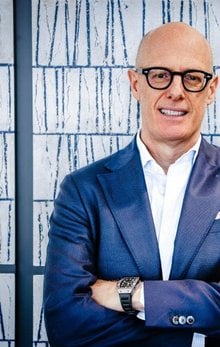
Paul Francis, Senior Manager Circularity at JLR, says: "What we're achieving with Cornerstone shows how JLR can lead in advancing circularity across the automotive industry, and the value of a coordinated, multi‑party approach to deliver progress faster."
June 29
As the world's largest cosmetics company, L'Oréal has worked to drive excellence and ensure responsibility within its operations since it was founded in 1909.
Owning 36 brands and 497 patents, L'Oréal is a giant in the industry,
The company has been placed eighth in Gartner's Supply Chain Top 25.
June 30
Dow has announced plans to invest roughly US$100m through to 2027 to expand its specialty silicones manufacturing across three countries. The investment could strengthen global supply chains for sectors including mobility, electronics and healthcare.
The company operates as the world's largest and most integrated silicones producer. Dow says the investments will expand capabilities in the US, China and Japan to meet demand growth in data centres and semiconductors.
July 1
Porsche AG is enhancing its supply chain, resilience and distribution network to manage geopolitical uncertainties and international tariff policies effectively.
The sports car manufacturer is currently navigating a complex global supply environment marked by geopolitical uncertainties and shifting trade policies. In 2025, the group faced extraordinary expenses of approximately €3.9bn (US$4.4bn), which included €700m (US$797.7m) in additional costs due to US tariffs. This highlights the impact of international trade tensions on the company's financial performance.
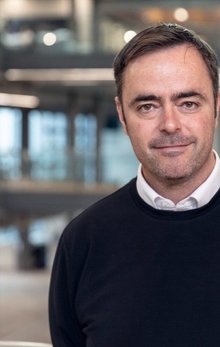
To counter these challenges, the organisation is comprehensively repositioning itself through Strategy 2035. Dr Michael Leiters, the new CEO, is pushing for a leaner and faster company structure.
July 1
The recent heatwave over Europe and the UK has seen records broken, with extreme temperatures seeing not just individuals suffer, but also vital infrastructure feeling the pressure.
Rising temperatures and more extreme weather conditions mean that climate change is now at the forefront of supply chain leaders’ minds, as future-proofing the resilience of supply chains is becoming an increasing priority.
Whether it’s low water levels forcing vessels to reduce cargo loads, cooling water becoming too warm in nuclear plants leading to shutdowns or refrigerated transport, warehousing, energy costs of cooling taking a hit, a likely recurrence of extreme heat means many need to act fast to prevent future supply chain disruption.
Company portals




Executives
Michael Leiters
CEO
Paul Francis
Senior Manager, Circular Economy