The Development of JLR's Closed-Loop Supply Chain

JLR has developed a concept vehicle featuring 49 more sustainable automotive components through collaboration with more than 40 supply chain partners.
According to JLR, the project has delivered more than a tonne of carbon dioxide equivalent savings, equivalent to a passenger flying from Paris to New York. The programme has also achieved multiple industry firsts.
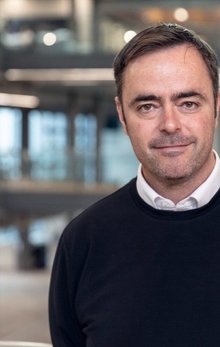
Paul Francis, Senior Manager Circularity at JLR, says: "What we're achieving with Cornerstone shows how JLR can lead in advancing circularity across the automotive industry, and the value of a coordinated, multi‑party approach to deliver progress faster."
Supplier partnership model
JLR engaged suppliers early in development to establish shared objectives across the value chain. This approach means partners contribute their specific expertise collaboratively throughout production.
"It's essential we maintain the highest performance and quality standards," Paul explains.
"When we engage early on shared goals and each partner in the value chain brings their expertise collaboratively throughout development, production efficiency and overall outcomes improve significantly.
"This is how real, honest progress is made, and how the economic opportunity of circularity can be realised."
The multi-partner collaborations have resulted in specific material innovations. These include 100% closed-loop recycled glass with a 36% carbon dioxide equivalent reduction, de-bondable electronics that allow for headlamp repair and 95% recycled magnets in speakers.

Integration pathways for production
JLR produced parts for a real bodyshell to establish clear pathways for integrating new solutions in its vehicle programmes. This method allows the company to test supplier innovations in actual manufacturing conditions.
Recycled door glass, lower-emission steel, recycled seat foam and new headlamp technology are already planned for upcoming models. These components emerged directly from supplier collaboration in the Cornerstone project.
Mary Creagh CBE, the UK's Minister for Nature, says the Cornerstone project "shows how industry can innovate with government providing a stable policy and investment framework".
JLR operates a Circularity Lab at its Gaydon site alongside design, research and development facilities and track test facilities. Cross-functional teams in the lab include specialists in sustainability, engineering, procurement and design.
Supplier engagement process
Teams at the lab disassemble vehicles to identify where circularity challenges exist. According to JLR, the teams then work closely with suppliers to understand and overcome barriers to reuse and recycling.
Data from the lab feeds directly into vehicle development decisions. This process creates a feedback loop between supplier capabilities and design requirements.
Initial tests on front bumpers found that the same quality and performance could be achieved using less polymers. This saved 177,500kg of carbon dioxide equivalent over a single model line and more than US$700,000 in cost.
Andrea Debbane, Chief Sustainability Officer at JLR, said: "I am so excited about the potential of this way of working. It represents a collective commitment to doing things differently, challenging us to rethink our approach from all angles to find the solutions needed to design and build the cars of the future."
Supply chain resilience factors
Resource scarcity, geopolitical volatility and the need for resilient supply chains could mean manufacturers look towards circularity beyond sustainability objectives. Material availability rather than environmental goals may become the primary motivation.
According to the World Resources Institute, global raw material extraction will surge by 150% by 2060 under a business-as-usual scenario, depleting high-grade commodity stocks. This projection suggests supply constraints rather than demand growth.
Closed-loop systems like JLR's 100% recycled glass could mean manufacturers stop competing for shrinking pools of raw materials. This approach changes the supplier relationship from commodity procurement to partnership in material recovery.
Rare earth elements are primarily processed by just a few countries. Reusing these materials allows manufacturers to effectively onshore their supply, bypassing export controls and trade tariffs.
Remanufacturing and circular reverse logistics operate at local or regional level. This shortens the supply chain and could reduce exposure to global logistics disruptions.
Company portals

Executives

Andrea Debbane
Chief Sustainability Officer
Paul Francis
Senior Manager, Circular Economy