How L'Oréal is Gaining Global Recognition With Innovation
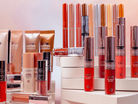
As the world's largest cosmetics company, L'Oréal has worked to drive excellence and ensure responsibility within its operations since it was founded in 1909.
Owning 36 brands and 497 patents, L'Oréal is a giant in the industry,
The company has been placed eighth in Gartner's Supply Chain Top 25.

Embedding sustainability
For more than 25 years, the company has worked dedicatedly towards a sustainable future, aiming to protect the natural landscape and empower communities around the world. In 2020, it launched The L'Oréal for the Future programme, focussing on four key pillars:
- steward the climate transition
- safeguard nature
- drive circularity
- support communities.
Through this, its initiatives have become integrated into standard practices and operational policies at L'Oréal. The company prioritises localised production strategies, which has resulted in significantly lower air freight movements, reducing air freight emissions by 85%. Moreover, 67% of ingredients are sourced from nature or recycled materials. The aim is to go above 75% by 2030.
L'Oréal is also using regenerative agriculture practises throughout its operations, using it as an opportunity to innovate and develop resilience.
In order to reduce waste, L'Oréal also has a wide range of refill options for its products, helping create more convenience and sustainability across the supply chains. These products are available across fragrance, skincare, body care, makeup and haircare.
Welcoming technology
The company is also being celebrated by Gartner for its use of innovation and technology.
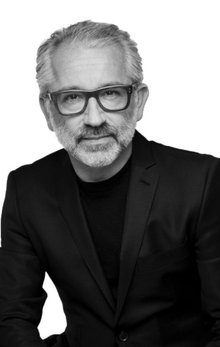
"At L'Oréal Luxe, we know we must constantly challenge the status quo in order to remain visionary," explains Cyril Chapuy, President at L’Oréal Luxe.
"Today, consumer behavior is pivoting."
For L'Oréal, this means embracing new technologies and listening to the consumer. One way in which it has done this is by introducing 'TikTok-to-Sell'. This is a TikTok planning and buying model which is designed to directly link e-commerce performance strategy to omnichannel sales. This meant improving access to real-time data, better optimisation across the conversion funnel and using consumer insights to ensure more accurate decision-making.
By doing this, the company saw a 90% increase on ROAS, as well as 9% increase on conversion rate for transactions and views.
The company has also been using AI to meet demand. As the Group's agile operational engine, L’Oréal Operations is constantly working to reach scale and speed that consumers demand. It has undergone significant capacity increases and adoptions of new lines, but a significant growth opportunity comes from AI, technology and data.
L’Oréal is using smart inventory planning tools and advanced visual monitoring systems in order to increase efficiency and precision. Its distribution capabilities have grown as a result, with its Suzhou Fulfilment Centre in China dispatching 157,000 parcels in the space of 24 hours.
"Powered by the expertise, agility and innovative spirit of our teams, Operations fuels growth and builds sustainable value," explains Antoine Vanlaeys, Chief Operations Officer at L'Oréal.
"Working hand in hand with our partners, we anticipate new challenges and contribute to shaping the future of beauty."
The company is also using Beauty Tech to transform the consumer journey, aiming to increase personalisation, inclusivity and responsibility. Its teams are constantly innovating to pioneer highly personalised beauty solutions. Using AI and data analysis, L'Oréal is changing the industry.
To keep up with innovation, more than 65,000 employees have been upskilled in responsible gen AI use, ensuring these employees are securely in the modern supply chain and can help with L'Oréal's transformation.
As a result of all this, Gartner has recognised the company as a leader in supply chain operations.

Executives
Antoine Vanlaeys
Chief Operations Officer I Member of the Executive Committee
Cyril CHAPUY
President, L’Oréal Luxe