Australia & Japan Developing Critical Mineral Supply Chains
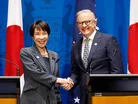
Japan and Australia have formalised a partnership addressing supply chain vulnerabilities across critical minerals, energy and food sectors. The agreement was signed during a three-day state visit by Japanese Prime Minister Sanae Takaichi to Australia in May 2026.
The pact aims to reduce dependency on concentrated supply sources and build alternative logistics networks. According to the joint statement, both nations will coordinate on supply chain resilience and diversification strategies.
The partnership establishes coordinated procurement frameworks and shared logistics infrastructure. Both nations will develop joint monitoring systems to track supply chain performance and identify potential disruptions before they impact operations.

Reducing concentration risk
China controls 70% of global refining capacity for 19 out of 20 critical minerals. This concentration creates exposure for nations dependent on these materials for AI infrastructure, electric vehicles and energy transition technologies.
Demand for lithium, copper and nickel continues to increase. The partnership between Japan and Australia could provide alternative sourcing routes outside existing supply networks.
Japan currently receives approximately 33% of its energy supply from Australia. Australia is also Japan's largest supplier of liquified natural gas.
Tensions in the Middle East have prompted Japanese firms to monitor Australian LNG developments more closely. This geographic diversification could reduce exposure to supply disruptions in traditional energy corridors.
The agreement includes provisions for emergency stockpiling arrangements. Both countries will maintain strategic reserves of critical materials to buffer against short-term supply interruptions and price volatility.
Investment and financing structure
Australia plans to allocate up to AU$1.3bn (US$943m) to the partnership in grants and investments, with plans to increase funding as projects progress.
The collaboration builds on existing relationships. In 2011, Sojitz and Japan Organisation for Metals and Energy Security provided financing to Lynas Rare Earths for light rare earth production. By 2025, this had expanded to include heavy rare earth production.
Sojitz and JOGMEC have also worked with an Alcoa alumina refinery in Western Australia to develop gallium recovery operations. Gallium is used in LEDs, solar cells and semiconductors.
"Australia and Japan are taking action to protect our economies from future economic shocks and uncertainty," Prime Minister Anthony Albanese says in a statement.
"By working together, we will achieve more secure and resilient supply chains that will benefit Australian and Japanese businesses and consumers now and into the future."
Operational scope and priorities
The agreement covers multiple supply chain categories. Critical minerals and energy form the core pillars, with additional provisions for food and manufactured goods.
Both governments have committed to domestic smelting and metal processing capacity. This vertical integration strategy aims to reduce reliance on offshore processing nodes.
The partnership will establish dedicated shipping routes and port infrastructure upgrades to handle increased mineral and energy flows. Investment in bulk carrier capacity and specialised container facilities will support expanded trade volumes between the two nations.
"Our joint statement on energy security reaffirms our commitment to navigate the current energy crisis together and maintain open trade flows of essential energy goods, including liquid fuels and gas," Anthony explains.
"Our joint statement on critical minerals elevates critical minerals to a core pillar of our economic and security relationship, driving Japanese and Australian co-investment in trusted Australian critical mineral supply chains."
The Prime Ministers state the partnership will operate on transparency principles. Regular communication protocols are included in the framework.
Strategic implications
Australia's reserves of critical minerals provide a domestic source for Japanese industrial requirements. The partnership allows both nations to reconfigure supply routes previously channelled through single-source providers.
The agreement includes provisions for renewable energy resources and energy transition projects. These elements align with decarbonisation timelines in both countries.
"We affirmed that Japan and Australia will closely communicate with each other in responding with a sense of urgency," Sanae explains.
The partnership could demonstrate how bilateral agreements address supply chain concentration. Both nations gain operational control over sourcing decisions and logistics pathways.
Defence and security cooperation forms an additional component. The enhanced collaboration will expand the existing defence relationship to support regional stability objectives.
The agreement enables both countries to build supply networks with reduced exposure to geopolitical disruptions. Diversified sourcing strategies and domestic processing capacity form the operational foundations of the partnership.