How Tech Giants are Using AI to Combat Extreme Weather
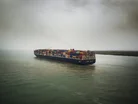
Efficient and safe trade is vital to ensure supply chains continue running at full capacity.
With so much global trade, predictable weather patterns are necessary to allow businesses to operate around major storms to avoid disruption.
As extreme weather events are becoming more unpredictable due to climate change, some of the biggest businesses around the world are introducing new weather-learning models as a means to combat trade disruptions.

Extreme weather and trade disruption
Navigation, route planning, cargo handling and crew safety within the shipping industry is all impacted by unpredictable weather.
With 80% of global trade transported by sea (measured in volume of goods), climate change can have a catastrophic impact on supply chains around the world.
In 2015, the El Faro cargo ship sank when it was unable to avoid a tropical storm, resulting in the deaths of 33 crew members.
In 2021, the Suez Canal was blocked when the container ship Ever Given got stuck, as a result of a sandstorm and strong winds.
More than 300 vessels were prevented from passage, meaning approximately 16.9 million tonnes of goods were unable to reach their destination.
Extreme weather events, like earthquakes, cause billions of dollars worth of damage to ports, meaning trade gets majorly disrupted.
In 2024, severe weather caused a total of around US$182bn in damage to the US alone and led to 568 fatalities according to NOAA (National Oceanic and Atmospheric Administration).
The heatwaves in the UK led to 1,311 excess deaths.
Climate change is exacerbating extreme weather events, making sea shipping more dangerous and unpredictable.
To combat this, tech giants around the world are releasing machine-learning weather models.
Machine-learning weather models
The Shipping Forecast, produced by the Met Office, has safely guided mariners for 100 years.
Like many other companies, it is now considering AI to deliver the best support, save as many lives, and ensure optimal efficiency.
James Shapland, Head of Regulated Transport Services at the Met Office, explains: “We are investing in next-generation capabilities such as advanced satellite data, innovative AI models, and better ways to share vital safety information with people at sea.
“We have started the journey towards producing visualisable, graphical weather warnings and forecasts to accompany the current textual suite of forecasts and warnings, such as the Shipping Forecast.”
Platforms like GraphCast (Google), AIFS (European Centre for Medium Range weather Forecasting) and Aurora (Microsoft) have proven to be more accurate than the traditional benchmark forecast.
Some options are still lagging behind, but as they develop, many predict they’ll become indispensable.
James continues: "This advancement would represent a major leap forward in how we create critical weather information for mariners.”
Professor Kirstine Dale, Chief AI officer at the Met Office adds: "I think we'll have traditional models running alongside AI models so that we are drawing on their combined strengths to enable hyper-localised accurate forecasts, delivered fast, when you need them.”
These models will be particularly useful for maritime services, particularly when it comes to ensuring the efficient running of global trade.
James states: “Marine services are a cornerstone of the UK’s blue economy and with smarter navigation, more efficient logistics, and better environmental stewardship, we are helping to unlock new opportunities for innovation, trade, and sustainability.”
Extreme weather will affect everything from crop growth to trade disruptions, so introducing modern machine-learning weather models will help businesses around the world mitigate supply chain risk.
With the help of these forecasts, companies can prepare for extreme weather events and reroute their trade, or pre-emptively change their delivery date.
As it stands, these platforms have the opportunity to save lives as well as ensure global trade remains strong.