
The Supply Chain Strategy of World-Leading EV Company BYD
Electric vehicle manufacturer BYD is rapidly expanding its operational footprint in the UK and Europe, a move underpinned by a sophisticated manufacturing and supply chain strategy.
The company’s growth in the UK market is considerable, with figures from September 2025 showing a substantial year-on-year increase.
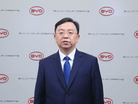
According to CNBC, BYD sold 11,271 vehicles in the UK in September 2025, contributing to a 2025 total of over 35,000. This growth suggests the UK is a key strategic region for BYD’s European operations, resulting from a long-term plan of international expansion led by Founder and CEO Wang Chuanfu.
Wang’s leadership has guided BYD from its origins as a battery manufacturer to its current position as a global producer of electric vehicles (EVs) and renewable energy systems. This integration, controlling the supply of core components like batteries, is a key element of its strategy.
It allows BYD to manage costs and innovate concurrently, resulting in competitively priced vehicles such as the BYD Dolphin, which has a starting price of just over £26,000 (US$34,500).
Localising European supply chains
A cornerstone of BYD’s European strategy is the localisation of its manufacturing. In 2023, the company established a new manufacturing and production centre in Hungary, marking a major commitment to the region.
This facility is the first of its kind in Europe to feature an advanced car production line for a Chinese automotive company.
By producing vehicles within the European Union, BYD can streamline its supply chain, reduce lead times and logistics costs and respond more rapidly to regional market demands.
This move signals a clear intent to embed its operations within the European market, creating a more resilient supply network.
In 2008, Wang stated: “For new-energy cars, we believe we can become the global leader. From the technology standpoint, 10 years should be enough. I believe Chinese companies can become leaders in the alternative car business because we make good batteries.”

Intelligent manufacturing and data integration
BYD is leveraging data to refine its manufacturing and vehicle systems. BYD’s 2025 Interim Report details its Integrated Vehicle Intelligence strategy, powered by the ‘God’s Eye’ technology matrix.
This system uses cameras and sensors for advanced driver-assistance features.
BYD says this delivers a driving experience that “improves with every mile and enhances safety with every use.” The data generated is a crucial asset. The report shows that by the end of May 2025, BYD had sold over 710,000 intelligent system-equipped vehicles.
These vehicles collectively generate more than 44 million kilometres of intelligent vehicle data each day. This vast dataset can be used to inform future manufacturing processes, optimise vehicle performance and refine supply chain logistics.
Discussing the technology, Wang said: “Integrated Vehicle Intelligence is set to steer the future direction of vehicular intelligence and to accelerate the transformation of the automotive industry.”
A full-market logistics strategy
BYD’s 7+4 Full Market Strategy, introduced in 2015, demonstrates a comprehensive approach to ground transportation that extends deep into the logistics and supply chain sectors.
The strategy aims to cover a wide spectrum of transport needs with 7 conventional vehicle types - passenger vehicles, taxis, buses, coaches, urban logistics vehicles, urban construction vehicles and urban sanitation vehicles - as well as 4 specialised vehicle types.
The specialised types include vehicles for mining, ports, airports and warehousing.
This multi-faceted approach shows BYD is not only focused on the consumer market but also on integrating its technology into commercial and industrial logistics.
By supplying vehicles for warehousing, ports and urban logistics, BYD is positioning itself as a key partner in the wider supply chain ecosystem.
Not only is it creating sustainable supply chains, but it is able to cover the entire logistics chain in a streamlined approach.
Company portals

Executives
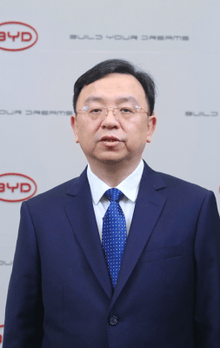
Wang Chuanfu
CEO