
Gartner: Agentic & Physical AI Top 2026 Supply Chain Trends
Autonomy and agency, specialisation and intelligence, as well as trust and governance are some of the overarching themes mentioned in Gartner’s latest Supply Chain Technology Trends for 2026 report.
These key trends reflect an overall shift towards self-directed, accountable systems spanning digital and physical environments. This is important for supply chain leaders as it indicates a shift in the role AI is playing within operations.
AI is not being used for insight alone, but in 2026, these themes show it playing a more significant role in operational execution.

Autonomous, intelligent and adaptive supply chains
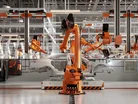
The theme of autonomy won’t come as a surprise to supply chain leaders, with the evolution of AI, machine learning and robotics engineering meaning that robots are equipped to take on tasks even beyond their original design.
As part of physical operations, Garner noted that it is seeing this technology combine AI models with IoT sensors, robotics and automation systems, which in turn is enabling real-time sensing, analysis and execution without operations, improving efficiency and adaptability.
Looking ahead, agentic AI is now capable of proactively planning, acting and adapting to meet tasks even in complex environments. 2026 has seen leading supply chain networks expand the capabilities of individual AI agents according to the report. Using collaborative multiagent systems (MAS) to work collaboratively across workflows and environments, with the aim of automating multistep processes to increase scalability.
“This year’s trends highlight the growing role of AI as the foundation for more autonomous, intelligent and adaptive supply chains,” says Christian Titze, VP Analyst and Chief of Research in Gartner’s Supply Chain practice.
“As organisations move toward hyperconnected, AI-driven environments, leaders must focus not only on deploying advanced technologies, but also on ensuring they work together to deliver measurable value and long-term resilience.”
Smarter supply chain management
Another key theme identified in the report is specialisation and intelligence. This has been observed in the form of intelligent simulation and domain-specific language models (LLMs), which the report says “are trained or fine-tuned for specialised supply chain use cases, delivering greater accuracy, reliability and compliance than general-purpose AI models”.
As a result, performance improvements can be observed in knowledge management, compliance, workflow automation and decision support. Decision governance also falls under Gartner’s final theme of trust and governance.
This overarching trend is leaning heavily on accountability, with decision governance noted across companies forming frameworks and guardrails to govern the advances in AI-enabled decision-making. The report notes that this is “essential to building trust and enabling high-quality, auditable decisions across complex supply chain processes”.
Risks and regulatory pressure
Leaning on governance, these themes noted by Gartner are in response to practical pressure facing supply chain leaders this year. Behind the push for polyfunctional robots and physical AI is continued labour shortages, while mounting regulatory and transparency demands from both customers and lawmakers are pushing the need for product provenance.
With agentic AI and multiagent systems being trusted with ever more autonomous decision-making, governance risks are increasing, meaning decision governance frameworks are increasingly essential.
The Gartner report explains that these shifts are transformational, not a continuation or upgrade of the existing systems. By aligning each technology to specific business objectives and not merely adopting AI for the sake of it, supply chain leaders are more likely to “maintain competitive advantage”.
Company portals

Executives

Christian Titze
VP Analyst and Chief of Research, Supply Chain