Top 10: Supplier Collaboration Platforms
In the global market, fragmentation is a systemic risk. According to Deloitte’s 2025 Global CPO Survey, 61% of procurement leaders now prioritise enhancing supplier collaboration to mitigate mounting geopolitical and economic volatility.
Supplier collaboration platforms (SCPs) are digital ecosystems that synchronise procurement, quality and ESG data into a single source of truth.
For a CSCO, these platforms are essential – they replace manual spreadsheets with real-time visibility, ensuring compliance with strict ESG mandates and reducing total cost of ownership.
By automating the back-and-forth, SCPs transform rigid, linear chains into agile, resilient networks capable of pivoting at pace. Here, we list the Top 10.
10. IntegrityNext
Platform launched: 2016
CEO: Bruno Teuber
Key stat: Monitors nearly three million suppliers across 190 countries for sustainability and compliance

IntegrityNext is designed for high-stakes regulatory compliance and due diligence. It simplifies the complex requirements of laws like the German Supply Chain Act (LkSG) and the EU’s CSDDD through automated risk assessments.
The platform’s standout feature is its AI-driven news tracking, which scans millions of sources for real-time ESG alerts.
It enables proactive collaboration by allowing buyers to assign and track corrective actions directly within the system, ensuring that sustainability is not just a checkbox exercise but a continuous process of risk mitigation
9. EcoVadis
Platform launched: 2007
CEO: Frédéric Trinel & Pierre-François Thaler
Key stat: Has rated more than 100,000 companies on sustainability performance worldwide
EcoVadis is the global gold standard for sustainability-led collaboration.
Unlike traditional platforms, it focuses specifically on ESG performance, providing evidence-based ratings across four key themes: environment, labour & human rights, ethics and sustainable procurement.
It acts as a collaborative tool where buyers can monitor risk and suppliers can follow actionable improvement plans.
By standardising sustainability data, it allows businesses to build ethical supply chains and comply with global regulations while helping suppliers gain a competitive edge through validated "medals" and badges.
8. Infor Nexus
Platform launched: 1998 (rebranded in 2019)
CEO: Kevin Samuelson
Key stat: Manages the movement of more than US$100bn in goods annually for the world’s largest brands
This platform functions as an intelligent control tower, providing end-to-end visibility and multi-tier traceability.
One of its most distinctive features is the integration of supply chain finance, which allows buyers to reward ESG-compliant suppliers with preferential financing rates.
By connecting banks, logistics providers and suppliers on a single instance, it ensures that financial and physical goods move in tandem. This creates a highly resilient network where collaboration is supported by real-time data on everything from container location to carbon emissions.
7. E2open
Platform launched: 2000
CEO: Mark Hall
Key stat: Acquired by WiseTech Global in 2025 for an enterprise value of US$2.1bn
E2open is a powerhouse for multi-enterprise network orchestration.
It excels at managing end-to-end processes across all tiers of the supply chain, including logistics and global trade. Its "Harmony" interface provides a single source of truth for internal and external partners, facilitating synchronised decision-making.
The platform's strength is its ability to handle "decision-grade" data, allowing companies to collaborate on everything from demand sensing to transportation forecasting, making it indispensable for global brands with complex, multi-layered distribution and manufacturing networks.
6. Tradeshift
Platform launched: 2010
CEO: Mike Cowles
Key stat: The network connects over one million companies globally and has processed more than US$1tn in transaction value since its inception.
Tradeshift stands out because it treats supplier collaboration as a two-way street, rather than a top-down mandate. By offering a free, "join once, connect to all" model, it removes the usual barriers to entry, ensuring high adoption across diverse supply chains.
The platform excels at automating the P2P cycle, drastically reducing manual errors and late payments – a common bugbear for British SMEs. With real-time visibility into invoice status and integrated financing options, it fosters genuine transparency.
Ultimately, it’s about digitising relationships to build more resilient, agile networks that benefit both the enterprise and the vendor.
5. JAGGAER
Platform launched: 2019
CEO: Andrew Roszko
Key stat: JAGGAER's customers include Ralph Lauren, Danish Crown and L'Oreal

Known for its industry-specific approach, this platform is particularly effective at reducing administrative burdens through automation – reportedly slashing procurement cycle times by up to 25% by streamlining sourcing events and contract management.
A standout feature is its comprehensive supplier scorecards, which provide transparent, real-time performance analytics. This fosters a culture of accountability and mutual growth, as suppliers can clearly see where they stand against KPIs, making it a preferred choice for sectors like higher education and public procurement.
4. Ivalua
Platform launched: 2000
CEO: Franck Lheureux
Ivalua offers a truly unified platform where all modules share a single code base and data model. This architectural consistency makes it exceptionally good for deep Supplier Relationship Management (SRM).
It empowers organisations to move past basic tactical tasks and engage in joint innovation and strategic risk sharing.
The platform’s flexibility allows for high levels of configuration, enabling firms to tailor their collaboration portals to specific industry requirements, ensuring that complex workflows – like quality documentation or ESG tracking – are managed seamlessly within one interface.
3. o9 Solutions
Platform launched: 2009
CEO: Chakri Gottemukkala
Key stat: Reached a US$3.7bn valuation following its 2023 investment round
Centred on its proprietary Digital Brain technology, o9 Solutions transforms supplier interaction into a multi-tier orchestration. It specialises in breaking down the "two-headed customer" problem where procurement and planning send conflicting signals to vendors.
The platform uses AI Agents to automate onboarding and forecasting, allowing for a structured, data-driven dialogue.
Plus, its ability to model complex supply chain "what-if" scenarios ensures that collaboration is not just about communication, but about aligning strategic financial goals with upstream supplier capabilities.
2. Blue Yonder
Platform launched: 1985 (rebranded in 2020)
CEO: Duncan Angove
Key stat: Reported US$1.36bn in revenue (2024) and maintains a workforce of approximately 8,000 employees
Blue Yonder stands out for its AI-driven cognitive capabilities that synchronise demand and supply planning. It moves beyond simple transactions by using machine learning to predict disruptions and suggest proactive resolutions.
A key feature is its "Inventory Ops Agent", which helps planners navigate complex constraints in real-time.
By providing a unified view of warehouse and transport data alongside supplier capacity, it ensures that collaboration is deeply rooted in operational reality, making it ideal for fast-moving retail and manufacturing environments.
1. SAP Business Network
Platform launched: 2021
CEO: Christian Klein
Key stat: Facilitates more than US$5tn in annual commerce across millions of connected companies
As the world’s largest B2B marketplace, this platform excels at global connectivity. It allows businesses to digitise the entire source-to-pay process within a massive ecosystem of millions of trading partners.
By integrating procurement, logistics and asset management, it removes data silos and enables real-time document exchange.
Its primary strength lies in its unparalleled scale, allowing buyers to find new suppliers rapidly while maintaining high levels of transparency and transaction automation across diverse geographical regions – and earning it the top spot on this week's list.






Executives
Andrew Roszko
Chief Executive Officer
Bruno Teuber
Chief Executive Officer
Chakri Gottemukkala
Official member
Christian Klein
CEO & Member of the Executive Board
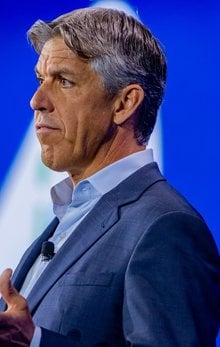
Duncan Angove
CEO
Franck Lheureux
Chief Executive Officer
Kevin Samuelson
Chief Executive Officer
Mark Hall
Chief Acquisition and Integration Officer WiseTech Global, CEO e2Open
Mike Cowles
CEO
Pierre-Francois Thaler
Cofounder & Co-CEO