The Freight Strategy Driving Formula E’s Green Push
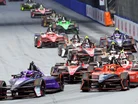
Formula E's Season 10 operations demonstrate how motorsport logistics can drive emissions reductions while delivering competitive performance on a global scale.
The championship's Season 10 Sustainability Report reveals strategic supply chain innovations that could offer valuable insights for logistics professionals managing complex international operations.
Between 2023 and 2024, Formula E achieved a 55% reduction in Scope 1 and 2 greenhouse gas emissions against its baseline, according to its Season 10 Sustainability Report. However, the championship's total emissions rose by 11% compared to Season 9, primarily due to the transition from secondary assumptions to primary data for business travel across each team in the championship.
Jeff Dodds, CEO of Formula E, says: "Season 10 proved once again that elite sport and sustainability are not mutually exclusive – they are mutually reinforcing.
"From using sustainable aviation fuel across continents to leaving lasting legacies in host cities through our Better Futures Fund, our purpose is clearer than ever: to accelerate sustainable human progress through the power of electric racing."
Optimising freight routes
Formula E restructured its logistics network in Season 10, implementing a new global hub in Valencia, Spain, which replaced its previous logistics base at Donington Park in the UK. The strategic relocation could demonstrate how proximity to major transport infrastructure can transform freight efficiency.
The new hub's location near a major port allowed Formula E to optimise its freight routes and increase its use of sustainable sea freight. The championship partnered with DHL to prioritise the use of ships powered by sustainable biofuels, shifting away from more carbon-intensive air freight where operationally feasible.
Formula E successfully completed its logistics transition by the start of Season 11 despite challenges including an unexpected flood in Valencia in October 2024. This resilience in supply chain operations highlights the importance of contingency planning in complex logistics networks.
The Valencia facility provides Formula E with enhanced capabilities for managing equipment across its global race calendar.
By centralising operations in a location with direct access to Mediterranean shipping routes, the championship reduced transit times and improved coordination between freight movements and race schedules.
Sustainable aviation fuel integration
The championship also successfully used sustainable aviation fuel (SAF) to transport freight between Berlin and Shanghai using DHL's GoGreen Plus service. This service uses a book and claim system, with SAF used by air carriers and the emission reductions allocated to shippers as certificates.
Paul Fowler, Vice President of Motorsports at DHL, says: "Our collaboration with Formula E shows what's possible when logistics and sport work together.
"By partnering closely and rethinking freight strategies, we've identified practical ways to reduce emissions – optimising routes and shifting to sea and road transport – while ensuring the championship runs smoothly."
The partnership between Formula E and DHL could illustrate how shipper-carrier collaboration can identify emission reduction opportunities without compromising operational performance. The modal shift strategy, prioritising sea and road transport over air freight, represents a practical approach to freight decarbonisation.
The integration of SAF into Formula E's logistics operations demonstrates the viability of alternative fuels in time-sensitive freight movements.
While SAF currently represents a premium cost compared to conventional jet fuel, the championship's commitment to its use could help drive broader market adoption and scale economies in the sustainable aviation sector.

Supply chain certification standards
For a second consecutive year, Formula E was awarded first position in the Global Sustainability Benchmark in Sport with a best-ever score of 85%.
The championship reaffirmed its environmental credentials, aligning with standards including ISO 20121, ISO 14064 and the IWA 42 framework for climate governance and emissions transparency.
Formula E also became the first sport to receive BSI's Net Zero Pathway certification. The Pathway provides independent assurance across an organisation's carbon inventory, targets and management controls to help ensure net zero goals are realistic and achievable.
The certification process required Formula E to demonstrate comprehensive measurement and reporting of emissions across all operational scopes. This level of scrutiny ensures that sustainability claims are supported by verifiable data and aligned with internationally recognised climate science targets.
International operations
Season 10 took Formula E around the globe to 10 different locations: Mexico City, Mexico; Diriyah, Saudi Arabia; São Paulo, Brazil; Tokyo, Japan; Misano Adriatico, Italy; Monaco; Berlin, Germany; Shanghai, China; Portland, US; and London, UK.
Managing logistics across such diverse geographical markets presents significant supply chain complexity.
Julia Pallé, VP Sustainability at Formula E, says: "We believe electric racing can do more than inspire – it can directly drive change. Over the last 10 seasons we have not only inspired others to act but helped them in delivering real impact."
The championship's ability to maintain operational consistency while implementing major logistics transformations could provide a case study for supply chain professionals managing global distribution networks.
The transition to Valencia as a central hub, combined with strategic freight partnerships and alternative fuel adoption, demonstrates how infrastructure decisions can create opportunities for both operational efficiency and emissions reduction.
Each race location presents unique logistical challenges, from customs regulations to local infrastructure capabilities. Formula E's success in navigating these complexities while simultaneously reducing emissions demonstrates that sustainability initiatives can be integrated into even the most demanding operational environments.
Company portals




Executives
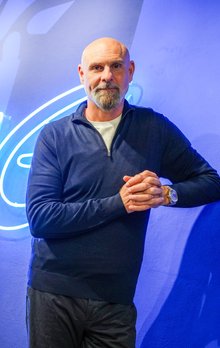
Jeff Dodds
Chief Executive Officer
Julia Pallé
Vice President, Sustainability
Matt Page
Senior Vice President, EMEA Assurance
Paul Fowler
Vice President Motorsports - Global