Formula E’s GEN4: Driving the Future of EV Supply Chains?
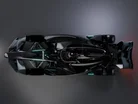
Formula E’s GEN4 car is bringing a new kind of speed and sustainability to electric racing.
Built in partnership with the FIA (Fédération Internationale de l’Automobile), it marks a fresh phase in the championship’s tech development. This latest all-electric machine is more than a race car – it’s a testbed for electric vehicle innovation with manufacturers already adapting its tech for the road.
With its performance, materials and power systems pushing engineering boundaries, the GEN4 serves as both a spectacle for motorsport and a source of real-world EV development.
From aerodynamics to tyre selection, every component has a path that connects it to mass-market production.

GEN4’s circular supply chain
The GEN4 stands out as Formula E’s first car with a fully circular design. That means a supply chain structured to reduce waste and reuse materials, with 100% recyclability and 20% of the components made from recycled parts.
Beth Paretta, Vice President of Sporting at Formula E, explains: “That process was working with those suppliers from as soon as they were awarded the tender.
“The sustainability element of this was woven in with meetings through the entire process, from design concept to then sourcing, supply chain procurement and then ultimately delivery.”
The GEN4 introduces permanent all-wheel drive, a major evolution in Formula E's single-seater platform. It achieves racing power of 450 kW, delivers up to 600 kW in Attack Mode and offers up to 700 kW of regenerative braking.
From the start of its design, the GEN4 follows a consistent sustainability framework. That framework doesn’t just shape the car – it shapes the way it’s built, delivered and used.
Suppliers work alongside engineers from the concept stage to ensure every aspect meets environmental goals while still delivering elite performance.
Tech that ends up on your driveway
Jeff Dodds, Formula E Chief Executive Officer, says: “Fundamentally, the manufacturers are in it because of the transferability between the racetrack and the road.
“If we're talking to our manufacturer partners, they would say they view the racing circuit as a laboratory and they get to test new technologies and develop new technologies.”
Teams including Jaguar and Nissan use race conditions to trial systems that make their way into road-going models. Porsche is one of the strongest examples, feeding lessons from its 99X Electric race car directly into the development of the upcoming Cayenne Electric.
Set to launch in 2026, the Cayenne Electric will adopt direct oil cooling of the motor and rapid charging inspired by Formula E’s Pit Boosts.
Dr Michael Steiner, Member of the Board of Management for Research and Development at Porsche, confirms the impact: “Formula E is our development lab for the electromobility of tomorrow. This is where we gain valuable insights for our road-going sports cars.
“The new Cayenne Electric shows how quickly such a technology transfer takes place at Porsche and how relevant our commitment to the electric racing series is to series production.”
Fast charging is one standout result. Both the Cayenne Electric and the 99X Electric adopt battery systems capable of adding more than 300 kilometres of range in 10 minutes – the kind of leap that alters consumer confidence in EV infrastructure.
GEN4 signals future road-ready tech
With a top speed of over 200 mph already confirmed in testing, GEN4 doesn’t just look quick – it is. It’s also a foundation for technologies that soon land in consumer EVs. Marek explains that a big part of the GEN4 project is giving manufacturers a platform to test systems relevant for mass-market cars.
“The GEN4 will be a clear step forward for road relevancy in terms of electronics and traction management alongside some technologies which will be used for the development of the powertrain,” he says.
“We had long, extensive discussions with the manufacturers on that aspect, and it has been designed to allow the manufacturers to experience the newest technologies they have which are very relevant for the road cars being developed now.”
Jeff adds that excitement matters too: “The test driver cannot get out of the car without having a smile.”
It’s that excitement – and the potential to bring high-performance electric mobility to the public – that pushes the GEN4 into more than motorsport. The car is built to race, but its influence spreads across industries.
As Sylvain Filippi, Envision Racing Managing Director and Chief Technology Officer, puts it: "The GEN4 car is a huge leap in performance, reinforcing our position at the pinnacle of motorsport, with the fastest accelerating race car on the planet.
"But what makes this truly inspiring is that it has been achieved whilst prioritising efficiency and sustainability, proving that ‘sustainable’ doesn’t mean compromise.”
Formula E continues to influence how global manufacturers think about the electric future. From racing tech to the road and supply chains to sustainability strategies, the GEN4 is more than a fast car – it is a live prototype for the next generation of EVs.
[Additional interviewing by Lucy Potter]




Executives
Beth Paretta
VP, Sporting
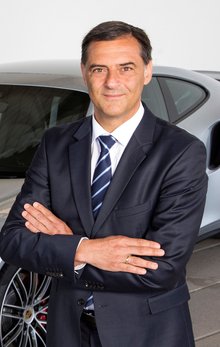
Dr Michael Steiner
Member of the Board of Management for Research and Development

Jeff Dodds
Chief Executive Officer

Marek Nawarecki
Circuit Sport Director
Sylvain Filippi
Managing Director & CTO