Freeport Autonomous Mining: Boosting Supply Chain Efficiency
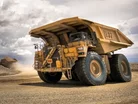
Freeport-McMoRan Copper & Gold is deploying next-generation autonomous haulage systems (AHS) fleets to increase haulage efficiency and strengthen supply chain resilience.
The company's ongoing strategy focuses on technological innovation and sustainable development, which could prove particularly vital amid growing economic, regulatory and environmental challenges affecting global copper supply chains.

Autonomous operations enhance reliability
Mines around the world are facing issues meeting demand, especially as volatility has resulted in supply chain fragmentation across global business. Freeport-McMoRan is undertaking seven main innovations that could transform its mines and establish future resilience, with direct implications for downstream manufacturers and end users dependent on stable copper supplies.
Across mines in Arizona and Indonesia, Freeport-McMoRan is deploying next-generation autonomous trucks and loaders. These vehicles are powered by advanced AI, with the capabilities to optimise ore extraction, route planning and maintenance.
Through these systems, there will be optimal speed and fuel management, resulting in an estimated 18% increase in haulage efficiency. The continuous operations enabled by autonomous systems, running 24 hours a day, seven days a week, could mean more predictable output levels for supply chain partners.
This approach will introduce an anticipated 22% decrease in accident rates, reducing the risk of production disruptions that can cascade through the supply chain.
Through the use of AI-powered sensors, X-ray transmission and automated conveyers, Freeport-McMoRan is able to expand its metal recovery rates. The company anticipates an increase in processing efficiency from 20% to 25%, which could directly boost production output amid growing demand from electric vehicle manufacturers and renewable energy sectors.
Digital systems reduce disruption risks
Freeport-McMoRan's digital twin modelling integrates geological data, sensor feeds and AI simulation, allowing for virtual modelling of operations. This provides early fault detection and maintenance prediction, with an anticipated reduced downtime of 30%.
For supply chain managers at manufacturing companies, this could translate to fewer unexpected shortages and more reliable delivery schedules. The predictive analytics approach helps avoid failures and resource wastage, enabling better planning across the entire value chain.
By reducing unplanned outages, Freeport-McMoRan could provide more accurate forecasting to customers who depend on consistent copper supplies for production planning.
All supply chain, sustainability, Scope 3 and net zero leaders should attend:
- Procurement and Supply Chain LIVE: The Net Zero Summit - QEII Centre, London, March 4-5
- Procurement and Supply Chain LIVE: The US Summit - Navy Pier, Chicago, April 21-22
Co-located with Sustainability LIVE, these events brings together CSCOs, CSOs and senior decision-makers at a moment when sustainability, supply chains and commercial performance are increasingly interconnected.
Tickets can be booked online today for The Net Zero Summit and The US Summit. Group discounts available.
Water systems and local partnerships
Freeport-McMoRan has installed solar parks near its Grasberg and Morenci operations, as well as wind turbines in South America. This integration of renewable energy across mining complexes is reducing reliance on fossil fuels and ensuring a resilient energy supply.
The company anticipates a 30% fossil fuel reduction and a 40% energy-related carbon cut. For supply chain resilience, diversified energy sources could mean protection against fossil fuel price volatility and potential energy supply disruptions. This stability in operational costs could help maintain more predictable pricing for downstream customers.
Freeport-McMoRan has implemented closed-loop water systems and advanced tailings management at its mines, which reduced total water withdrawal by up to 50%. This decreased reliance on local water sources could minimise operational risks in drought-prone regions, protecting against climate-related supply disruptions.
The company's community engagement platforms are helping introduce direct engagement with local populations across Indonesia, Arizona and South America. This ensures the integration of community feedback into mine planning and promotion of local supplier development and training programmes. This is anticipated to develop more than 1,500 local jobs and supplier contracts every year.
By building stronger relationships with local communities, Freeport-McMoRan could reduce the risk of social licence challenges that have disrupted mining operations elsewhere, providing greater supply chain certainty. These investments are helping the company absorb price shocks, develop better communication across its supply chain and with the local community, as well as increase operational output.
By investing in its operations and making sustainable and technological advancements, Freeport-McMoRan is building mining resilience that could benefit the entire copper supply chain.